
Comparison Hikvision DS-UPS1000 1000 VA vs EnerGenie EG-UPS-B850 850 VA
Add to comparison |  | 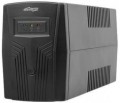 |
|---|---|---|
| Hikvision DS-UPS1000 1000 VA | EnerGenie EG-UPS-B850 850 VA | |
| Outdated Product | from $119.95 | |
| User reviews | ||
| TOP sellers | ||
Interactive UPS. Cold start. | ||
| Type | smart | smart |
| Form factor | standard (Tower) | standard (Tower) |
| Switching to battery | 10 ms | 10 ms |
Input | ||
| Input voltage | 1 phase (230V) | 1 phase (230V) |
| Input voltage range | 220 – 240 В | 165 – 275 В |
| Bypass (direct connection) | in absent | in absent |
Output | ||
| Output voltage | 1 phase (230V) | 1 phase (230V) |
| Peak output power | 1000 VA | 850 VA |
| Rated output power | 600 W | 510 W |
| Output voltage accuracy | 10 % | |
| Output waveform | pure sine wave (PSW) | similar to a sinusoid (approximated) |
| Output frequency | 50/60 Hz | 50/60 Hz |
| Redundant sockets | 2 | 2 |
| Socket type | type F (Schuko) | type F (Schuko) |
Battery | ||
| Number of batteries | 1 | 1 |
| 1 battery voltage | 12 В | 12 В |
| Total battery capacity | 9 Ah | 8 Ah |
| Battery type | GEL ( filled with gel) | |
| Full charge time | 720 min | |
Protection | ||
| Protection | overload protection sound alarm | short circuit protection overload protection noise filtering sound alarm |
| Fuse | melting | melting |
General | ||
| Operating temperature | 0 °C ~ +40 °C | 0 – 40 °C |
| Dimensions (HxWxD) | 139x92x274 mm | 140x100x280 mm |
| Weight | 5.4 kg | 5.5 kg |
| Added to E-Catalog | october 2023 | february 2016 |


Compare Hikvision DS-UPS1000 and EnerGenie EG-UPS-B850
You may be interested in
My comparisons
Hikvision DS-UPS1000 often compared


EnerGenie EG-UPS-B850 often compared


Glossary
Input voltage range
In this case, the input voltage range is implied, in which the UPS is able to supply a stable voltage to the load only due to its own regulators, without switching to the battery. For redundant UPSs (see "Type") this range is quite small, approximately 190 to 260 V; for interactive and especially inverter ones, it is much wider. Some UPS models allow you to manually set the input voltage range.
Peak output power
The maximum output power supplied by the UPS, in other words, the highest apparent load power allowed for this model.
This indicator is measured in volt-amperes (the general meaning of this unit is the same as that of the watt, and different names are used to separate different types of power). The total power consumption of the load, implied in this case, is the sum of two powers — active and reactive. Active power is actually effective power (it is indicated in watts in the characteristics of electrical appliances). Reactive power is the power wasted by coils and capacitors in AC devices; with numerous coils and/or capacitors, this power can be a fairly significant part of the total energy consumption. Note that for simple tasks, you can use data on effective power (it is often given for UPS — see below); but for accurate electrical calculations it is worth using the full one.
The simplest selection rule for this indicator is: the maximum output power of the UPS in volt-amperes should be at least 1.7 times higher than the total load power in watts. There are also more detailed calculation formulas that take into account the characteristics of different types of load; they can be found in special sources. As for specific values, the most modest modern UPSs give out 700 – 1000 VA, or even less — this is enough to power a PC of average performance; and in the most "heavyweight" models, th...is figure can be 8 – 10 kVA and higher.
This indicator is measured in volt-amperes (the general meaning of this unit is the same as that of the watt, and different names are used to separate different types of power). The total power consumption of the load, implied in this case, is the sum of two powers — active and reactive. Active power is actually effective power (it is indicated in watts in the characteristics of electrical appliances). Reactive power is the power wasted by coils and capacitors in AC devices; with numerous coils and/or capacitors, this power can be a fairly significant part of the total energy consumption. Note that for simple tasks, you can use data on effective power (it is often given for UPS — see below); but for accurate electrical calculations it is worth using the full one.
The simplest selection rule for this indicator is: the maximum output power of the UPS in volt-amperes should be at least 1.7 times higher than the total load power in watts. There are also more detailed calculation formulas that take into account the characteristics of different types of load; they can be found in special sources. As for specific values, the most modest modern UPSs give out 700 – 1000 VA, or even less — this is enough to power a PC of average performance; and in the most "heavyweight" models, th...is figure can be 8 – 10 kVA and higher.
Rated output power
The effective output power of the UPS is, in fact, the maximum active power of the load that can be connected to the device.
Active power is consumed directly for the operation of the device; it is expressed in watts. In addition to it, most AC devices also consume reactive power, which is "wasted" (relatively speaking) is spent by coils and capacitors. Apparent power (denoted in volt-amperes) is precisely the sum of active and reactive power; it is this characteristic that should be used in accurate electrical calculations. See "Maximum output power" for details; here we note that when selecting a UPS for a relatively simple application, it is quite possible to use only effective power. This is at least easier than converting the watts claimed in the characteristics of the connected devices into full power volt-amps.
The most modest modern "uninterruptibles" give out less than 500 watts. 501 – 1000 W can be considered an average value, 1.1 – 2 kW is above average, and in the most powerful models this figure exceeds 2 kW and can reach very impressive values (up to 1000 kW or more in some industrial class UPS).
Active power is consumed directly for the operation of the device; it is expressed in watts. In addition to it, most AC devices also consume reactive power, which is "wasted" (relatively speaking) is spent by coils and capacitors. Apparent power (denoted in volt-amperes) is precisely the sum of active and reactive power; it is this characteristic that should be used in accurate electrical calculations. See "Maximum output power" for details; here we note that when selecting a UPS for a relatively simple application, it is quite possible to use only effective power. This is at least easier than converting the watts claimed in the characteristics of the connected devices into full power volt-amps.
The most modest modern "uninterruptibles" give out less than 500 watts. 501 – 1000 W can be considered an average value, 1.1 – 2 kW is above average, and in the most powerful models this figure exceeds 2 kW and can reach very impressive values (up to 1000 kW or more in some industrial class UPS).
Output voltage accuracy
This parameter characterizes the degree of difference between the AC voltage at the output of the UPS and the perfect voltage, the graph of which has the shape of a regular sinusoid. The perfect voltage is so named because it is the most uniform and creates the least unnecessary load on the connected devices. Thus, the distortion of the output voltage is one of the most important parameters that determine the quality of the power received by the load. A distortion level of 0% means that the UPS produces a perfect sine wave, up to 5% — slight sine wave distortion, up to 18% — strong distortion, from 18% to 40% — a trapezoidal signal, more than 40% — a square wave.
Output waveform
The form of a graph describing the changes in voltage at the output of the UPS.
— Pure sinewave. The classic AC voltage graph, this is how it changes in an AC network; The sine wave output means that the UPS has little to no distortion compared to the mains. As a result, such power is suitable for any AC technology, and some devices (for example, audio equipment) generally require an exceptionally pure sine wave. However, this requires rather complex technical solutions, and therefore this waveform can be found in expensive interactive and inverter UPSs.
— Simulated sine wave (approximated). This signal has a shape close to a sinusoid, but the graph line in this case is not smooth, but consists of separate rectangular “steps”. This waveform is provided by most inexpensive UPSs; such devices are inexpensive and quite suitable for powering computer equipment.
— Pure sinewave. The classic AC voltage graph, this is how it changes in an AC network; The sine wave output means that the UPS has little to no distortion compared to the mains. As a result, such power is suitable for any AC technology, and some devices (for example, audio equipment) generally require an exceptionally pure sine wave. However, this requires rather complex technical solutions, and therefore this waveform can be found in expensive interactive and inverter UPSs.
— Simulated sine wave (approximated). This signal has a shape close to a sinusoid, but the graph line in this case is not smooth, but consists of separate rectangular “steps”. This waveform is provided by most inexpensive UPSs; such devices are inexpensive and quite suitable for powering computer equipment.
Total battery capacity
The capacity of the battery installed in the UPS. For models with multiple batteries, this is both the total working capacity and the capacity of each individual battery: the batteries in such devices are usually connected in series, so that their total capacity corresponds to the capacity of each individual cell.
Theoretically, a higher battery capacity means the ability to power loads of a given capacity for longer. However, in fact, this parameter is more of a reference than practically significant. The fact is that the actual amount of energy stored by the battery depends not only on the capacity in amp-hours, but also on the voltage in volts; this voltage is often not specified in the characteristics, despite the fact that for accurate calculations it must be known. So when choosing, you should focus on more "close to life" characteristics — first of all, on the directly claimed operating time in different modes (see above).
Theoretically, a higher battery capacity means the ability to power loads of a given capacity for longer. However, in fact, this parameter is more of a reference than practically significant. The fact is that the actual amount of energy stored by the battery depends not only on the capacity in amp-hours, but also on the voltage in volts; this voltage is often not specified in the characteristics, despite the fact that for accurate calculations it must be known. So when choosing, you should focus on more "close to life" characteristics — first of all, on the directly claimed operating time in different modes (see above).
Battery type
The type of battery installed in the UPS.
— Fiberglass (AGM). An advanced type of lead-acid battery with electrolyte in an adsorbed state: the compartments of such a battery are filled with porous material, which contains acid. At the same time, the battery case is sealed and AGM models are maintenance-free. This technology is the most popular in batteries for uninterruptible power supplies: it is ideal for batteries operating in buffer mode (that is, when they rarely need to be discharged and, as a rule, little by little). In addition, it provides a long service life, and AGM batteries are inexpensive. The disadvantages of this option include the impossibility of replenishing the electrolyte if it leaks, as well as poor tolerance to overcharging (although the latter becomes irrelevant with a high-quality power controller).
— Gel (GEL). A type of lead-acid battery that uses a gel electrolyte. GEL batteries are best suited for operation in cyclic mode - that is, when the battery needs to power the load for a long time, discharge almost to zero, then charge and again provide long-term autonomous power. But for the buffer mode, in which most UPSs operate (standing on standby for a long time in order to briefly maintain power supply in the event of a failure), this technology is not suitable for a number of reasons. Therefore, it makes sense to purchase such batteries only in cases where t...he “uninterruptible power supply” has to be turned on almost every day - for example, in unstable networks with constant and long-term power outages.
— Lithium-ion (Li-Ion). The key advantages of lithium-ion batteries are high capacity with small dimensions and weight. Also, Li-Ion batteries are not subject to the “memory effect” and can charge quite quickly. Of course, this option is not without its drawbacks - first of all, it is sensitive to low and high temperatures, and if overloaded, the lithium-ion battery can catch fire or even explode. However, thanks to the use of built-in controllers, the likelihood of such “emergency” situations is extremely low and, in general, the advantages of this technology significantly outweigh the disadvantages.
— Lithium iron phosphate (LiFePO4). An advanced modification of lithium-ion batteries (see above), designed to eliminate some of the shortcomings of the original technology. Lithium iron phosphate batteries are characterized by a large number of charge/discharge cycles, chemical and thermal stability, low temperature tolerance, short charging time (including high currents) and safety in operation. The likelihood of an “explosion” of a LiFePO4 battery when overloaded is reduced to almost zero, and in general, such batteries cope with high peak loads without problems and maintain the operating voltage almost until they are fully discharged.
— Fiberglass (AGM). An advanced type of lead-acid battery with electrolyte in an adsorbed state: the compartments of such a battery are filled with porous material, which contains acid. At the same time, the battery case is sealed and AGM models are maintenance-free. This technology is the most popular in batteries for uninterruptible power supplies: it is ideal for batteries operating in buffer mode (that is, when they rarely need to be discharged and, as a rule, little by little). In addition, it provides a long service life, and AGM batteries are inexpensive. The disadvantages of this option include the impossibility of replenishing the electrolyte if it leaks, as well as poor tolerance to overcharging (although the latter becomes irrelevant with a high-quality power controller).
— Gel (GEL). A type of lead-acid battery that uses a gel electrolyte. GEL batteries are best suited for operation in cyclic mode - that is, when the battery needs to power the load for a long time, discharge almost to zero, then charge and again provide long-term autonomous power. But for the buffer mode, in which most UPSs operate (standing on standby for a long time in order to briefly maintain power supply in the event of a failure), this technology is not suitable for a number of reasons. Therefore, it makes sense to purchase such batteries only in cases where t...he “uninterruptible power supply” has to be turned on almost every day - for example, in unstable networks with constant and long-term power outages.
— Lithium-ion (Li-Ion). The key advantages of lithium-ion batteries are high capacity with small dimensions and weight. Also, Li-Ion batteries are not subject to the “memory effect” and can charge quite quickly. Of course, this option is not without its drawbacks - first of all, it is sensitive to low and high temperatures, and if overloaded, the lithium-ion battery can catch fire or even explode. However, thanks to the use of built-in controllers, the likelihood of such “emergency” situations is extremely low and, in general, the advantages of this technology significantly outweigh the disadvantages.
— Lithium iron phosphate (LiFePO4). An advanced modification of lithium-ion batteries (see above), designed to eliminate some of the shortcomings of the original technology. Lithium iron phosphate batteries are characterized by a large number of charge/discharge cycles, chemical and thermal stability, low temperature tolerance, short charging time (including high currents) and safety in operation. The likelihood of an “explosion” of a LiFePO4 battery when overloaded is reduced to almost zero, and in general, such batteries cope with high peak loads without problems and maintain the operating voltage almost until they are fully discharged.
Full charge time
The time it takes to fully charge the UPS battery. Note that in this case, this time is calculated according to special rules: not from 0 to 100% of the charge, but from a state in which it is impossible to maintain half the load, up to 90% of the charge. Of course, a full charge will take a little longer. However, this data is closer to practice than the “from 0 to 100%” calculation: the inability to work at half load makes the UPS practically useless, and this condition can be taken as zero, and 90% of the battery is already able to provide a good guarantee in case of a power failure.
Protection
The protection functions provided in the design of the UPS.
— Short circuit protection. A short circuit is a sharp drop in load resistance to critically low values, due to which the current strength increases and the UPS experiences significant overloads that can disable the device and even cause a fire. It may be caused by a problem with the connected device, poor insulation, foreign objects, etc. In the event of such a situation, the short circuit protection system turns off the UPS, preventing unpleasant consequences.
— Overload protection. Overload in this case is the excess of the load power consumption over the output power of the UPS. Working in this mode can also lead to unpleasant consequences up to breakage and fire; to avoid this, a protection system is installed that turns off the UPS when an overload occurs.
— Overcharging protection of external battery. The overcharge protection function prevents the accumulation of excess energy in the battery, from which the UPS operates in autonomous mode. Overcharging is highly undesirable for any type of battery. It can lead to various unpleasant consequences - from deterioration in performance to overheating and fire of the battery. The automatic protective equipment on board the uninterruptible power supply turns off the power after the battery is fully charged. This prevents “extra” curre...nt from entering the battery, which could damage it. This system is convenient in that the battery can be left on charge for a long time without fear of overexerting it.
— Noise filtering. A system that suppresses high-frequency interference in an electrical network — these can be either single voltage surges when turning on and off powerful electrical appliances, or long-term interference from constant sources, such as electric motors. These interferences can adversely affect the operation of electronics connected to the network (up to visible failures); the noise filtering system avoids this. Such systems are quite simple, and therefore most modern UPSs are equipped with them.
— Data line protection. High-frequency interference protection system, similar to interference filtering (see above) — only used not in an electrical network, but in a telephone or wired computer (LAN) network. Such networks are also subject to interference from various sources of electromagnetic radiation, which can cause failures of equipment connected to them: PCs, printers, fax machines, etc. UPSs with this feature have at least two LAN standard connectors (input and output), into which appropriate network or telephone (with RJ-11 connectors compatible with LAN) cables are inserted.
— Emergency cut-off. This connector allows you to connect the UPS to an emergency power off system. Thus, in an emergency (for example, in the event of a fire), the entire room, including and with a power reserve, can be completely de-energized by pressing one button. Without this, the UPS would simply switch to battery when the power goes out and leave the equipment energized, which could lead to disastrous consequences.
— Sound alarm. A system that gives an audible signal in various important situations. It is most commonly used to signal a power outage and the UPS is transferring to battery power. Without a sound signal, this could not be noticed at all (the light is not always on in the room, it goes out when the network fails, the contact in the socket itself may disappear, etc.), which is fraught with a sudden shutdown of the equipment, data loss and breakdowns. Also, sound alarm can be used for other events — low battery, end of charge, bypass on / off, etc.
— Short circuit protection. A short circuit is a sharp drop in load resistance to critically low values, due to which the current strength increases and the UPS experiences significant overloads that can disable the device and even cause a fire. It may be caused by a problem with the connected device, poor insulation, foreign objects, etc. In the event of such a situation, the short circuit protection system turns off the UPS, preventing unpleasant consequences.
— Overload protection. Overload in this case is the excess of the load power consumption over the output power of the UPS. Working in this mode can also lead to unpleasant consequences up to breakage and fire; to avoid this, a protection system is installed that turns off the UPS when an overload occurs.
— Overcharging protection of external battery. The overcharge protection function prevents the accumulation of excess energy in the battery, from which the UPS operates in autonomous mode. Overcharging is highly undesirable for any type of battery. It can lead to various unpleasant consequences - from deterioration in performance to overheating and fire of the battery. The automatic protective equipment on board the uninterruptible power supply turns off the power after the battery is fully charged. This prevents “extra” curre...nt from entering the battery, which could damage it. This system is convenient in that the battery can be left on charge for a long time without fear of overexerting it.
— Noise filtering. A system that suppresses high-frequency interference in an electrical network — these can be either single voltage surges when turning on and off powerful electrical appliances, or long-term interference from constant sources, such as electric motors. These interferences can adversely affect the operation of electronics connected to the network (up to visible failures); the noise filtering system avoids this. Such systems are quite simple, and therefore most modern UPSs are equipped with them.
— Data line protection. High-frequency interference protection system, similar to interference filtering (see above) — only used not in an electrical network, but in a telephone or wired computer (LAN) network. Such networks are also subject to interference from various sources of electromagnetic radiation, which can cause failures of equipment connected to them: PCs, printers, fax machines, etc. UPSs with this feature have at least two LAN standard connectors (input and output), into which appropriate network or telephone (with RJ-11 connectors compatible with LAN) cables are inserted.
— Emergency cut-off. This connector allows you to connect the UPS to an emergency power off system. Thus, in an emergency (for example, in the event of a fire), the entire room, including and with a power reserve, can be completely de-energized by pressing one button. Without this, the UPS would simply switch to battery when the power goes out and leave the equipment energized, which could lead to disastrous consequences.
— Sound alarm. A system that gives an audible signal in various important situations. It is most commonly used to signal a power outage and the UPS is transferring to battery power. Without a sound signal, this could not be noticed at all (the light is not always on in the room, it goes out when the network fails, the contact in the socket itself may disappear, etc.), which is fraught with a sudden shutdown of the equipment, data loss and breakdowns. Also, sound alarm can be used for other events — low battery, end of charge, bypass on / off, etc.