
Comparison JBL Studio 698 vs JBL Studio 290
Add to comparison | 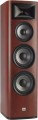 | 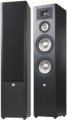 |
|---|---|---|
| JBL Studio 698 | JBL Studio 290 | |
from $649.00 | from $801.00 up to $1,344.00 | |
| TOP sellers | ||
| Features | monitor | homemade |
| Mount | floor | floor |
Specs | ||
| Type | passive | passive |
| Number of channels | 1.0 | 2.0 system |
| Number of speakers | 4 | 4 |
| Number of bands | 3 | 3 |
| Sensitivity | 90 dB | 91 dB |
| Impedance | 6 Ohm | 8 Ohm |
| Crossover frequency | 0.32 / 1.8 kHz | |
Power / frequency | ||
| Maximum amplifier power | 250 W | 225 W |
| Overall frequency range | 36 – 40000 Hz | 38 – 22000 Hz |
Design | ||
| Design features | phase inverter back horn design Bi-Amping/Bi-Wiring | phase inverter back horn design Bi-Amping/Bi-Wiring |
General | ||
| Tweeter size | 25 mm | 25 mm |
| Midrange speaker size | 152 mm | 100 mm |
| Woofer size (LF/MF) | 203 mm | 200 mm |
| Finishing material | MDF | MDF |
| Front speaker dimensions (HxWxD) | 106x30x40 cm | 112x27x33 cm |
| Weight | 36 kg | 50 kg |
| Added to E-Catalog | february 2021 | july 2014 |


Compare JBL Studio 698 and Studio 290
You may be interested in
JBL Studio 698 often compared


JBL Studio 290 often compared


Glossary
Features
General specialization of the speaker system.
These days, by this criterion, we distinguish home, concert, monitor, public address, outdoor, and cinema systems, as well as solutions for expanding existing AS. At the same time, the intended use isn’t a hard rule—many models also allow nonstandard use cases. However, it’s still simpler and more convenient to choose a speaker according to the application it was originally designed for. The specific features of speakers for different purposes are as follows:
— Home. A type of AS intended, as the name suggests, for individual use at home. Note that the specs of such models can vary widely—from the simplest bookshelf speakers to powerful multi-way speakers designed for home theaters and high-quality audio systems.
— Concert. A distinguishing exterior feature of AS intended for concerts is their large size and high nominal power (in some models it exceeds 1 kW). The latter is indispensable for vast spaces—halls, stadiums, etc.—where the sound also has to overpower the audience’s reaction (sometimes quite loud). Buying such speakers for home use makes no sense—not only due to the high price, but also because instead of high-level inputs (as in home AS) these systems have a connector for specialized equi...pment, musical instruments, etc. Most often concert speakers are sold in a 1.0 configuration (see “Number of channels”) so that sound engineers can assemble the required speaker setup from a specific number of components.
— Monitor. The primary purpose of monitor speakers is sound quality control; accordingly, all such models offer extremely high accuracy in reproducing every detail, a flat FR, and virtually no distortion. This makes them indispensable for professional use (for example, in recording studios): a monitor speaker will let you pinpoint all flaws in the input signal, including amplifier noise, editing inaccuracies, etc. Like concert models (see above), these systems are usually equipped with specialized inputs; however, using monitors for home listening makes little sense for another reason as well: all sound imperfections that go unnoticed on regular speakers will show up—and can noticeably spoil the impression. And the price of such models is quite high.
—
— Outdoor. Speaker systems designed for installation outside. They can be used, for example, to provide sound for parties at a country house or outdoors, to play music on café summer terraces, etc. All models of this type necessarily have a moisture-resistant, corrosion-resistant enclosure (see “Water resistance”) for adverse weather; in addition, they are usually protected against UV exposure. Outdoor speakers can be mounted in different ways (see above), but suspended options are the most common.
— Cinema. Models intended, as the name suggests, for use in movie theaters—primarily not in “home-size” rooms for 6–10 viewers, but in large entertainment complexes with dozens or hundreds of seats. Cinema speakers have the following common traits. First, they are all passive, intended to be connected to specialized amplifiers; accordingly, high-voltage inputs in the form of binding posts or Euroblock sockets are used. Second, the power of such devices is quite high—100 W and above. Third, cinema speakers are usually produced in a 1.0 format (see “Number of channels”)—in other words, such models are not complete speaker systems, but individual components used to assemble a specific multichannel AS. This format makes it possible to select speakers as precisely as possible for a specific auditorium. By installation type, cinema speakers are usually floorstanding, in-wall, or wall-mounted. The latter are most often designed for installation on side walls, while the first two go behind the screen. Floorstanding versions can in fact consist of two parts—a classic low-frequency cabinet and a horn for MF and HF.
— Speaker system expansion. A specific type of speaker not intended for standalone use and used as an add-on to traditionally designed speakers. Such models are mainly used in multichannel surround systems—to extend the soundstage vertically; they have a distinctive look: relatively compact size, a slanted top panel, and a driver built into that panel. This way, the drivers aim the sound upward—so that, after reflecting off the ceiling, it reaches the listener and creates the impression that the sound source is above. Using “expansion” speakers lets you avoid specialized ceiling speakers. This is especially convenient given that ceiling speakers are usually in-wall/in-ceiling and fairly complex to install, whereas expansion modules often allow installation directly on top of the main AS components. Also note that this type of speaker may be originally designed for specific main speaker models; it’s worth confirming this before purchase.
These days, by this criterion, we distinguish home, concert, monitor, public address, outdoor, and cinema systems, as well as solutions for expanding existing AS. At the same time, the intended use isn’t a hard rule—many models also allow nonstandard use cases. However, it’s still simpler and more convenient to choose a speaker according to the application it was originally designed for. The specific features of speakers for different purposes are as follows:
— Home. A type of AS intended, as the name suggests, for individual use at home. Note that the specs of such models can vary widely—from the simplest bookshelf speakers to powerful multi-way speakers designed for home theaters and high-quality audio systems.
— Concert. A distinguishing exterior feature of AS intended for concerts is their large size and high nominal power (in some models it exceeds 1 kW). The latter is indispensable for vast spaces—halls, stadiums, etc.—where the sound also has to overpower the audience’s reaction (sometimes quite loud). Buying such speakers for home use makes no sense—not only due to the high price, but also because instead of high-level inputs (as in home AS) these systems have a connector for specialized equi...pment, musical instruments, etc. Most often concert speakers are sold in a 1.0 configuration (see “Number of channels”) so that sound engineers can assemble the required speaker setup from a specific number of components.
— Monitor. The primary purpose of monitor speakers is sound quality control; accordingly, all such models offer extremely high accuracy in reproducing every detail, a flat FR, and virtually no distortion. This makes them indispensable for professional use (for example, in recording studios): a monitor speaker will let you pinpoint all flaws in the input signal, including amplifier noise, editing inaccuracies, etc. Like concert models (see above), these systems are usually equipped with specialized inputs; however, using monitors for home listening makes little sense for another reason as well: all sound imperfections that go unnoticed on regular speakers will show up—and can noticeably spoil the impression. And the price of such models is quite high.
—
— Outdoor. Speaker systems designed for installation outside. They can be used, for example, to provide sound for parties at a country house or outdoors, to play music on café summer terraces, etc. All models of this type necessarily have a moisture-resistant, corrosion-resistant enclosure (see “Water resistance”) for adverse weather; in addition, they are usually protected against UV exposure. Outdoor speakers can be mounted in different ways (see above), but suspended options are the most common.
— Cinema. Models intended, as the name suggests, for use in movie theaters—primarily not in “home-size” rooms for 6–10 viewers, but in large entertainment complexes with dozens or hundreds of seats. Cinema speakers have the following common traits. First, they are all passive, intended to be connected to specialized amplifiers; accordingly, high-voltage inputs in the form of binding posts or Euroblock sockets are used. Second, the power of such devices is quite high—100 W and above. Third, cinema speakers are usually produced in a 1.0 format (see “Number of channels”)—in other words, such models are not complete speaker systems, but individual components used to assemble a specific multichannel AS. This format makes it possible to select speakers as precisely as possible for a specific auditorium. By installation type, cinema speakers are usually floorstanding, in-wall, or wall-mounted. The latter are most often designed for installation on side walls, while the first two go behind the screen. Floorstanding versions can in fact consist of two parts—a classic low-frequency cabinet and a horn for MF and HF.
— Speaker system expansion. A specific type of speaker not intended for standalone use and used as an add-on to traditionally designed speakers. Such models are mainly used in multichannel surround systems—to extend the soundstage vertically; they have a distinctive look: relatively compact size, a slanted top panel, and a driver built into that panel. This way, the drivers aim the sound upward—so that, after reflecting off the ceiling, it reaches the listener and creates the impression that the sound source is above. Using “expansion” speakers lets you avoid specialized ceiling speakers. This is especially convenient given that ceiling speakers are usually in-wall/in-ceiling and fairly complex to install, whereas expansion modules often allow installation directly on top of the main AS components. Also note that this type of speaker may be originally designed for specific main speaker models; it’s worth confirming this before purchase.
Number of channels
— 1.0. Single-channel(monophonic) audio system. "Alone" such speakers do not provide a sense of surround sound, but can be used as separate components for multi-channel surround sound systems.
— 2.0. Normal stereo sound: two speakers responsible for the left and right channels. Allows you to create a minimal illusion of "surround" sound by simulating the displacement of the sound source in the space in front of the listener.
— 2.1. A dual speaker system that creates a minimal illusion of "surround" sound, and a subwoofer that delivers powerful and rich sound by adding bass and ultra-low frequencies.
— 3.0. System of three speakers(centre and two front). According to some manufacturers, such systems in small rooms are capable, with some tricks, of reproducing full surround sound without rear speakers.
— 5.0. A set of five speakers(two front, centre and two rear), which allows you to reproduce a full surround sound, which is subjectively perceived by the listener not only in front, but also behind him.
— 5.1. A set of five speakers and a subwoofer for low and ultra-low frequencies, allowing you to reproduce a full surround sound, which is subjectively perceived by the listener not only in front, but also behind him. 5.1 systems ar...e one of the most popular multi-channel audio formats, widely used, in particular, in home theaters.
There are also much rarer options due to narrow needs:
— 1.1. Systems in the form of a subwoofer, on which a general range speaker is installed on top. They are found mainly in concert acoustics — it is convenient to assemble systems for powerful and rich sound from such components.
— 2.2. Further development of the idea embodied in systems 1.1 (see above); in fact, these are sets of two identical speakers of 1.1 format. Such sets are produced from the considerations that for concerts, especially in relatively small rooms, it is often enough just a pair of 1.1 speakers; it is more convenient and often cheaper to buy two such speakers at once than to buy them one at a time.
— 3.1. A system of three speakers (centre and two front), as well as a subwoofer for bass and ultra-low frequencies. It is a "stripped down" version of the 5.1 system; according to some manufacturers, such systems are capable of reproducing full surround sound in the absence of rear speakers, due to which they are perfect for installation in small rooms where it is not possible to place full-fledged 5.1 acoustics.
— 4.0. A variation of 4.1 systems (see below), devoid of a subwoofer, otherwise completely similar.
— 4.1. Simplified version of 5.1 format (see above); such systems usually lack either a centre or one of the rear channels. Anyway, other things being equal, they are cheaper than full-length 5.1, but their sound quality is significantly lower.
— 4.2. This category includes mainly concert acoustics (see "Intended use"), which is an extended version of the 2.2 described above. In 4.2 systems, not one, but two total range speakers are installed above each subwoofer. Thus, you can achieve better and richer sound.
— 5.2. A variation of the 5.1 described above, supplemented by a second subwoofer — this has a positive effect on the quality and accuracy of bass reproduction. On the other hand, setting up such systems is somewhat more complicated.
— 6.1. Extended version of 5.1 format: two front speakers, a centre speaker, three rear speakers (left, right and centre) and a subwoofer for bass and extra bass. It is characterized by a more accurate transmission of surround sound in the rear sector, but is quite rare.
— 7.0. Extended version of multi-channel audio with five main channels (eg 5.1). In this case, the five main channels are supplemented with two more, which allows to achieve a more voluminous and reliable sound. Most often, additional channels are located at the back ("rear right" and "rear left"), but depending on the specific sound format, other installation options are possible — for example, on the sides of the user.
— 8.1. Systems providing 8 main sound channels plus 1 low frequency. The specific distribution of the main channels may be different, depending on the model. However, all 8.1 systems differ, on the one hand, in good reliability of surround sound, on the other hand, in high cost and complexity in setting up.
— 2.0. Normal stereo sound: two speakers responsible for the left and right channels. Allows you to create a minimal illusion of "surround" sound by simulating the displacement of the sound source in the space in front of the listener.
— 2.1. A dual speaker system that creates a minimal illusion of "surround" sound, and a subwoofer that delivers powerful and rich sound by adding bass and ultra-low frequencies.
— 3.0. System of three speakers(centre and two front). According to some manufacturers, such systems in small rooms are capable, with some tricks, of reproducing full surround sound without rear speakers.
— 5.0. A set of five speakers(two front, centre and two rear), which allows you to reproduce a full surround sound, which is subjectively perceived by the listener not only in front, but also behind him.
— 5.1. A set of five speakers and a subwoofer for low and ultra-low frequencies, allowing you to reproduce a full surround sound, which is subjectively perceived by the listener not only in front, but also behind him. 5.1 systems ar...e one of the most popular multi-channel audio formats, widely used, in particular, in home theaters.
There are also much rarer options due to narrow needs:
— 1.1. Systems in the form of a subwoofer, on which a general range speaker is installed on top. They are found mainly in concert acoustics — it is convenient to assemble systems for powerful and rich sound from such components.
— 2.2. Further development of the idea embodied in systems 1.1 (see above); in fact, these are sets of two identical speakers of 1.1 format. Such sets are produced from the considerations that for concerts, especially in relatively small rooms, it is often enough just a pair of 1.1 speakers; it is more convenient and often cheaper to buy two such speakers at once than to buy them one at a time.
— 3.1. A system of three speakers (centre and two front), as well as a subwoofer for bass and ultra-low frequencies. It is a "stripped down" version of the 5.1 system; according to some manufacturers, such systems are capable of reproducing full surround sound in the absence of rear speakers, due to which they are perfect for installation in small rooms where it is not possible to place full-fledged 5.1 acoustics.
— 4.0. A variation of 4.1 systems (see below), devoid of a subwoofer, otherwise completely similar.
— 4.1. Simplified version of 5.1 format (see above); such systems usually lack either a centre or one of the rear channels. Anyway, other things being equal, they are cheaper than full-length 5.1, but their sound quality is significantly lower.
— 4.2. This category includes mainly concert acoustics (see "Intended use"), which is an extended version of the 2.2 described above. In 4.2 systems, not one, but two total range speakers are installed above each subwoofer. Thus, you can achieve better and richer sound.
— 5.2. A variation of the 5.1 described above, supplemented by a second subwoofer — this has a positive effect on the quality and accuracy of bass reproduction. On the other hand, setting up such systems is somewhat more complicated.
— 6.1. Extended version of 5.1 format: two front speakers, a centre speaker, three rear speakers (left, right and centre) and a subwoofer for bass and extra bass. It is characterized by a more accurate transmission of surround sound in the rear sector, but is quite rare.
— 7.0. Extended version of multi-channel audio with five main channels (eg 5.1). In this case, the five main channels are supplemented with two more, which allows to achieve a more voluminous and reliable sound. Most often, additional channels are located at the back ("rear right" and "rear left"), but depending on the specific sound format, other installation options are possible — for example, on the sides of the user.
— 8.1. Systems providing 8 main sound channels plus 1 low frequency. The specific distribution of the main channels may be different, depending on the model. However, all 8.1 systems differ, on the one hand, in good reliability of surround sound, on the other hand, in high cost and complexity in setting up.
Sensitivity
Speaker sensitivity.
This characteristic is indicated on the basis of how loud the acoustics are capable of producing when a signal of a certain standard power is applied to it. Simply put, the higher the sensitivity of the speaker, the louder it will sound at the same output power of the amplifier. Thus, sensitive acoustics can be effectively used even in combination with relatively low-power "amplifiers". On the other hand, low sensitivity also has its advantages: it allows you to achieve a more uniform frequency response and reduces the likelihood of overloading the amplifier. In the least sensitive modern speakers, this indicator does not exceed 84 dB, in the most sensitive it is 95 – 96 dB or more.
Note that in fact, you have to pay attention to this parameter when acoustics are planned to be used with a separately selected power amplifier. Therefore, for active systems (see "Type"), sensitivity is purely a reference value, and, usually, it can be ignored when choosing.
This characteristic is indicated on the basis of how loud the acoustics are capable of producing when a signal of a certain standard power is applied to it. Simply put, the higher the sensitivity of the speaker, the louder it will sound at the same output power of the amplifier. Thus, sensitive acoustics can be effectively used even in combination with relatively low-power "amplifiers". On the other hand, low sensitivity also has its advantages: it allows you to achieve a more uniform frequency response and reduces the likelihood of overloading the amplifier. In the least sensitive modern speakers, this indicator does not exceed 84 dB, in the most sensitive it is 95 – 96 dB or more.
Note that in fact, you have to pay attention to this parameter when acoustics are planned to be used with a separately selected power amplifier. Therefore, for active systems (see "Type"), sensitivity is purely a reference value, and, usually, it can be ignored when choosing.
Impedance
Impedance is the nominal electrical impedance of a speaker system. Nowadays, a set of standard impedance values are used; the most widely used speakers are 4 ohms, 6 ohms, 8 ohms and 16 ohms.
This parameter is of primary importance for passive acoustics (see "Type"). When connecting such speakers to a power amplifier, it is highly desirable that their impedance matches the speaker impedance for which the amplifier is designed; in case of a mismatch, either overload and distortion in sound (if the speaker impedance is below optimal), or a decrease in power (in the opposite case), are possible.
As for active acoustics, here the impedance is mainly of reference value — the speakers in such systems are initially selected for the corresponding amplifiers. However there is an opinion that a higher resistance reduces the level of interference and has a positive effect on the purity of the sound; however, the difference in impedance between different models is usually not so great that this effect is noticeable against the background of other factors that determine sound quality.
This parameter is of primary importance for passive acoustics (see "Type"). When connecting such speakers to a power amplifier, it is highly desirable that their impedance matches the speaker impedance for which the amplifier is designed; in case of a mismatch, either overload and distortion in sound (if the speaker impedance is below optimal), or a decrease in power (in the opposite case), are possible.
As for active acoustics, here the impedance is mainly of reference value — the speakers in such systems are initially selected for the corresponding amplifiers. However there is an opinion that a higher resistance reduces the level of interference and has a positive effect on the purity of the sound; however, the difference in impedance between different models is usually not so great that this effect is noticeable against the background of other factors that determine sound quality.
Crossover frequency
The crossover frequency provided in the speaker design.
A crossover is installed exclusively in a multi-band model (see "Number of Bands"). This is an electronic filter that ensures the division of the incoming audio signal into separate frequency ranges and directs each range to "its" set of speakers. And the crossover frequency shows where the boundary between these ranges lies. If there are more than two bands, there will be several such boundaries: for example, for a four-band system it may be specified "0.15 / 0.8 / 2.8 kHz" or "0.12 / 1 / 3.8".
In most cases, this parameter has mainly a reference value: the frequencies of the built-in crossover are selected to match the operating characteristics of the speakers installed in the speaker system.
A crossover is installed exclusively in a multi-band model (see "Number of Bands"). This is an electronic filter that ensures the division of the incoming audio signal into separate frequency ranges and directs each range to "its" set of speakers. And the crossover frequency shows where the boundary between these ranges lies. If there are more than two bands, there will be several such boundaries: for example, for a four-band system it may be specified "0.15 / 0.8 / 2.8 kHz" or "0.12 / 1 / 3.8".
In most cases, this parameter has mainly a reference value: the frequencies of the built-in crossover are selected to match the operating characteristics of the speakers installed in the speaker system.
Maximum amplifier power
The highest power rating of an amplifier that the loudspeakers can handle safely. Too much input power can damage the speakers, so when connecting, make sure that the amplifier's characteristics do not exceed the capabilities of the speakers. It is worth noting that this parameter may be slightly higher than the total nominal power of the acoustics (see below), since in this case we are only talking about the safety of the equipment, and not about the absence of distortion in the sound.
Overall frequency range
The total frequency range that the speaker is capable of reproducing. Specified from the bottom of the range in the lowest frequency component to the top of the range in the highest frequency: for example, in a 2.1 system with main speakers at 100 – 22000 Hz and a subwoofer at 20 – 150 Hz, the total value will be 20 – 22000 Hz.
The wider the frequency range — the fuller the reproduced sound, the lower the likelihood that some part of the low or high frequencies will be "cut off". It is worth noting here that the human ear perceives frequencies on average from 16 Hz to 22 kHz, and from a practical point of view, it makes no sense to provide a wider frequency range in speakers. However, quite a few models go beyond this range, sometimes quite significantly (for example, there are speakers with a range of about 10 – 50,000 Hz). Such characteristics are a kind of "side effect" of high-end acoustics, and they are usually given for advertising purposes.
Thus, the lower limit of the range in modern speakers can be within frequencies up to 20 Hz, however, higher values \u200b\u200bare more common — 30 – 40 Hz, 40 – 50 Hz, or even more than 70 Hz. In turn, the upper limit in most modern speakers lies in the range 19 – 22 kHz, although there are deviations both upwards (see above) and downwards....
The wider the frequency range — the fuller the reproduced sound, the lower the likelihood that some part of the low or high frequencies will be "cut off". It is worth noting here that the human ear perceives frequencies on average from 16 Hz to 22 kHz, and from a practical point of view, it makes no sense to provide a wider frequency range in speakers. However, quite a few models go beyond this range, sometimes quite significantly (for example, there are speakers with a range of about 10 – 50,000 Hz). Such characteristics are a kind of "side effect" of high-end acoustics, and they are usually given for advertising purposes.
Thus, the lower limit of the range in modern speakers can be within frequencies up to 20 Hz, however, higher values \u200b\u200bare more common — 30 – 40 Hz, 40 – 50 Hz, or even more than 70 Hz. In turn, the upper limit in most modern speakers lies in the range 19 – 22 kHz, although there are deviations both upwards (see above) and downwards....
Midrange speaker size
The diameter of the midrange speaker(s) speakers. The size of the speaker determines its operating range, as well as the total power: the larger the diameter, the lower the frequencies and the larger the radiating surface area (and hence the power). Accordingly, the dynamics for the midrange can be quite large, but in this case this parameter cannot be called critical. More detailed information can be found in special sources.
Woofer size (LF/MF)
The diameter of the woofer or combined woofer/midrange speaker(s). The larger the speaker, the lower its operating frequencies and the more sound power it can provide. Therefore, you should pay special attention to this parameter if you want to get high-quality rich bass - especially if we are talking about an audio system without a subwoofer. More detailed information about speaker sizes can be found in special sources.