
Comparison JBL Studio 698 vs JBL Studio 690
Add to comparison | 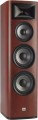 |  |
|---|---|---|
| JBL Studio 698 | JBL Studio 690 | |
from $649.00 | from $399.95 | |
| TOP sellers | ||
| Features | monitor | monitor |
| Mount | floor | floor |
Specs | ||
| Type | passive | passive |
| Number of channels | 1.0 | 1.0 |
| Number of speakers | 4 | 3 |
| Number of bands | 3 | 2.5 |
| Sensitivity | 90 dB | 90 dB |
| Impedance | 6 Ohm | 6 Ohm |
| Crossover frequency | 0.32 / 1.8 kHz | 0.6 / 1.7 kHz |
Power / frequency | ||
| Maximum amplifier power | 250 W | 250 W |
| Overall frequency range | 36 – 40000 Hz | 36 – 40000 Hz |
Design | ||
| Design features | phase inverter back horn design Bi-Amping/Bi-Wiring | phase inverter back horn design Bi-Amping/Bi-Wiring |
General | ||
| Tweeter size | 25 mm | 25 mm |
| Midrange speaker size | 152 mm | |
| Woofer size (LF/MF) | 203 mm | 203 mm |
| Finishing material | MDF | MDF |
| Front speaker dimensions (HxWxD) | 106x30x40 cm | 106x30x35 cm |
| Weight | 36 kg | 29 kg |
| Color | ||
| Added to E-Catalog | february 2021 | june 2020 |


Compare JBL Studio 698 and Studio 690
You may be interested in
My comparisons
JBL Studio 698 often compared


JBL Studio 690 often compared

Glossary
Number of speakers
The number of individual speakers provided in each speaker. Do not confuse this parameter with the number of bands described below — several speakers can be responsible for one band; it is believed that this can improve some of the sound parameters, in addition, it allows you to achieve high power with relatively small speaker dimensions. Otherwise, the number of speakers is more of a reference than a practically significant indicator.
If there are speakers with a different number of speakers in the set, the maximum value of this parameter is usually indicated (most often — by the front speaker). In this case, passive radiators(if any, see "Design Features") are not taken into account in the calculation.
If there are speakers with a different number of speakers in the set, the maximum value of this parameter is usually indicated (most often — by the front speaker). In this case, passive radiators(if any, see "Design Features") are not taken into account in the calculation.
Number of bands
The number of distinct frequency bands into which the sound is divided when played back through the speakers. For each such band, a separate speaker is provided, and sometimes several (for more details, see "Number of speakers").
Among multi-band consumer-level models, the most common options are 2 or 3 bands — LF / HF and LF / MF / HF, respectively. A larger number, usually, indicates a high class of acoustics, because. it is more accurately capable of reproducing the signal and, accordingly, is more complicated. But there are also small satellites with one speaker ( single-way) for the case of an undemanding listener.
Note that, in addition to integers, models are also produced with a fractional number of bands — for example, 2.5 or 3.5. This marking indicates the presence in the design of a speaker that is responsible for two bands at once: for example, model 2.5 has separate speakers for bass and treble plus a combined bass + midrange (similar in design to bass, but also loaded with mid frequencies).
Among multi-band consumer-level models, the most common options are 2 or 3 bands — LF / HF and LF / MF / HF, respectively. A larger number, usually, indicates a high class of acoustics, because. it is more accurately capable of reproducing the signal and, accordingly, is more complicated. But there are also small satellites with one speaker ( single-way) for the case of an undemanding listener.
Note that, in addition to integers, models are also produced with a fractional number of bands — for example, 2.5 or 3.5. This marking indicates the presence in the design of a speaker that is responsible for two bands at once: for example, model 2.5 has separate speakers for bass and treble plus a combined bass + midrange (similar in design to bass, but also loaded with mid frequencies).
Crossover frequency
The crossover frequency provided in the speaker design.
A crossover is installed exclusively in a multi-band model (see "Number of Bands"). This is an electronic filter that ensures the division of the incoming audio signal into separate frequency ranges and directs each range to "its" set of speakers. And the crossover frequency shows where the boundary between these ranges lies. If there are more than two bands, there will be several such boundaries: for example, for a four-band system it may be specified "0.15 / 0.8 / 2.8 kHz" or "0.12 / 1 / 3.8".
In most cases, this parameter has mainly a reference value: the frequencies of the built-in crossover are selected to match the operating characteristics of the speakers installed in the speaker system.
A crossover is installed exclusively in a multi-band model (see "Number of Bands"). This is an electronic filter that ensures the division of the incoming audio signal into separate frequency ranges and directs each range to "its" set of speakers. And the crossover frequency shows where the boundary between these ranges lies. If there are more than two bands, there will be several such boundaries: for example, for a four-band system it may be specified "0.15 / 0.8 / 2.8 kHz" or "0.12 / 1 / 3.8".
In most cases, this parameter has mainly a reference value: the frequencies of the built-in crossover are selected to match the operating characteristics of the speakers installed in the speaker system.
Midrange speaker size
The diameter of the midrange speaker(s) speakers. The size of the speaker determines its operating range, as well as the total power: the larger the diameter, the lower the frequencies and the larger the radiating surface area (and hence the power). Accordingly, the dynamics for the midrange can be quite large, but in this case this parameter cannot be called critical. More detailed information can be found in special sources.
Weight
The total weight of all components of the speaker system.