
Comparison DJI RS 3 Mini vs DJI RSC2
Add to comparison | 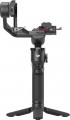 | 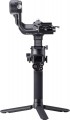 |
|---|---|---|
| DJI RS 3 Mini | DJI RSC2 | |
| Compare prices 10 | from $399.00 | |
| User reviews | ||
| TOP sellers | ||
1/4" connector at the end of the handle. Remote shutter control button (Bluetooth or with a wired camera connection). 3rd generation RS Stabilization algorithm. Support for vertical shooting. 1.4" color touch screen display. 50% lighter than RS 3 Pro and 40% lighter than RS 3. Includes a NATO port for connecting holders, lighting and other accessories. | Quickly switch between vertical and horizontal shooting modes. SuperSmooth digital stabilization mode. Foldable design. Tracking mode only works when using a Wi-Fi transmitter, which is purchased separately. | |
| Type | for camera | for camera |
| Display |  | |
| In box | quick release plate tripod stand | quick release plate tripod stand |
Gimbal specifications | ||
| Max. load | 2 kg | 3 kg |
| Rotation angle | 360° | 360° |
| Tilt angle | -10° +210° | -240° +95° |
| Bank angle | -95° +240° | -112° +214° |
| Max. controlled speed | 360 °/sec | 360 °/sec |
Battery | ||
| Battery model | HB7 | |
| Capacity | 2450 mAh | 3400 mAh |
| Battery life | 10 h | 14 h |
Shooting features | ||
| Camera control | joystick | joystick |
| Functions | camera position fixing axis lock control wheel | camera position fixing axis lock control wheel |
| Shooting modes | Time lapse sports mode autopanorama tracking mode inversion mode | Time lapse sports mode autopanorama tracking mode inversion mode |
General | ||
| Connection | Bluetooth | Bluetooth |
| Folding | | |
| Mechanical axis lock | | |
| Dimensions (folded) | 323x195x98 mm | 260x210x75 mm |
| Weight (without handle) | 795 g | |
| Weight | 923 g | 1216 g |
| Added to E-Catalog | january 2023 | october 2020 |





Compare DJI RS 3 Mini and RSC2
Price comparison
You may be interested in
My comparisons
DJI RS 3 Mini often compared


DJI RSC2 often compared

Glossary
Max. load
The maximum weight that the stabiliser is designed to carry.
This is the maximum weight of the camera with all accessories allowed for this model.
This is the maximum weight of the camera with all accessories allowed for this model.
Tilt angle
The range of forward-backwards tilt angles relative to the vertical position supported by the stabiliser.
It can be written in different ways.
The simplest option is when one angle value is indicated in the characteristics. This may mean that the camera can deviate from the neutral position in both directions by the same angle, which is half the range.
Another option is used when the angles of tilt forward and backward are not the same. In such cases, the horizontal position of the camera on a vertical steadicam is taken as zero, the “-” sign indicates the maximum angle of camera deflection back, lens up, and the “+” sign — forward, lens down.
It can be written in different ways.
The simplest option is when one angle value is indicated in the characteristics. This may mean that the camera can deviate from the neutral position in both directions by the same angle, which is half the range.
Another option is used when the angles of tilt forward and backward are not the same. In such cases, the horizontal position of the camera on a vertical steadicam is taken as zero, the “-” sign indicates the maximum angle of camera deflection back, lens up, and the “+” sign — forward, lens down.
Bank angle
The range of roll angles (to the side) supported by the stabiliser.
Can be recorded in two ways (See "Tilt angle")
Can be recorded in two ways (See "Tilt angle")
Battery model
Model of the battery used in the stabiliser. This information is not very important when choosing: if you wish, knowing the battery model, you can find detailed information about it. However, the key characteristics of the battery are usually given in general information about the stabiliser. Nevertheless, model information can be useful if you plan to purchase an additional battery, or if you already have a battery and you need to evaluate its compatibility with the device.
Capacity
The capacity of the battery used in the stabiliser.
In theory, a higher capacity allows you to work longer without recharging, but the battery life of the stabiliser also depends on its power consumption. So, only models with similar performance characteristics can be compared with each other according to this indicator; and when choosing, it is better to focus not on the capacity, but on the directly claimed battery life.
In theory, a higher capacity allows you to work longer without recharging, but the battery life of the stabiliser also depends on its power consumption. So, only models with similar performance characteristics can be compared with each other according to this indicator; and when choosing, it is better to focus not on the capacity, but on the directly claimed battery life.
Battery life
The maximum length of time the device will work before it needs its battery to be recharged. It is worth considering that the manufacturer indicates the maximum time, which does not correspond to real indicators due to the conditions and intensity of use.