
Comparison DJI RS 3 Mini vs Zhiyun Weebill 3
Add to comparison | 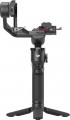 | 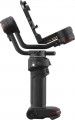 |
|---|---|---|
| DJI RS 3 Mini | Zhiyun Weebill 3 | |
| Compare prices 6 | Compare prices 1 | |
| TOP sellers | ||
1/4" connector at the end of the handle. Remote shutter control button (Bluetooth or with a wired camera connection). 3rd generation RS Stabilization algorithm. Support for vertical shooting. 1.4" color touch screen display. 50% lighter than RS 3 Pro and 40% lighter than RS 3. Includes a NATO port for connecting holders, lighting and other accessories. | Built-in 0.96 inch OLED screen. The battery supports Power Delivery fast charging (100% in 120 minutes) with a maximum runtime of up to 21 hours on a single charge. Built-in stage lighting with adjustable temperature. Built-in microphone. Carrying case, freehand handle and hand rest are not included in the basic package (only in Combo). | |
| Type | for camera | for camera |
| Display |  | |
| In box | quick release plate tripod stand | quick release plate tripod stand |
Gimbal specifications | ||
| Max. load | 2 kg | 3.3 kg |
| Rotation angle | 360° | 360° |
| Tilt angle | -10° +210° | -130° +180° |
| Bank angle | -95° +240° | -280° +60° |
| Max. controlled speed | 360 °/sec | |
Battery | ||
| Battery model | HB7 | 3x18650 |
| Capacity | 2450 mAh | 2600 mAh |
| Battery life | 10 h | 21 h |
Shooting features | ||
| Camera control | joystick | joystick |
| Functions | camera position fixing axis lock control wheel | camera position fixing axis lock control wheel |
| Shooting modes | Time lapse sports mode autopanorama tracking mode inversion mode | Time lapse selfie mode sports mode tracking mode inversion mode |
General | ||
| Connection | Bluetooth | Wi-Fi Bluetooth |
| Folding | | |
| Mechanical axis lock | | |
| Dimensions (folded) | 323x195x98 mm | 342x206.5x72.5 mm |
| Weight (without handle) | 795 g | |
| Weight | 923 g | 1130 g |
| Added to E-Catalog | january 2023 | july 2022 |




Compare DJI RS 3 Mini and Zhiyun Weebill 3
Comparing the DJI RS 3 Mini and Zhiyun Weebill 3, several key differences can be identified. The RS 3 Mini supports a maximum load of 2 kg and features a 1.4" display with touch controls, while the Weebill 3 can handle up to 3.3 kg and is equipped with a 0.96" OLED screen. In terms of battery life, the Weebill 3 comes out ahead with 21 hours, whereas the RS 3 Mini works for up to 10 hours. Both stabilizers have similar camera control features and shooting modes, but the Weebill 3 offers a built-in light and microphone, which can be useful for vloggers. Meanwhile, the RS 3 Mini is lighter and more compact, making it convenient to carry. The choice between them depends on your load and functionality needs.
Price comparison
You may be interested in
My comparisons
DJI RS 3 Mini often compared


Glossary
Max. load
The maximum weight that the stabiliser is designed to carry.
This is the maximum weight of the camera with all accessories allowed for this model.
This is the maximum weight of the camera with all accessories allowed for this model.
Tilt angle
The range of forward-backwards tilt angles relative to the vertical position supported by the stabiliser.
It can be written in different ways.
The simplest option is when one angle value is indicated in the characteristics. This may mean that the camera can deviate from the neutral position in both directions by the same angle, which is half the range.
Another option is used when the angles of tilt forward and backward are not the same. In such cases, the horizontal position of the camera on a vertical steadicam is taken as zero, the “-” sign indicates the maximum angle of camera deflection back, lens up, and the “+” sign — forward, lens down.
It can be written in different ways.
The simplest option is when one angle value is indicated in the characteristics. This may mean that the camera can deviate from the neutral position in both directions by the same angle, which is half the range.
Another option is used when the angles of tilt forward and backward are not the same. In such cases, the horizontal position of the camera on a vertical steadicam is taken as zero, the “-” sign indicates the maximum angle of camera deflection back, lens up, and the “+” sign — forward, lens down.
Bank angle
The range of roll angles (to the side) supported by the stabiliser.
Can be recorded in two ways (See "Tilt angle")
Can be recorded in two ways (See "Tilt angle")
Max. controlled speed
The maximum controlled speed supported by the stabiliser is, in fact, the highest speed of rotation of the camera along one axis or another, provided by the device. This is the maximum rotation speed of the entire structure, at which the stabiliser automation can provide effective stabilisation along the corresponding axis (that is, keep the camera stationary).
This item is directly related to the purpose of the stabiliser — for shooting while hiking or cycling on flat terrain, a high stabilization speed is hardly necessary, but during surfing, acrobatic aerobatics and other similar activities, the “slow” stabiliser often turns out to be ineffective.
This item is directly related to the purpose of the stabiliser — for shooting while hiking or cycling on flat terrain, a high stabilization speed is hardly necessary, but during surfing, acrobatic aerobatics and other similar activities, the “slow” stabiliser often turns out to be ineffective.
Battery model
Model of the battery used in the stabiliser. This information is not very important when choosing: if you wish, knowing the battery model, you can find detailed information about it. However, the key characteristics of the battery are usually given in general information about the stabiliser. Nevertheless, model information can be useful if you plan to purchase an additional battery, or if you already have a battery and you need to evaluate its compatibility with the device.
Capacity
The capacity of the battery used in the stabiliser.
In theory, a higher capacity allows you to work longer without recharging, but the battery life of the stabiliser also depends on its power consumption. So, only models with similar performance characteristics can be compared with each other according to this indicator; and when choosing, it is better to focus not on the capacity, but on the directly claimed battery life.
In theory, a higher capacity allows you to work longer without recharging, but the battery life of the stabiliser also depends on its power consumption. So, only models with similar performance characteristics can be compared with each other according to this indicator; and when choosing, it is better to focus not on the capacity, but on the directly claimed battery life.
Battery life
The maximum length of time the device will work before it needs its battery to be recharged. It is worth considering that the manufacturer indicates the maximum time, which does not correspond to real indicators due to the conditions and intensity of use.
Shooting modes
— Time lapse. Shooting video in time lapse mode involves a very low frame rate (one frame every few seconds, or even minutes). In the completed video, the effect of fast movement is achieved (for example, the day from sunrise to sunset fits in just a few minutes). However, this is the general principle of time lapse; but the specific ways of its implementation may be different depending on the specific model of the stabiliser.
- Selfie mode. A separate mode for shooting selfies. This function can be implemented in different ways, depending on the purpose of the device. It is aimed at filming himself and the immediate environment of the operator.
- Sports mode. The mode is designed for high-quality shooting of dynamic scenes in motion. In sports mode, the stabiliser automatically compensates for frame deviations from the reference location, while the motor runs at the highest possible speed.
- Panorama. In this shooting mode, the camera attached to the device automatically rotates around its axis, taking a series of shots, from which the panoramic image is then “glued together”. Most often, this function involves the creation of horizontal panoramas. However, camera movement in the vertical plane can also be provided.
— Tracking mode. Automatic tracking of a...certain object by pointing the camera so that the shooting target is constantly in the centre of the image, or at least in the frame. The subject for tracking is set by the stabiliser operator.
— Inversion mode. This mode allows you to turn the device upside down, retaining all its functions and camera position. It will come in handy when shooting from atypical angles (for example, from the ground).
- Selfie mode. A separate mode for shooting selfies. This function can be implemented in different ways, depending on the purpose of the device. It is aimed at filming himself and the immediate environment of the operator.
- Sports mode. The mode is designed for high-quality shooting of dynamic scenes in motion. In sports mode, the stabiliser automatically compensates for frame deviations from the reference location, while the motor runs at the highest possible speed.
- Panorama. In this shooting mode, the camera attached to the device automatically rotates around its axis, taking a series of shots, from which the panoramic image is then “glued together”. Most often, this function involves the creation of horizontal panoramas. However, camera movement in the vertical plane can also be provided.
— Tracking mode. Automatic tracking of a...certain object by pointing the camera so that the shooting target is constantly in the centre of the image, or at least in the frame. The subject for tracking is set by the stabiliser operator.
— Inversion mode. This mode allows you to turn the device upside down, retaining all its functions and camera position. It will come in handy when shooting from atypical angles (for example, from the ground).
Connection
There are two main types of connection in modern stabilisers: Wi-Fi(more precisely, Wi-Fi Direct — for direct communication between devices) and Bluetooth. Despite the difference from a technical point of view, in this case, these standards are very similar. First, they are both wireless. Secondly, both are used for direct connection with devices installed on the stabiliser — smartphones, action cameras, etc. (for more details, see "Features"). Thirdly, the specific functions of such a connection may be different, they should be specified separately for each model. However, such functions usually include at least control over the recording process (start/pause video recording, capture photos). So the main selection criterion for this indicator is what technology the connected gadget supports — Wi-Fi or Bluetooth.
Separately, we note that there are stabilisers that support both standards at once — these are mainly expensive professional models for cameras (see "Features"), where Wi-Fi is used to transfer video to an external screen, and Bluetooth is used for basic remote control.
Separately, we note that there are stabilisers that support both standards at once — these are mainly expensive professional models for cameras (see "Features"), where Wi-Fi is used to transfer video to an external screen, and Bluetooth is used for basic remote control.