
Comparison Insta360 X4 vs GoPro HERO11
Add to comparison | 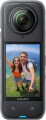 | 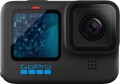 |
|---|---|---|
| Insta360 X4 | GoPro HERO11 | |
| Compare prices 20 | Compare prices 2 | |
| User reviews | ||
| TOP sellers | ||
360° shooting with Active HDR support. Selfie mode Me mode with a frequency of 60 fps and focus on the operator (you need a selfie stick). Compared to the previous generation, the resolution for 360° shooting and autonomy have been increased. Use of AI to reduce noise and improve video quality, gesture control. | Enhanced 27MP (8:7 aspect ratio) sensor with advanced digital image stabilization. Horizon Lock feature. Ability to shoot in 10-bit color. Compatible with previous generation accessories. Improved battery by 38% compared to the included HERO10 battery. | |
| Product type | 360° camera | action camera |
| Body type | vertical | conventional |
| Thread 1/4" (for tripod) |  |  |
| Dust-, moisture-proof camera | IPX8 | IPX8 |
Filming | ||
| Full HD (1080p) | 1920x1080 px 60 fps | 1920x1080 px 60 fps |
| Quad HD | 2720x1530 px 60 fps | 2720x1530 px 60 fps |
| Ultra HD (4K) | 3840x2160 px 60 fps | 3840x2160 px 60 fps |
| Shooting above 4K | 7680x3840 px 30 fps | 5312x2988 px 60 fps |
| Slow motion | 120 fps | 240 fps |
| Digital stabilization | | |
| Sound recording | | |
| Noise cancelation | | |
| Microphones | 4 | |
| Megapixels | 72 | 27 |
| Sensor | 1/2" | 1/1.9" |
| Aperture | f/1.9 | f/2.8 |
| Photo resolution | 5888x2944 px | |
| Capabilities | serial photo shoot one click recording online streaming cyclic recording time lapse photo panoramas night shooting | photo during video serial photo shoot one click recording online streaming time lapse night shooting |
Features | ||
| Display | 2.29 " touch | 2.27 " TFT touch |
| Front screen | 1.4 " | |
| Connection | Wi-Fi 5 (802.11ac) Bluetooth USB-C | GPS Wi-Fi 5 (802.11ac) Bluetooth USB-C microphone connection |
| Speaker | | |
| Voice control | | |
| Max. memory card capacity | 1024 GB | 256 GB |
Battery | ||
| Type | removable | removable |
| Battery model | GoPro Enduro | |
| Capacity | 2290 mAh | 1720 mAh |
| Recording time | up to 135 min | |
General | ||
| In box | helmet mount bicycle / moto handlebar | |
| Dimensions | 123.6x46x37.6 mm | 71.8x50.8x33.6 mm |
| Weight | 203 g | 127 g |
| Color | ||
| Added to E-Catalog | april 2024 | september 2022 |




Compare Insta360 X4 and GoPro HERO11
Price comparison
You may be interested in
My comparisons
Insta360 X4 often compared


GoPro HERO11 often compared


Glossary
Product type
— Action camera. In other words, all models that are not panoramic or 360° cameras (see below). Note that in some models, the viewing angle can be 180 ° or even more. The difference from panoramic cameras in such cases is that action cameras do not shoot panoramas.
— Panoramic camera. A type of action camera designed for shooting panoramic photos and videos. A distinctive feature of this type of camera is the fisheye lens protruding from the body. Such a lens completely covers the hemisphere in front of it, which provides interesting additional features: for example, by installing such a camera with the lens up under the windscreen of a car, you can capture both what is happening on the road and the behaviour of the driver and passengers at the same time. When viewing ready-made panoramas, the user can shift the image at will, directing his gaze in any direction within this hemisphere (this applies to both photos and videos); also similar photos and videos are well suited for viewing in virtual reality glasses.
— 360° camera. Further development of the idea of the panoramic cameras described above: devices that have several lenses and can cover the surrounding space completely or almost completely, 360° along any axis. Most 360° cameras are equipped with two lenses on opposite sides of the body. However, there are models with 4 and even 6 lenses (see "...Lenses" for more details). Anyway, cameras of this type provide maximum coverage but are not cheap.
— Panoramic camera. A type of action camera designed for shooting panoramic photos and videos. A distinctive feature of this type of camera is the fisheye lens protruding from the body. Such a lens completely covers the hemisphere in front of it, which provides interesting additional features: for example, by installing such a camera with the lens up under the windscreen of a car, you can capture both what is happening on the road and the behaviour of the driver and passengers at the same time. When viewing ready-made panoramas, the user can shift the image at will, directing his gaze in any direction within this hemisphere (this applies to both photos and videos); also similar photos and videos are well suited for viewing in virtual reality glasses.
— 360° camera. Further development of the idea of the panoramic cameras described above: devices that have several lenses and can cover the surrounding space completely or almost completely, 360° along any axis. Most 360° cameras are equipped with two lenses on opposite sides of the body. However, there are models with 4 and even 6 lenses (see "...Lenses" for more details). Anyway, cameras of this type provide maximum coverage but are not cheap.
Body type
— Oblong. Oblong action cameras — they look like an elongated rectangle (parallelepiped) or a cylinder, while the lens is placed on one of the narrow ends. This is the difference between the oblong cameras and the conventional ones described below. This layout is convenient primarily because it allows you to hold the camera in your hand securely. On the other hand, the control panel and display during shooting are often turned away from the user, which can create some inconvenience. However, this can be offset by the use of folding displays and other similar features; and in some situations, the side display and controls even prove to be an advantage.
— Vertical. Oblong action cameras that are stretched up and have a lens at the top. Such models are very similar to chest cameras and can be used for such purposes. However, their main use is shooting yourself and holding it in your hand. It is for this purpose that the case is made elongated, which makes it convenient to cover it with your hand.
— Conventional. The camera body has the shape of a rectangle, but the lens is placed on its wide, frontal edge. Outwardly, such models are most similar to classic digital cameras. Some may have a fairly large display, placed on the opposite side of the lens, as in the same photo cameras, which allows the user to see the shooting scene in real time. However, the l...ocation of the lens, usually, does not affect the technical specs of the camera itself, and therefore both conventional and oblong models can provide the same video quality.
— Cube. A fairly specific type of action camera, the body of which has the shape of a compact cube. Usually, such models are relatively small in size, but the size reduction, in turn, affects the video capabilities and overall functionality. For example, such models are extremely rarely equipped with displays (although many of them can be connected via Wi-Fi to a smartphone or tablet, which compensates for this disadvantage).
— Glasses with a camera. Devices in the form of sports glasses with a built-in camera. The lens of such a camera is usually located between the glasses lenses, less often on the side, based on one of the temples; during normal use, it constantly “looks” approximately in the same direction as the user himself. Also, the advantages of cameras of this type include accuracy and stealth. On the other hand, in glasses, the additional electronic filling must be very tiny, which makes it difficult to use advanced optics and severely limits the battery capacity. And even with this in mind, such devices are heavier and bulkier than ordinary sports glasses. Another disadvantage is that the camera and frame with lenses cannot be matched separately — as a result, a model with a suitable camera may not be suitable due to the size or style of the glasses, and vice versa.
— Camera mask. A protective mask with a built-in camera. Note that such masks can have different specializations — for scuba diving, motocross, skiing, etc.; these details must be clarified before purchase. However, the lens in such devices is usually located in the middle of the forehead, so the camera takes POV photos and video. The main disadvantage of such devices is that when choosing, you need to take into account both the technical specs of the camera and the purpose and convenience of wearing the mask. In other words, a good camera can be built into an inappropriate mask, and vice versa.
— Camera with a clip. Action cameras fall into this category, for which a clip-on mount is standard. Many of them can be additionally equipped with other mounts, but primarily designed for this type of use and may not be the best purchase for extreme video shooting. On the other hand, such a mount is quite versatile, since it allows you to attach the camera to almost any piece of equipment (backpack strap, unloading belt, belt, etc.).
— Sphere. The shape of the body is found mainly in panoramic and 360° cameras (see "Product type") — it is in such devices that the spherical body is often the most convenient. In the case of conventional action cameras, "sphere" usually means a cylindrical body with a lens on a flat end; such cameras are similar to conventional cameras (see above) and do not have fundamental differences from them.
— Vertical. Oblong action cameras that are stretched up and have a lens at the top. Such models are very similar to chest cameras and can be used for such purposes. However, their main use is shooting yourself and holding it in your hand. It is for this purpose that the case is made elongated, which makes it convenient to cover it with your hand.
— Conventional. The camera body has the shape of a rectangle, but the lens is placed on its wide, frontal edge. Outwardly, such models are most similar to classic digital cameras. Some may have a fairly large display, placed on the opposite side of the lens, as in the same photo cameras, which allows the user to see the shooting scene in real time. However, the l...ocation of the lens, usually, does not affect the technical specs of the camera itself, and therefore both conventional and oblong models can provide the same video quality.
— Cube. A fairly specific type of action camera, the body of which has the shape of a compact cube. Usually, such models are relatively small in size, but the size reduction, in turn, affects the video capabilities and overall functionality. For example, such models are extremely rarely equipped with displays (although many of them can be connected via Wi-Fi to a smartphone or tablet, which compensates for this disadvantage).
— Glasses with a camera. Devices in the form of sports glasses with a built-in camera. The lens of such a camera is usually located between the glasses lenses, less often on the side, based on one of the temples; during normal use, it constantly “looks” approximately in the same direction as the user himself. Also, the advantages of cameras of this type include accuracy and stealth. On the other hand, in glasses, the additional electronic filling must be very tiny, which makes it difficult to use advanced optics and severely limits the battery capacity. And even with this in mind, such devices are heavier and bulkier than ordinary sports glasses. Another disadvantage is that the camera and frame with lenses cannot be matched separately — as a result, a model with a suitable camera may not be suitable due to the size or style of the glasses, and vice versa.
— Camera mask. A protective mask with a built-in camera. Note that such masks can have different specializations — for scuba diving, motocross, skiing, etc.; these details must be clarified before purchase. However, the lens in such devices is usually located in the middle of the forehead, so the camera takes POV photos and video. The main disadvantage of such devices is that when choosing, you need to take into account both the technical specs of the camera and the purpose and convenience of wearing the mask. In other words, a good camera can be built into an inappropriate mask, and vice versa.
— Camera with a clip. Action cameras fall into this category, for which a clip-on mount is standard. Many of them can be additionally equipped with other mounts, but primarily designed for this type of use and may not be the best purchase for extreme video shooting. On the other hand, such a mount is quite versatile, since it allows you to attach the camera to almost any piece of equipment (backpack strap, unloading belt, belt, etc.).
— Sphere. The shape of the body is found mainly in panoramic and 360° cameras (see "Product type") — it is in such devices that the spherical body is often the most convenient. In the case of conventional action cameras, "sphere" usually means a cylindrical body with a lens on a flat end; such cameras are similar to conventional cameras (see above) and do not have fundamental differences from them.
Thread 1/4" (for tripod)
The presence of a 1/4" threaded socket on the camera body. It is this size that is standard for modern tripods and is used in most of these devices. So this feature allows you to mount the camera on a tripod without using adapters and other additional equipment.
Shooting above 4K
The maximum resolution and frame rate of video taken by the camera in a standard higher than 4K. Since such formats have not yet become widespread, the number of devices with the corresponding resolution is not so large.
Slow motion
Frame rate supported by the camera when shooting in slow motion.
In general, such shooting is called “high-speed” because it is carried out at an increased frame rate (more than 60 fps). As a result, when played back at normal speed (60 fps and below), the video looks slow hence the name. This kind of slow-motion can be used just for fun, as an artistic technique, and even for scientific purposes — to capture movement that is too fast for the human eye. In any case, the higher the slow-mo frame rate, the more you can slow down the video and the more advanced the camera is in this regard. On the other hand, the higher the frame rate, the more performant the graphics part should be; and this, in turn, affects the price of the device, sometimes quite noticeably.
We also note that slow-mo shooting may be available only at certain resolutions, not always at maximum. These points can be directly specified in the specs of the action camera.
In general, such shooting is called “high-speed” because it is carried out at an increased frame rate (more than 60 fps). As a result, when played back at normal speed (60 fps and below), the video looks slow hence the name. This kind of slow-motion can be used just for fun, as an artistic technique, and even for scientific purposes — to capture movement that is too fast for the human eye. In any case, the higher the slow-mo frame rate, the more you can slow down the video and the more advanced the camera is in this regard. On the other hand, the higher the frame rate, the more performant the graphics part should be; and this, in turn, affects the price of the device, sometimes quite noticeably.
We also note that slow-mo shooting may be available only at certain resolutions, not always at maximum. These points can be directly specified in the specs of the action camera.
Microphones
The number of built-in microphones provided in the camera.
This parameter is indicated only for models that have more than one microphone. This design provides additional capabilities, but the range of these capabilities depends on the number of microphones and the features of a particular model. So, most often such devices have two microphones; this can be a pair for recording stereo sound, or one microphone can work to record sound, and the second one can act as a sensor for the noise reduction system (see above). A larger number - 3 or 4 microphones - is found mainly in 360-degree cameras (see “Product type”), where such equipment is used to record “surround” multi-channel sound.
This parameter is indicated only for models that have more than one microphone. This design provides additional capabilities, but the range of these capabilities depends on the number of microphones and the features of a particular model. So, most often such devices have two microphones; this can be a pair for recording stereo sound, or one microphone can work to record sound, and the second one can act as a sensor for the noise reduction system (see above). A larger number - 3 or 4 microphones - is found mainly in 360-degree cameras (see “Product type”), where such equipment is used to record “surround” multi-channel sound.
Megapixels
The number of megapixels in the action camera sensor, in other words, the resolution of this sensor(1 megapixel is 1 million photosensitive points).
There is an opinion that the higher the resolution, the better the image quality. It is true from the point of view that manufacturers are trying to install high-resolution sensors in advanced cameras. At the same time, there are no strict dependencies here, and from the technical point of view, the number of megapixels determines only the maximum image resolution that can be captured using this sensor. The quality of this picture will depend both on several features of the sensor itself (size, type, special design solutions), and the specs of the camera. So when choosing, you should focus not so much on the resolution of the image sensor, but on the general class of the camera and reviews with examples of footage.
There is an opinion that the higher the resolution, the better the image quality. It is true from the point of view that manufacturers are trying to install high-resolution sensors in advanced cameras. At the same time, there are no strict dependencies here, and from the technical point of view, the number of megapixels determines only the maximum image resolution that can be captured using this sensor. The quality of this picture will depend both on several features of the sensor itself (size, type, special design solutions), and the specs of the camera. So when choosing, you should focus not so much on the resolution of the image sensor, but on the general class of the camera and reviews with examples of footage.
Sensor
Additional information regarding the sensor installed in the lens. This item can specify both the diagonal size (in inches) and the sensor model, and sometimes both parameters at once. Anyway, such data is provided only if the device is equipped with a high-class image sensor. With the model, everything is quite simple: knowing the name of the sensor, you can find detailed data on it.
The diagonal of the image sensor is traditionally indicated in fractions of an inch — accordingly, for example, a 1/2.3" sensor will be larger than 1/2.6". Larger sensors are considered more advanced, as they allow for better image quality at the same resolution. This is because due to the larger sensor area, each pixel is also larger and receives more light, which improves sensitivity and reduces noise. Of course, the actual image quality will also depend on several other parameters, but in general, a larger sensor size usually means a more advanced camera.
The diagonal of the image sensor is traditionally indicated in fractions of an inch — accordingly, for example, a 1/2.3" sensor will be larger than 1/2.6". Larger sensors are considered more advanced, as they allow for better image quality at the same resolution. This is because due to the larger sensor area, each pixel is also larger and receives more light, which improves sensitivity and reduces noise. Of course, the actual image quality will also depend on several other parameters, but in general, a larger sensor size usually means a more advanced camera.
Aperture
Action camera optics aperture. This characteristic determines how much the lens weakens the light flux passing through it. This parameter is indicated by a fraction, for example, f/2.8. The smaller the number in such a designation, the higher the aperture ratio and the more light the lens can transmit. A high aperture ratio is important, first of all, when shooting in low light conditions: it allows you to capture an image without “raising” the sensitivity of the matrix and without creating additional artefacts in the form of noise, and in photo mode, it also allows you to work with shorter shutter speeds (which is useful for dynamic scenes). In addition, the higher the aperture ratio, the lower the depth of field and the easier it is to get a blurred background. Note that for simple shooting scenarios, this parameter does not play a decisive role, but for professional tasks, it can be very significant.