
Comparison Soundcore V20i vs Soundcore V30i
Add to comparison | 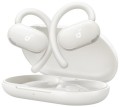 | 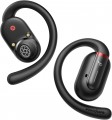 |
|---|---|---|
| Soundcore V20i | Soundcore V30i | |
| Compare prices 4 | Compare prices 2 | |
| TOP sellers | ||
Long battery life, customization using proprietary application. | Long battery life, customization using proprietary application. | |
Connection and design | ||
| Features | for active sports | for active sports |
| Design | open (open ear) behind the ear | open (open ear) behind the ear |
| Connection type | wireless | wireless |
| Connection | Bluetooth v5.3 | Bluetooth v5.3 |
| Range | 10 m | 10 m |
Specs | ||
| Frequency range | 20 – 20000 Hz | 20 – 20000 Hz |
| Emitter type | dynamic | dynamic |
Microphone specs | ||
| Microphone | built into the case | built into the case |
| Number of microphones | 2 pcs in each earphone | |
| Microphone noise canceling | ENC | ENC |
Features | ||
| Mobile app |  |  |
| Bass Boost | | |
| Multipoint | | |
| Codec support | AAC | AAC |
Power supply | ||
| Power source | battery | battery |
| Operating time (music) | 8 h | 12 h |
| Operating time (with case) | 36 h | 36 h |
| Fast charge | 10 minutes for 3 hours of work | |
| Charging port | USB-C | USB-C |
General | ||
| Touch control | | |
| Waterproof | IP55 | IPX5 |
| In box | charging case | charging case |
| Color | ||
| Added to E-Catalog | october 2024 | march 2024 |



Compare Soundcore V20i and V30i
Headphones Soundcore V20i and V30i have similar characteristics, but there are a few key differences. Both devices are designed for active sports and use wireless connectivity with a range of 10 meters. The V20i offers a Bass Boost feature and Multipoint support, whereas the V30i does not have these features. The V20i has a battery life of 8 hours (36 hours with the case), while the V30i provides 12 hours (also 36 hours with the case) and supports fast charging — 10 minutes for 3 hours of use. The V20i has a water resistance rating of IP55, while the V30i is rated at IPX5, making the V20i more resistant to moisture. Both headphones feature touch controls and built-in microphones with noise cancellation.
Price comparison
You may be interested in
Glossary
Number of microphones
The number of microphones in headphones indicates how many separate microphone capsules are used in the headset for voice transmission and sound processing algorithms. In simple models, there is one microphone, which is sufficient for occasional calls in a quiet room. More advanced TWS, office, and gaming headsets have 2–3 microphones per earbud: some "listen" to the voice, others to the surrounding noise, so the electronics can better eliminate interference and make speech clearer to the listener. A large number of microphones is especially important during conversations outdoors, on public transport, in an open-plan office, and for features like wind noise reduction or precise sound direction detection in gaming models. For instance, a headset with multiple microphones will transmit a voice much better during a conference call or online gaming than basic headphones with one microphone, though it may be slightly more expensive.
Mobile app
The ability to operate the functions and settings of headphones through a mobile application for a smartphone or tablet. Communication between the device and gadgets is usually carried out via the Bluetooth wireless protocol. The mobile application may provide tools for flexible sound settings (equalizer, bass boost, etc.), switching noise reduction and transparency modes, reassigning buttons and gestures, finding lost headphones, etc. Also, the ability to update the headphone firmware is often implemented through the mobile application.
Bass Boost
Bass boost function for powerful and rich bass. Often implemented as a single button, with which you can actually "turn the bass on and off." Bass Boost is more convenient than adjusting low frequencies with an equalizer; in addition, various special technologies can be used to enhance the bass.
Multipoint
A technology used in Bluetooth models (see "Connection") that allows the headphones to connect to multiple devices at the same time. Thanks to this, you can, for example, listen to music from a laptop, and when a call comes in on a mobile phone, switch the headphones to a conversation. This technology has its own characteristics for different manufacturers, and therefore, if the multipoint function is critical for you, you should separately clarify the details of its operation in the selected model.
Operating time (music)
The declared operating time of headphones with autonomous power supply (see above) when listening to music on a single battery charge or a set of batteries.
As a rule, the characteristics indicate a certain average operating time in music listening mode, for standard conditions; in practice, it will depend on the intensity of use, volume level and other operating parameters, and in models with replaceable batteries - also on the quality of specific batteries. However, based on the stated time, you can fairly reliably assess the autonomy of the selected headphones and compare them with other models. As for specific values, relatively “short-lived” devices have a battery life of up to 8 hours, a figure of 8 – 12 hours can be called quite good, 12 – 20 hours – very good, and in the most “long-lasting” headphones the operating time can exceed 20 hours.
As a rule, the characteristics indicate a certain average operating time in music listening mode, for standard conditions; in practice, it will depend on the intensity of use, volume level and other operating parameters, and in models with replaceable batteries - also on the quality of specific batteries. However, based on the stated time, you can fairly reliably assess the autonomy of the selected headphones and compare them with other models. As for specific values, relatively “short-lived” devices have a battery life of up to 8 hours, a figure of 8 – 12 hours can be called quite good, 12 – 20 hours – very good, and in the most “long-lasting” headphones the operating time can exceed 20 hours.
Fast charge
The function reduces the charging time of the headphones compared to the duration of the standard procedure. For this, increased voltage and / or current strength is used, as well as a special "smart" process control. The capabilities and features of fast charging may vary depending on the specific implementation of the technology. Most often, accelerated charging implies the possibility of literally 5-10 minutes. extend the battery life of the headphones in the accompanying charging case by at least one hour of additional playback.
Waterproof
The headphones have special protection against moisture and dust; also, this clause may specify the level of such protection according to the IP standard.
Not all waterproof headphones allow complete immersion in water, but in this case this is usually not required — water protection is mainly intended for safe operation in the rain (or during sports activities when the user sweats a lot). But the specific degree of such protection in different models can vary markedly, and here it is most convenient to evaluate it by IP marking. This marking consists of the letters IP and two numbers; moisture resistance is described by the second, last digit, and in modern headphones you can find the following options:
— 2. Protection against vertical drops of water in the working position and when the device deviates up to 15 ° from this position. The minimum indicator that allows us to talk about resistance to rain (however, without strong winds).
— 3. Protection against splashes falling vertically or at an angle up to 60° from the vertical. Provides resistance to moderate rain and strong winds.
— 4. Splash proof from any direction. With such headphones, rain of medium intensity is not terrible, regardless of the strength of the wind.
— 5. Protected against water jets from any direction. Allows you to transfer already a combination of strong wind w...ith a downpour.
— 6. Protection against strong water jets. It is considered the minimum level that allows you to swim safely (with your head above the surface of the water) wearing headphones.
— 7. Possibility of short-term (less than half an hour) immersion under water to a shallow depth (less than 1 m); continuous operation in immersed mode is not expected. In such headphones, you can no longer only swim, but also dive under water to a shallow depth (plunge with your head), but they are not suitable for full-fledged diving.
— 8. The highest level of water protection actually found in modern headphones (although theoretically there is a higher level, level 9). Allows long-term (more than 30 minutes) immersion under water to a depth of 1 m or more, and even permanent work in a submerged position. And although the latter is not particularly relevant for headphones, however, this degree of protection makes it possible to swim and even dive safely. However, note that specific restrictions on use in such headphones may be different, they must be clarified according to the instructions.
As for protection against dust (it is indicated by the first digit in the IP marking), its level in modern “ears” is indicated mainly in cases where it corresponds to level 4 (protection against objects 1 mm thick or more), 5 (allowed a small amount of dust that does not affect the operation of the device) or 6 (complete protection against dust). Also note that this number can be replaced by the letter "X" — for example, IPX7; this means that no official dust certification has been carried out for this model. However, this resistance in many cases can be assessed by the degree of protection against moisture: for example, devices with a moisture resistance of 7 or 8, by definition, do not let water through — which means that they are also not afraid of dust.
Not all waterproof headphones allow complete immersion in water, but in this case this is usually not required — water protection is mainly intended for safe operation in the rain (or during sports activities when the user sweats a lot). But the specific degree of such protection in different models can vary markedly, and here it is most convenient to evaluate it by IP marking. This marking consists of the letters IP and two numbers; moisture resistance is described by the second, last digit, and in modern headphones you can find the following options:
— 2. Protection against vertical drops of water in the working position and when the device deviates up to 15 ° from this position. The minimum indicator that allows us to talk about resistance to rain (however, without strong winds).
— 3. Protection against splashes falling vertically or at an angle up to 60° from the vertical. Provides resistance to moderate rain and strong winds.
— 4. Splash proof from any direction. With such headphones, rain of medium intensity is not terrible, regardless of the strength of the wind.
— 5. Protected against water jets from any direction. Allows you to transfer already a combination of strong wind w...ith a downpour.
— 6. Protection against strong water jets. It is considered the minimum level that allows you to swim safely (with your head above the surface of the water) wearing headphones.
— 7. Possibility of short-term (less than half an hour) immersion under water to a shallow depth (less than 1 m); continuous operation in immersed mode is not expected. In such headphones, you can no longer only swim, but also dive under water to a shallow depth (plunge with your head), but they are not suitable for full-fledged diving.
— 8. The highest level of water protection actually found in modern headphones (although theoretically there is a higher level, level 9). Allows long-term (more than 30 minutes) immersion under water to a depth of 1 m or more, and even permanent work in a submerged position. And although the latter is not particularly relevant for headphones, however, this degree of protection makes it possible to swim and even dive safely. However, note that specific restrictions on use in such headphones may be different, they must be clarified according to the instructions.
As for protection against dust (it is indicated by the first digit in the IP marking), its level in modern “ears” is indicated mainly in cases where it corresponds to level 4 (protection against objects 1 mm thick or more), 5 (allowed a small amount of dust that does not affect the operation of the device) or 6 (complete protection against dust). Also note that this number can be replaced by the letter "X" — for example, IPX7; this means that no official dust certification has been carried out for this model. However, this resistance in many cases can be assessed by the degree of protection against moisture: for example, devices with a moisture resistance of 7 or 8, by definition, do not let water through — which means that they are also not afraid of dust.