
Comparison Huawei Y6 Pro 16 GB vs Huawei P8 Lite 16 GB
Add to comparison | 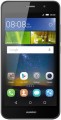 |  |
|---|---|---|
| Huawei Y6 Pro 16 GB | Huawei P8 Lite 16 GB | |
from $146.67 up to $167.96 | Compare prices 1 | |
| User reviews | ||
| TOP sellers | ||
The volume rocker can play the role of a control button for the main camera (13 MP). 5-megapixel front camera, complemented by a set of selfie tools. The microSD card is installed in the slot for the second SIM. | ||
| Operating system | Android 5.1 | Android 6.0 |
Display | ||
| Main display | 5 " 1280х720 (16:9) 294 ppi IPS | 5 " 1280х720 (16:9) 294 ppi IPS |
| Display-to-body ratio | 67 % | 68 % |
Hardware | ||
| CPU frequency | 1.3 GHz | 1.2 GHz |
| CPU cores | 4 | 8 |
| RAM | 2 GB | 2 GB |
| Memory storage | 16 GB | 16 GB |
| Memory card slot | microSD | microSD |
| Max. memory card storage | 32 GB | 128 GB |
Test results | ||
| AnTuTu Benchmark Test | 24 000 points | |
Main camera | ||
| Main lens | 13 MP | 13 MP |
| Full HD (1080p) | + | + |
| Flash |  | |
Front camera | ||
| Main selfie lens | 5 MP | 5 MP |
Connections and communication | ||
| Cellular technology | 4G (LTE) | 4G (LTE) |
| SIM card type | micro-SIM | micro-SIM |
| SIM slots | 2 SIM | SIM + SIM/microSD |
| Connectivity technology | Wi-Fi 4 (802.11n) Bluetooth v4.0 | Wi-Fi 4 (802.11n) Bluetooth v4.0 NFC |
| Inputs & outputs | microUSB mini-jack (3.5 mm) | microUSB mini-jack (3.5 mm) |
Features and navigation | ||
| Features | FM receiver | noise cancellation |
| Navigation | aGPS GPS module GLONASS | aGPS GPS module GLONASS digital compass |
Power supply | ||
| Battery capacity | 4000 mAh | 2200 mAh |
| Battery type | Li-ion (graphite) | Li-ion (graphite) |
General | ||
| Bezel/back cover material | plastic/plastic | plastic/plastic |
| Dimensions (HxWxD) | 143.1x71.8x9.7 mm | 143x70.6x7.7 mm |
| Weight | 160 g | 131 g |
| Added to E-Catalog | april 2016 | may 2015 |



Compare Huawei Y6 Pro and P8 Lite
When comparing the Huawei Y6 Pro and Huawei P8 Lite, it's worth noting that both smartphones have similar features, such as a 5-inch screen with a resolution of 1280x720 and 2 GB of RAM. However, the P8 Lite runs on the newer Android 6.0 version and has an 8-core HiSilicon Kirin 620 processor, which provides better performance compared to the 4-core MediaTek MT6735P in the Y6 Pro. Users note that the P8 Lite has a stylish design and a good camera, but suffers from battery issues and call reception problems. Meanwhile, the Y6 Pro is praised for its excellent battery life and sound, but there are also mentions of performance and connectivity stability issues. Both devices have their pros and cons, but the P8 Lite might be preferable for those seeking a more powerful and modern smartphone.
Price comparison
You may be interested in
My comparisons
Huawei Y6 Pro often compared


Huawei P8 Lite often compared
Glossary
Operating system
The term “operating system” in this case refers to all types of firmware — both full-fledged operating systems such as iOS and Android used in smartphones, and software platforms for regular phones (non-smartphones). The main difference between these two categories is that a full-fledged OS initially has a more extensive set of functions and also allows users to install and remove various applications — from games and social media clients to specialized tools such as photo and video editors.
Among modern smartphones, two operating systems are the most widespread — Android and iOS. Here is a more detailed description of each:
— Android. A free open-source OS by Google. It is used by almost all modern manufacturers except Apple; it is available on the market in numerous versions — in particular, the current ones are Android 14, Android 15, Android 16, Android 17. It should be noted that one OS version may have been installed when the device was released, while by the time of sale it may have been updated to a newer one. Functionally, this OS is notable primarily for full multitasking support and an extensive selection of available apps — in both respects, it surpasses iOS; on the other hand, Android apps generally have somewhat lower quality due to less stri...ngent requirements. Android initially has close integration with Google services — the Google Play app and content store, Gmail email, Google Drive cloud storage, etc.; however, exceptions to this rule are possible. Note that the latest versions of this OS can be found on the market both in their original form and in one of two specific editions:
— iOS. Apple's proprietary operating system, used only in this manufacturer's gadgets. The main advantages of iOS over Android are primarily careful optimization for specific devices (allowing good performance with relatively modest RAM capacities), overall ease and security of use, as well as high app quality. In addition, iOS updates are released regularly and are available for all devices (except clearly outdated ones that can no longer handle new system versions). On the other hand, this OS does not support multitasking and is as closed to the user as possible: in particular, apps can only be installed from the proprietary store, there is no access to the file system, and memory cards are not supported in principle.
— Harmony OS. A universal operating system by Huawei, also known as Hongmeng. It supports a wide range of devices: smart home ecosystem equipment, smartwatches, smartphones, and tablets. Harmony OS is a kind of overlay on top of Android without Google services. The app store for devices running Harmony OS is called AppGallery.
— Flyme OS. A modified version of the Android operating system used as the software platform for Meizu smartphones. The OneMind engine is responsible for OS stability. Flyme OS has no app menu, and all program icons are distributed across home screens. Distinctive features of the platform include advanced file management tools, the Aicy voice assistant, flexible mEngine vibration adjustment, Family Guardian parental control options, and a structured gallery with a convenient visual editor.
— Proprietary. This term most often refers to basic firmware installed in a regular phone (not a smartphone), usually a button phone. Such firmware has a more modest set of pre-installed programs than full-fledged operating systems; at best, this set can be expanded with universal Java-based mobile apps, while additional apps are often not supported at all. However, this cannot be called a disadvantage, given the specifics of traditional phone use.
Note that devices with other operating systems besides those described above can also be found on sale. However, most of these are either outdated models or devices with rare and uncommon types of firmware.
Among modern smartphones, two operating systems are the most widespread — Android and iOS. Here is a more detailed description of each:
— Android. A free open-source OS by Google. It is used by almost all modern manufacturers except Apple; it is available on the market in numerous versions — in particular, the current ones are Android 14, Android 15, Android 16, Android 17. It should be noted that one OS version may have been installed when the device was released, while by the time of sale it may have been updated to a newer one. Functionally, this OS is notable primarily for full multitasking support and an extensive selection of available apps — in both respects, it surpasses iOS; on the other hand, Android apps generally have somewhat lower quality due to less stri...ngent requirements. Android initially has close integration with Google services — the Google Play app and content store, Gmail email, Google Drive cloud storage, etc.; however, exceptions to this rule are possible. Note that the latest versions of this OS can be found on the market both in their original form and in one of two specific editions:
- - Go Edition. A modification of Android designed for affordable smartphones with “weak” hardware. Both the OS itself and standard apps (Assistant, Gmail, etc.) have been redesigned in this edition to ensure reliable operation even with low processing power. At the same time, developers have tried to preserve the functionality of full Android as much as possible — nevertheless, some specific features are still unavailable in Go Edition (for example, standard maps do not support turn-by-turn navigation, and compatibility with the Wear OS system on smartwatches is not provided).
- - HMS. An edition of Android used in Huawei smartphones. Due to US sanctions against China, this company cannot fully cooperate with Google — in particular, it cannot use Google services (Google Mobile Services — GMS) in its Android smartphones. HMS — Huawei Mobile Services — was introduced as a replacement. These services include a Huawei ID user identifier, the AppGallery app store, proprietary equivalents of Google's main services (assistant, browser, cloud storage, music/video, etc.), as well as tools for app developers.
- - Android 13. A popular operating system for mobile devices, the 13th version of which was released in 2022. No radical innovations were implemented in Android 13, but the OS introduced a number of useful features and changes. In particular, the Material You workspace design concept can now select primary colors from installed wallpapers or themes and apply them to icon display throughout the system. User data privacy has reached a new level — Android 13 allows configuring individual permissions and selecting specific images from the Gallery that an app can access. Users can choose the default interface language for each program. The system has also become more energy-efficient, while the clipboard and barcode scanner have been improved.
- - Android 13 Go. A lightweight version of the Android 13 operating system designed for installation on low-power smartphones. A distinctive feature of the OS is a special algorithm that optimizes the smartphone's processing power. The system also lacks some hardware-demanding functions. Android 13 Go introduced the Material You interface design concept, allowing the menu color scheme to be adapted to the installed wallpaper. The Go version inherited from the full Android 13 system the ability to grant apps permission to send notifications and the option to change the language for specific programs.
- - Android 14. An operating system for mobile devices released in 2023. Frankly, there are few system changes in the 14th version of Android, with the main focus placed on flexible interface customization. Among the new features, it is important to mention notification display via the flash or screen: a flashlight blinking pattern can now be set for each app, while a color palette for notifications can be selected for the screen. The operating system also introduced a useful option for adjusting screenshot capture, added a widget for displaying battery charge and a list of active connections, and implemented a system-level app cloning option. System fonts in the OS can be increased up to 200% of their standard size, with non-linear scaling — it is primarily applied to small text. Other improvements include enhanced system energy efficiency and cosmetic interface changes with more rounded elements.
- - Android 14 Go. A lightweight version of the Android 14 operating system for budget smartphones with limited hardware resources. The Go Edition distribution includes simplified standard apps while providing basic Android functionality with minimal performance and power consumption requirements. Despite its “lightweight” nature, Android 14 Go supports improved notifications, new controls, and privacy settings that debuted in the full 14th edition of Google's OS. However, smartphones with the lightweight Go version are not compatible with Wear OS smartwatches — this should be taken into account.
- - Android 15. The Android 15 operating system was released in 2024. Notable innovations include native support for satellite communication (for contacting emergency services or sending SOS signals), the ability to record and share only a specific app window rather than the entire screen, updated hardware extensions for camera control, enhanced control over messages, and flexible volume adjustment. The system has also traditionally received improved security features and increased energy efficiency.
- -Android 16. The 2025 version, where one of the main innovations is Live Updates dynamic notifications — they show delivery progress, trip status, or another process without requiring the app to be constantly opened. The system also automatically groups notifications from the same app, received an enhanced Advanced Protection mode, and improved hearing aid controls.
- -Android 17. The next generation of Android was officially released on June 16, 2026. The main focus is on multitasking: apps can be opened in floating Bubbles windows, quickly switched between, and expanded to full screen. It introduced improved screen recording with user reactions, an optimized gaming interface for foldable devices, and external controller button remapping. The system also received stricter access control for location and contacts, enhanced stolen smartphone locking, and memory management to improve stability and battery life.
— iOS. Apple's proprietary operating system, used only in this manufacturer's gadgets. The main advantages of iOS over Android are primarily careful optimization for specific devices (allowing good performance with relatively modest RAM capacities), overall ease and security of use, as well as high app quality. In addition, iOS updates are released regularly and are available for all devices (except clearly outdated ones that can no longer handle new system versions). On the other hand, this OS does not support multitasking and is as closed to the user as possible: in particular, apps can only be installed from the proprietary store, there is no access to the file system, and memory cards are not supported in principle.
— Harmony OS. A universal operating system by Huawei, also known as Hongmeng. It supports a wide range of devices: smart home ecosystem equipment, smartwatches, smartphones, and tablets. Harmony OS is a kind of overlay on top of Android without Google services. The app store for devices running Harmony OS is called AppGallery.
— Flyme OS. A modified version of the Android operating system used as the software platform for Meizu smartphones. The OneMind engine is responsible for OS stability. Flyme OS has no app menu, and all program icons are distributed across home screens. Distinctive features of the platform include advanced file management tools, the Aicy voice assistant, flexible mEngine vibration adjustment, Family Guardian parental control options, and a structured gallery with a convenient visual editor.
— Proprietary. This term most often refers to basic firmware installed in a regular phone (not a smartphone), usually a button phone. Such firmware has a more modest set of pre-installed programs than full-fledged operating systems; at best, this set can be expanded with universal Java-based mobile apps, while additional apps are often not supported at all. However, this cannot be called a disadvantage, given the specifics of traditional phone use.
Note that devices with other operating systems besides those described above can also be found on sale. However, most of these are either outdated models or devices with rare and uncommon types of firmware.
Display-to-body ratio
The ratio of the screen area to the total front panel area of the phone. Simply put, this spec describes how much of the front panel is occupied by the screen; the rest is the bezels.
This indicator is given exclusively for smartphones with touch screens — it is for them that it is most relevant. The larger the percentage of the body is occupied by the screen, the thinner are the bezels, the neater the smartphone looks and the more convenient it is to work with it with one hand. As for specific numbers, the average values are 80 – 85 %, the higher values allow us to talk about a thin bezel, and more than 90 % — about a “bezel less” design.
Separately, we note that this parameter has nothing to do with the aspect ratio of the screen. The aspect ratio describes only the display itself — its proportions, the ratio between the larger and smaller side of the rectangle.
This indicator is given exclusively for smartphones with touch screens — it is for them that it is most relevant. The larger the percentage of the body is occupied by the screen, the thinner are the bezels, the neater the smartphone looks and the more convenient it is to work with it with one hand. As for specific numbers, the average values are 80 – 85 %, the higher values allow us to talk about a thin bezel, and more than 90 % — about a “bezel less” design.
Separately, we note that this parameter has nothing to do with the aspect ratio of the screen. The aspect ratio describes only the display itself — its proportions, the ratio between the larger and smaller side of the rectangle.
CPU frequency
The clock frequency of the CPU that the device is equipped with. For multi-core processors, which are standard in modern smartphones, the frequency of each individual core is implied; and if the processor has cores with different frequencies (see "Number of cores") — usually, the maximum indicator is given.
In general, high performance smartphones have high frequency of the processor. However, note that this parameter itself is not directly related to the capabilities of the CPU: many other features of the chip affect the actual performance, and often a low cost solution with a higher clock speed turns out to be less performant than an expensive one, and at the same time, presumably, more "slow" processor. In addition, the overall performance of the system directly depends on a whole set of other factors — primarily the amount of RAM. Therefore, when evaluating a smartphone, it is worth focus not so much on the frequency of the processor, but on the general specs of the system and visual indicators like the results in tests (see below).
In general, high performance smartphones have high frequency of the processor. However, note that this parameter itself is not directly related to the capabilities of the CPU: many other features of the chip affect the actual performance, and often a low cost solution with a higher clock speed turns out to be less performant than an expensive one, and at the same time, presumably, more "slow" processor. In addition, the overall performance of the system directly depends on a whole set of other factors — primarily the amount of RAM. Therefore, when evaluating a smartphone, it is worth focus not so much on the frequency of the processor, but on the general specs of the system and visual indicators like the results in tests (see below).
CPU cores
The number of cores in the processor of a mobile phone.
The core in this specific case refers to the part of the processor that executes one thread of commands. Accordingly, the presence of multiple cores allows you to work with multiple threads simultaneously, which has a positive effect on performance. At the same time multi-core CPUs are now found even in the most inexpensive modern smartphones — even chips with 8 cores are not uncommon among them, not to mention simpler quad -core and six-core solutions. And some modern processors can have up to 10 cores.
Theoretically, more cores can improve processor efficiency. However, in fact, the performance of the CPU (and the smartphone itself, eventually) depends on many additional factors. Thus the number of cores is purely a reference parameter. For example, a high-end quad-core processor may be much more performant than an inexpensive eight-core one. So you really should focus on overall level of performance and the results shown in various tests (see below)
It is also worth mentioning that individual cores of mobile CPUs may vary in clock speed, performance and power consumption. The classic version is 8 cores working according to the “4 + 4” scheme: 4 relatively “weak” and power efficient cores are responsible for simple tasks like Internet surfing, and ano...ther 4 – more powerful ones - turn on when high performance is required (for example, in games with advanced graphics). This scheme of work allows you to achieve the optimal balance between performance and energy efficiency of CPU.
The core in this specific case refers to the part of the processor that executes one thread of commands. Accordingly, the presence of multiple cores allows you to work with multiple threads simultaneously, which has a positive effect on performance. At the same time multi-core CPUs are now found even in the most inexpensive modern smartphones — even chips with 8 cores are not uncommon among them, not to mention simpler quad -core and six-core solutions. And some modern processors can have up to 10 cores.
Theoretically, more cores can improve processor efficiency. However, in fact, the performance of the CPU (and the smartphone itself, eventually) depends on many additional factors. Thus the number of cores is purely a reference parameter. For example, a high-end quad-core processor may be much more performant than an inexpensive eight-core one. So you really should focus on overall level of performance and the results shown in various tests (see below)
It is also worth mentioning that individual cores of mobile CPUs may vary in clock speed, performance and power consumption. The classic version is 8 cores working according to the “4 + 4” scheme: 4 relatively “weak” and power efficient cores are responsible for simple tasks like Internet surfing, and ano...ther 4 – more powerful ones - turn on when high performance is required (for example, in games with advanced graphics). This scheme of work allows you to achieve the optimal balance between performance and energy efficiency of CPU.
Max. memory card storage
The largest volume of memory card with which the phone supports. For more information about the cards themselves, see "Memory Card Slot"; here we note that capacious cards often use advanced technologies that are not supported by all devices, and sometimes phones simply do not have enough power to process large amounts of data. Therefore, for the convenience of choosing in our catalog, the maximum supported volume is indicated.
In fact, there are cases when some devices may exceed the claimed characteristics. However, it is worth focusing on official data, because, if officially supported volume is exceeded, normal operation of the card is not guaranteed.
In fact, there are cases when some devices may exceed the claimed characteristics. However, it is worth focusing on official data, because, if officially supported volume is exceeded, normal operation of the card is not guaranteed.
Test results
The test results are specified either by a younger model in a line or a particular model, made for a better understanding performance of phone models if you compare phones against these parameters. For example, the 128 GB model has test results, and the 256 GB model has no information on the network, and in both models you will see the same value that will give an understanding of the overall performance of the device. But if the editorial office has information for each model individually, then each model will have its test results filled out, and the model with bigger RAM will have bigger values.
AnTuTu Benchmark Test
The result shown by a device when undergoing a performance test (benchmark) in AnTuTu Benchmark.
AnTuTu Benchmark is a comprehensive test designed specifically for mobile devices, primarily smartphones and tablets. It evaluates the efficiency of the processor, memory, graphics, and input/output systems, providing a clear impression of the system's capabilities. The higher the performance, the more points are awarded. Smartphones that score over 1.5M points are considered high-performance according to the AnTuTu ranking.
Like any benchmark, this test does not provide absolute precision: the same device can show different results, usually with deviations within 5-7%. These deviations depend on various factors unrelated to the system itself, such as the device's load from third-party programs and the ambient temperature during testing. Therefore, significant differences between two models can only be noted when the gap in their scores exceeds this margin of error.
AnTuTu Benchmark is a comprehensive test designed specifically for mobile devices, primarily smartphones and tablets. It evaluates the efficiency of the processor, memory, graphics, and input/output systems, providing a clear impression of the system's capabilities. The higher the performance, the more points are awarded. Smartphones that score over 1.5M points are considered high-performance according to the AnTuTu ranking.
Like any benchmark, this test does not provide absolute precision: the same device can show different results, usually with deviations within 5-7%. These deviations depend on various factors unrelated to the system itself, such as the device's load from third-party programs and the ambient temperature during testing. Therefore, significant differences between two models can only be noted when the gap in their scores exceeds this margin of error.
SIM slots
The quantity and types of removable cards (SIM, memory cards) that can be installed in the phone. On E-Catalog this parameter is specified only for devices that allow the installation of more than one SIM card — most often that means 2 SIM cards, however, you can find devices with three or even four corresponding slots.
Initially several slots mean that several phone numbers can be used on one device. Thus it is possible to combine personal and work numbers, separate plans for calls and the Internet, etc. in one device. However modern devices (especially smartphones) often provide the combined design “SIM + SIM / memory card " : one of the slots is intended only for SIM, the second can be used both for a SIM card or for a memory card such as microSD or Nano Memory (see "Memory card slot"). At the same time, there is no separate slot for a memory card in the device, so the user has to choose between the second number and additional storage. Therefore, if you want to use 2 SIM cards and a memory card at the same time, you should pay attention to models where this is directly stated.
It is also worth considering that individual slots may differ in the type of compatible SIM cards; see below for details.
Initially several slots mean that several phone numbers can be used on one device. Thus it is possible to combine personal and work numbers, separate plans for calls and the Internet, etc. in one device. However modern devices (especially smartphones) often provide the combined design “SIM + SIM / memory card " : one of the slots is intended only for SIM, the second can be used both for a SIM card or for a memory card such as microSD or Nano Memory (see "Memory card slot"). At the same time, there is no separate slot for a memory card in the device, so the user has to choose between the second number and additional storage. Therefore, if you want to use 2 SIM cards and a memory card at the same time, you should pay attention to models where this is directly stated.
It is also worth considering that individual slots may differ in the type of compatible SIM cards; see below for details.
Connectivity technology
Types of communications supported by the device in addition to mobile networks.
This list includes two types of characteristics. The first is the communication technology itself: Wi-Fi (including advanced standards Wi-Fi 5 (802.11ac) , Wi-Fi 6 (802.11ax), Wi-Fi 6E (802.11ax) , Wi-Fi 7 (802.11be)), Bluetooth (including the new generation Bluetooth v 5 in the form of a version 5.0, 5.1, 5.2, 5.3 and 5.4), NFC, satellite communication. The second type is additional functions implemented through one or another communication standard: this is primarily aptX support (including aptX HD, aptX Adaptive and aptX Lossless) and even a built-in walkie-talkie. Here is a more detailed description of each of these characteristics:
— Wi-Fi 4 (802.11n). Wi-Fi is a wireless communication technology that in modern phones can be used both to access the Internet through wireless access points, and for direct...communication with other devices (in particular, cameras and drones). Wi-Fi is a must for smartphones, but is extremely rare in traditional phones. Specifically, Wi-Fi 4 (802.11n) provides data transfer speeds of up to 600 Mbit/s and uses two frequency ranges at once - 2.4 GHz and 5 GHz, making it compatible with earlier 802.11 b/g standards and with more new Wi-Fi 5 (see below). Wi-Fi 4 is considered a relatively modest standard by modern standards, but it is still quite sufficient for most tasks.
- Wi-Fi 5 (802.11ac). The Wi-Fi standard (see above), which is the successor to Wi-Fi 4. In theory, it supports speeds of up to 6.77 Gbps, and also uses the 5 GHz band - it is less loaded with extraneous signals and more noise-resistant than the traditional 2.4 GHz. For compatibility purposes, a smartphone with a Wi-Fi 5 module may provide support for earlier standards, but it would not hurt to clarify this point separately.
- WiGig (802.11ad). Further, after Wi-Fi 5, the development of Wi-Fi standards, characterized primarily by the use of the 60 GHz band. In terms of maximum speed, it is virtually no different from Wi-Fi 5, however, the higher frequency increases the channel capacity, so that when several gadgets simultaneously communicate with one common device (for example, a router), the communication speed does not drop as much as in earlier standards. On the other hand, the 802.11ad signal is almost incapable of passing through walls; Manufacturers use various tricks to compensate for this shortcoming, but the best communication quality is still achieved only with direct visibility. Relatively little equipment for the WiGig standard is currently being produced, and it is not compatible with earlier versions of Wi-Fi; Therefore, smartphones usually provide support for other standards.
- Wi-Fi 6 (802.11ax). A standard developed as a direct development and improvement of Wi-Fi 5. Uses the ranges from 1 to 7 GHz - that is, it is capable of operating at standard frequencies of 2.4 GHz and 5 GHz (including equipment of earlier standards), and in others frequency bands. The maximum data transfer rate has increased to 10 Gbps, but the main advantage of Wi-Fi 6 was not even this, but the further optimization of the simultaneous operation of several devices on the same channel (improving the technical solutions used in Wi-Fi 5 and WiGig). Thanks to this, Wi-Fi 6 gives the lowest speed drop among modern standards when the channel is busy.
- Wi-Fi 6E (802.11ax). The Wi-Fi 6E standard is technically called 802.11ax. But unlike basic Wi-Fi 6 (for more details, see the corresponding paragraph), which is named similarly, it provides for operation in the unused 6 GHz band. In total, the standard uses 14 different frequency bands, offering high throughput in the most crowded places with many active connections. And it is backwards compatible with previous versions.
— Wi-Fi 7 (802.11be). The technology, like the previous Wi-Fi 6E, is capable of operating in three frequency ranges: 2.4 GHz, 5 GHz and 6 GHz. At the same time, the maximum bandwidth in Wi-Fi 7 was increased from 160 MHz to 320 MHz - the wider the channel, the more data it can transmit. The IEEE 802.11be standard uses 4096-QAM modulation, which also allows more symbols to be accommodated in a data transmission unit. From Wi-Fi 7 you can squeeze out a maximum theoretical information exchange speed of up to 46 Gbps. In the context of using wireless connections for streaming and video games, the implemented MLO (Multi-Link Operation) development seems very interesting. With its help, you can aggregate several channels in different ranges, which significantly reduces delays in data transmission and ensures low and stable ping. And Multi-RU (Multiple Resource Unit) technology is designed to minimize communication delays when there are many connected client devices.
— Bluetooth. Direct wireless communication technology between various devices. In mobile phones it is used primarily for connecting headphones, headsets and wrist gadgets such as fitness bracelets, but other methods of application are also possible - remote control mode, direct file transfer, etc. In modern mobile phones there can be different versions of Bluetooth, here are their features:
- aptX support. aptX technology was developed to improve the quality of sound transmitted over Bluetooth. When transmitting sound in a regular format, without aptX, the signal is compressed quite heavily, which affects the sound quality; This is not critical when talking on the phone, but it can significantly spoil the impression of listening to music. In turn, aptX allows you to transmit an audio signal with virtually no compression and achieve sound quality comparable to a wired communication. Such features will be especially appreciated by music lovers who prefer Bluetooth headphones or wireless speakers. Of course, to use aptX, both your smartphone and external audio device must support it.
- aptX HD support. aptX HD is a further development and improvement of the original aptX technology, allowing you to transmit sound in even higher quality - Hi-Res (24-bits/48kHz). According to the creators, this standard allows you to achieve signal quality superior to AudioCD and sound purity comparable to wired communication. The latter is often questionable, but it can be argued that overall aptX HD provides very high sound quality. On the other hand, all the advantages of this technology become noticeable only on Hi-Res audio - with quality 24-bits/48kHz or higher; otherwise, the quality is limited not so much by the characteristics of the communication as by the properties of the source files.
- Support for aptX LL. A modification of aptX technology, designed to minimize signal transmission delays. Encoding and decoding a signal when transmitting audio via Blueooth with aptX inevitably takes some time; This is not critical when listening to music, but in videos or games there may be a noticeable desynchronization between the image and sound. The aptX LL technology does not have this shortcoming; it also gives a delay, but this delay is so small that a person does not notice it.
- Support for aptX Adaptive. Further development of aptX; actually combines the capabilities of aptX HD and aptX Low Latency, but is not limited to this. One of the main features of this standard is the so-called adaptive bitrate: the codec automatically adjusts the actual data transfer rate based on the characteristics of the broadcast content (music, game audio, voice communications, etc.) and the congestion of the frequencies used. This, in particular, helps reduce energy consumption and increase communication reliability; and special algorithms allow you to broadcast sound quality comparable to aptX HD (24 bits/48 kHz), using much less transmitted data. And the minimum data transfer latency (at the aptX LL level) makes this codec excellent for games and movies.
– Support for aptX Lossless. The next branch of development of aptX technology, which allows you to transmit CD-quality sound over a wireless Bluetooth network without loss or use of compression. At the same time, audio broadcasting with sampling parameters of 16 bits / 44.1 kHz is carried out with a bitrate of about 1.4 Mbit/s - this is about three times faster than in the aptX Adaptive edition. Support for aptX Lossless began to be introduced in late 2021 as part of Qualcomm's Snapdragon Sound initiative, which is available on smartphones, headphones and speakers with a Snapdragon 8 Gen 1 processor and later.
— NFC chip. NFC is a technology for wireless communication over ultra-low distances, up to 10 cm. One of the most popular applications of this technology in smartphones is contactless payments, when the device actually plays the role of a credit card: just bring the device to a terminal that supports contactless technology like PayPass or PayWave. Another common way to use NFC is to automatically connect to another NFC-compatible device via Wi-Fi or Bluetooth: gadgets brought close to each other automatically set up a communication, and the customer only needs to confirm it. Other options are technically possible: recognizing smart cards and RFID tags, using the device as a travel card, access card, etc. However, such use formats are much less common.
- Infrared port. The infrared port looks like a small “eye”, usually on the top end of the phone. This equipment allows you to turn your phone into a remote control for controlling various equipment - just install the appropriate application. At the same time, we note that among such applications you can find an option for almost any device - from TVs to air conditioners, hoods, etc. Accordingly, the “smartphone remote control” turns out to be very universal.
— Walkie-talkie. Built-in radio module that allows you to use the phone as a walkie-talkie - for communication over relatively low distances without using SIM cards. Of course, for such communication you will need another walkie-talkie (or a phone with this function). The specific frequencies supported by the built-in radio module should be clarified separately; however, all phones with this feature operate in one or more standard bands. In practice, this means that they are capable of communicating not only with similar phones, but also with classic civilian walkie-talkies - provided they match the supported bands. The communication range is usually quite low; however, the built-in walkie-talkie can be very useful for tech in situations where conventional mobile communications are ineffective or unavailable. Typical examples of such situations are staying “far from civilization”, in an area of poor treatment, or traveling abroad, where roaming is expensive.
– Satellite communication. The satellite communication function is intended to send emergency alerts to rescue services in emergency situations. Smartphones with the ability to connect to satellite frequencies can communicate with emergency services in areas where there is no mobile network treatment. For better signal reception from satellites, it is advisable for the customer to be in an open space. At the stage of function formation, only ready-made requests can be transferred. In the future, it is planned to support full messaging via satellite communications, but a separate fee will be charged for them.
This list includes two types of characteristics. The first is the communication technology itself: Wi-Fi (including advanced standards Wi-Fi 5 (802.11ac) , Wi-Fi 6 (802.11ax), Wi-Fi 6E (802.11ax) , Wi-Fi 7 (802.11be)), Bluetooth (including the new generation Bluetooth v 5 in the form of a version 5.0, 5.1, 5.2, 5.3 and 5.4), NFC, satellite communication. The second type is additional functions implemented through one or another communication standard: this is primarily aptX support (including aptX HD, aptX Adaptive and aptX Lossless) and even a built-in walkie-talkie. Here is a more detailed description of each of these characteristics:
— Wi-Fi 4 (802.11n). Wi-Fi is a wireless communication technology that in modern phones can be used both to access the Internet through wireless access points, and for direct...communication with other devices (in particular, cameras and drones). Wi-Fi is a must for smartphones, but is extremely rare in traditional phones. Specifically, Wi-Fi 4 (802.11n) provides data transfer speeds of up to 600 Mbit/s and uses two frequency ranges at once - 2.4 GHz and 5 GHz, making it compatible with earlier 802.11 b/g standards and with more new Wi-Fi 5 (see below). Wi-Fi 4 is considered a relatively modest standard by modern standards, but it is still quite sufficient for most tasks.
- Wi-Fi 5 (802.11ac). The Wi-Fi standard (see above), which is the successor to Wi-Fi 4. In theory, it supports speeds of up to 6.77 Gbps, and also uses the 5 GHz band - it is less loaded with extraneous signals and more noise-resistant than the traditional 2.4 GHz. For compatibility purposes, a smartphone with a Wi-Fi 5 module may provide support for earlier standards, but it would not hurt to clarify this point separately.
- WiGig (802.11ad). Further, after Wi-Fi 5, the development of Wi-Fi standards, characterized primarily by the use of the 60 GHz band. In terms of maximum speed, it is virtually no different from Wi-Fi 5, however, the higher frequency increases the channel capacity, so that when several gadgets simultaneously communicate with one common device (for example, a router), the communication speed does not drop as much as in earlier standards. On the other hand, the 802.11ad signal is almost incapable of passing through walls; Manufacturers use various tricks to compensate for this shortcoming, but the best communication quality is still achieved only with direct visibility. Relatively little equipment for the WiGig standard is currently being produced, and it is not compatible with earlier versions of Wi-Fi; Therefore, smartphones usually provide support for other standards.
- Wi-Fi 6 (802.11ax). A standard developed as a direct development and improvement of Wi-Fi 5. Uses the ranges from 1 to 7 GHz - that is, it is capable of operating at standard frequencies of 2.4 GHz and 5 GHz (including equipment of earlier standards), and in others frequency bands. The maximum data transfer rate has increased to 10 Gbps, but the main advantage of Wi-Fi 6 was not even this, but the further optimization of the simultaneous operation of several devices on the same channel (improving the technical solutions used in Wi-Fi 5 and WiGig). Thanks to this, Wi-Fi 6 gives the lowest speed drop among modern standards when the channel is busy.
- Wi-Fi 6E (802.11ax). The Wi-Fi 6E standard is technically called 802.11ax. But unlike basic Wi-Fi 6 (for more details, see the corresponding paragraph), which is named similarly, it provides for operation in the unused 6 GHz band. In total, the standard uses 14 different frequency bands, offering high throughput in the most crowded places with many active connections. And it is backwards compatible with previous versions.
— Wi-Fi 7 (802.11be). The technology, like the previous Wi-Fi 6E, is capable of operating in three frequency ranges: 2.4 GHz, 5 GHz and 6 GHz. At the same time, the maximum bandwidth in Wi-Fi 7 was increased from 160 MHz to 320 MHz - the wider the channel, the more data it can transmit. The IEEE 802.11be standard uses 4096-QAM modulation, which also allows more symbols to be accommodated in a data transmission unit. From Wi-Fi 7 you can squeeze out a maximum theoretical information exchange speed of up to 46 Gbps. In the context of using wireless connections for streaming and video games, the implemented MLO (Multi-Link Operation) development seems very interesting. With its help, you can aggregate several channels in different ranges, which significantly reduces delays in data transmission and ensures low and stable ping. And Multi-RU (Multiple Resource Unit) technology is designed to minimize communication delays when there are many connected client devices.
— Bluetooth. Direct wireless communication technology between various devices. In mobile phones it is used primarily for connecting headphones, headsets and wrist gadgets such as fitness bracelets, but other methods of application are also possible - remote control mode, direct file transfer, etc. In modern mobile phones there can be different versions of Bluetooth, here are their features:
- Bluetooth v 4.0. A fundamental update (after version 3.0), introducing another data transmission format - Bluetooth Low Energy (LE). This protocol is designed primarily for miniature devices that transmit small amounts of information, such as fitness bracelets and medical sensors. Bluetooth LE allows you to significantly save energy during such communication.
- Bluetooth v4.1. Development and improvement of Bluetooth 4.0. One of the key improvements was the optimization of collaboration with 4G LTE communication modules - so that Bluetooth and LTE do not interfere with each other. In addition, this version makes it possible to simultaneously use a Bluetooth device in several roles - for example, to remotely control an external device while simultaneously streaming music to headphones.
- Bluetooth v4.2. Further, after 4.1, the development of the Bluetooth standard. It did not provide any fundamental updates, but received a number of improvements regarding reliability and noise immunity, as well as improved compatibility with the Internet of Things.
- Bluetooth v 5.0. Version introduced in 2016. The key innovations were the further expansion of capabilities associated with the Internet of Things. In particular, in the Bluetooth Low Energy protocol (see above), it became possible to double the data transfer rate (up to 2 Mbit/s) at the cost of reducing the range, and also quadruple the range at the cost of reducing the speed; In addition, a number of improvements have been introduced regarding simultaneous work with a large number of connected devices.
- Bluetooth v5.1. Update of the version described above v 5.0. In addition to general improvements in the quality and reliability of communication, this update introduced such an interesting feature as determining the direction from which the Bluetooth signal is coming. Thanks to this, it becomes possible to determine the location of connected devices with centimeter accuracy, which can be useful, for example, when searching for wireless headphones.
- Bluetooth v 5.2. The next update after 5.1 is Bluetooth 5 generation. The main innovations in this version are a number of security improvements, additional optimization of power consumption in LE mode and a new audio signal format for synchronizing parallel playback on multiple devices.
- Bluetooth v5.3. The Bluetooth v5.3 wireless protocol was introduced at the dawn of 2022. Among the innovations in it, they accelerated the process of negotiating a communication channel between the controller and the device, implemented the function of quickly switching between the operating state in a low duty cycle and a high-speed mode, and improved the throughput and stability of the communication by reducing susceptibility to interference. When unexpected interference occurs in Low Energy mode, the procedure for selecting a communication channel to switch from now on has been accelerated. There are no fundamental innovations in protocol 5.3, but a number of qualitative improvements are evident in it.
- Bluetooth v5.4. Protocol version 5.4, which was introduced at the beginning of 2023, increased the range and speed of data exchange, which is well suited for use in applications that require communication over long distances (for example, smart home systems). Also in Bluetooth v 5.4, the energy-saving BLE mode has been improved. This version of the protocol uses new security features to protect data from unauthorized access, has increased communication reliability by selecting the best channel for communication, and prevents communication losses due to interference.
- aptX support. aptX technology was developed to improve the quality of sound transmitted over Bluetooth. When transmitting sound in a regular format, without aptX, the signal is compressed quite heavily, which affects the sound quality; This is not critical when talking on the phone, but it can significantly spoil the impression of listening to music. In turn, aptX allows you to transmit an audio signal with virtually no compression and achieve sound quality comparable to a wired communication. Such features will be especially appreciated by music lovers who prefer Bluetooth headphones or wireless speakers. Of course, to use aptX, both your smartphone and external audio device must support it.
- aptX HD support. aptX HD is a further development and improvement of the original aptX technology, allowing you to transmit sound in even higher quality - Hi-Res (24-bits/48kHz). According to the creators, this standard allows you to achieve signal quality superior to AudioCD and sound purity comparable to wired communication. The latter is often questionable, but it can be argued that overall aptX HD provides very high sound quality. On the other hand, all the advantages of this technology become noticeable only on Hi-Res audio - with quality 24-bits/48kHz or higher; otherwise, the quality is limited not so much by the characteristics of the communication as by the properties of the source files.
- Support for aptX LL. A modification of aptX technology, designed to minimize signal transmission delays. Encoding and decoding a signal when transmitting audio via Blueooth with aptX inevitably takes some time; This is not critical when listening to music, but in videos or games there may be a noticeable desynchronization between the image and sound. The aptX LL technology does not have this shortcoming; it also gives a delay, but this delay is so small that a person does not notice it.
- Support for aptX Adaptive. Further development of aptX; actually combines the capabilities of aptX HD and aptX Low Latency, but is not limited to this. One of the main features of this standard is the so-called adaptive bitrate: the codec automatically adjusts the actual data transfer rate based on the characteristics of the broadcast content (music, game audio, voice communications, etc.) and the congestion of the frequencies used. This, in particular, helps reduce energy consumption and increase communication reliability; and special algorithms allow you to broadcast sound quality comparable to aptX HD (24 bits/48 kHz), using much less transmitted data. And the minimum data transfer latency (at the aptX LL level) makes this codec excellent for games and movies.
– Support for aptX Lossless. The next branch of development of aptX technology, which allows you to transmit CD-quality sound over a wireless Bluetooth network without loss or use of compression. At the same time, audio broadcasting with sampling parameters of 16 bits / 44.1 kHz is carried out with a bitrate of about 1.4 Mbit/s - this is about three times faster than in the aptX Adaptive edition. Support for aptX Lossless began to be introduced in late 2021 as part of Qualcomm's Snapdragon Sound initiative, which is available on smartphones, headphones and speakers with a Snapdragon 8 Gen 1 processor and later.
— NFC chip. NFC is a technology for wireless communication over ultra-low distances, up to 10 cm. One of the most popular applications of this technology in smartphones is contactless payments, when the device actually plays the role of a credit card: just bring the device to a terminal that supports contactless technology like PayPass or PayWave. Another common way to use NFC is to automatically connect to another NFC-compatible device via Wi-Fi or Bluetooth: gadgets brought close to each other automatically set up a communication, and the customer only needs to confirm it. Other options are technically possible: recognizing smart cards and RFID tags, using the device as a travel card, access card, etc. However, such use formats are much less common.
- Infrared port. The infrared port looks like a small “eye”, usually on the top end of the phone. This equipment allows you to turn your phone into a remote control for controlling various equipment - just install the appropriate application. At the same time, we note that among such applications you can find an option for almost any device - from TVs to air conditioners, hoods, etc. Accordingly, the “smartphone remote control” turns out to be very universal.
— Walkie-talkie. Built-in radio module that allows you to use the phone as a walkie-talkie - for communication over relatively low distances without using SIM cards. Of course, for such communication you will need another walkie-talkie (or a phone with this function). The specific frequencies supported by the built-in radio module should be clarified separately; however, all phones with this feature operate in one or more standard bands. In practice, this means that they are capable of communicating not only with similar phones, but also with classic civilian walkie-talkies - provided they match the supported bands. The communication range is usually quite low; however, the built-in walkie-talkie can be very useful for tech in situations where conventional mobile communications are ineffective or unavailable. Typical examples of such situations are staying “far from civilization”, in an area of poor treatment, or traveling abroad, where roaming is expensive.
– Satellite communication. The satellite communication function is intended to send emergency alerts to rescue services in emergency situations. Smartphones with the ability to connect to satellite frequencies can communicate with emergency services in areas where there is no mobile network treatment. For better signal reception from satellites, it is advisable for the customer to be in an open space. At the stage of function formation, only ready-made requests can be transferred. In the future, it is planned to support full messaging via satellite communications, but a separate fee will be charged for them.