
Comparison Zest 42660 vs Zest 13960
Add to comparison | 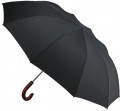 | 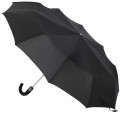 |
|---|---|---|
| Zest 42660 | Zest 13960 | |
from $25.32 up to $25.34 | from $24.20 up to $28.48 | |
| TOP sellers | ||
| Type | folding | folding |
| Suitable for | man | man |
Specs | ||
| Mechanism | machine | machine |
| Frame material | steel | steel |
| Spoke material | fibreglass | |
| Number of spokes | 10 pcs | 10 pcs |
| Dome diameter | 118 cm | 118 cm |
| Length (folded) | 50 cm | 35 cm |
| Dome material | polyester | polyester |
| Handle material | wood | plastic |
| Handle shape | hook | hook |
| Weight | 500 g | 520 g |
| Color | ||
| Added to E-Catalog | september 2014 | august 2014 |


Compare Zest 42660 and 13960
You may be interested in
My comparisons
Glossary
Spoke material
The material from which the umbrella's ribs are made. It may differ from the frame material (see the corresponding section), which is why this parameter is listed separately.
— Steel. One of the most common materials for ribs. Modern umbrellas may use different grades of steel, varying in price and quality; typically, this aspect directly correlates with the umbrella's price category. However, in any case, this material is quite strong, flexible, reliable, and durable, and is relatively inexpensive. The main disadvantage of steel is its comparatively large weight.
— Aluminum. Compared to steel, aluminum is distinguished by a lower weight on the one hand, and relatively low strength on the other. Consequently, it is relatively rare, mainly found in children's umbrellas and budget "adult" models.
— Fiberglass. Fiberglass ribs combine high flexibility, corrosion resistance, and cold resistance: in strong winds, such ribs spring back and restore the canopy shape without a "bend memory," and do not become brittle in freezing temperatures. This has led to their popularity in storm and golf umbrellas, as well as urban walking canes prioritizing wind resistance. In comparison: with steel, fiberglass is noticeably lighter and does not rust, but falls short in "edge stiffness" and is more likely to break than bend under critical impact; with aluminum, i...t excels in elasticity and resistance to inverting, avoiding permanent folds, although it might be slightly heavier at equal stiffness; relative to carbon fiber, fiberglass is more ductile and "tougher" against impact, cheaper and thicker at the same level of stiffness, while carbon is lighter and stiffer for premium storm models but more expensive and breaks "on snap," without warning deformations.
— Carbon Fiber. Carbon fiber ribs have the maximum stiffness-to-weight ratio: the canopy maintains its shape better in gusty winds, "flutters" less and returns to its original position more quickly with a compact rib diameter. The material is resistant to corrosion but requires high-quality resin and protective lacquer for UV resistance and micro-crack prevention at the joints. This solution is found in premium storm and golf umbrellas, as well as ultra-light travel models, where minimal weight and precise geometry are important. Compared to fiberglass, carbon fiber is noticeably lighter and stiffer at the same thickness, providing better wind resistance and sharper edge shape, but is less ductile and breaks without warning bends when overloaded, also being more expensive; fiberglass is more elastic, tolerates frequent inversions and targeted impacts better, though with a slight loss of "sharp" stiffness.
— Steel. One of the most common materials for ribs. Modern umbrellas may use different grades of steel, varying in price and quality; typically, this aspect directly correlates with the umbrella's price category. However, in any case, this material is quite strong, flexible, reliable, and durable, and is relatively inexpensive. The main disadvantage of steel is its comparatively large weight.
— Aluminum. Compared to steel, aluminum is distinguished by a lower weight on the one hand, and relatively low strength on the other. Consequently, it is relatively rare, mainly found in children's umbrellas and budget "adult" models.
— Fiberglass. Fiberglass ribs combine high flexibility, corrosion resistance, and cold resistance: in strong winds, such ribs spring back and restore the canopy shape without a "bend memory," and do not become brittle in freezing temperatures. This has led to their popularity in storm and golf umbrellas, as well as urban walking canes prioritizing wind resistance. In comparison: with steel, fiberglass is noticeably lighter and does not rust, but falls short in "edge stiffness" and is more likely to break than bend under critical impact; with aluminum, i...t excels in elasticity and resistance to inverting, avoiding permanent folds, although it might be slightly heavier at equal stiffness; relative to carbon fiber, fiberglass is more ductile and "tougher" against impact, cheaper and thicker at the same level of stiffness, while carbon is lighter and stiffer for premium storm models but more expensive and breaks "on snap," without warning deformations.
— Carbon Fiber. Carbon fiber ribs have the maximum stiffness-to-weight ratio: the canopy maintains its shape better in gusty winds, "flutters" less and returns to its original position more quickly with a compact rib diameter. The material is resistant to corrosion but requires high-quality resin and protective lacquer for UV resistance and micro-crack prevention at the joints. This solution is found in premium storm and golf umbrellas, as well as ultra-light travel models, where minimal weight and precise geometry are important. Compared to fiberglass, carbon fiber is noticeably lighter and stiffer at the same thickness, providing better wind resistance and sharper edge shape, but is less ductile and breaks without warning bends when overloaded, also being more expensive; fiberglass is more elastic, tolerates frequent inversions and targeted impacts better, though with a slight loss of "sharp" stiffness.
Length (folded)
The length of the umbrella when folded. For the decomposed one, this parameter is not specified, because is not critical, but when transporting a closed umbrella, it is the length that is the most important dimension.
The length of cane umbrellas (see "Type") is, by definition, the same when open or closed; most often it is 60 – 90% of the dome diameter (see above). But folding models of the same diameter can vary markedly in length, and here the choice depends on the situation: on the one hand, more compact umbrellas are more convenient to carry, on the other hand, they are less reliable and more complex in design, and also cost more.
The length of cane umbrellas (see "Type") is, by definition, the same when open or closed; most often it is 60 – 90% of the dome diameter (see above). But folding models of the same diameter can vary markedly in length, and here the choice depends on the situation: on the one hand, more compact umbrellas are more convenient to carry, on the other hand, they are less reliable and more complex in design, and also cost more.
Handle material
— Plastic. As a material for umbrella handles, plastic is very practical: it has a low price, is resistant to moisture, and its strength, although lower than that of metals, is quite sufficient in this case, especially since there are many varieties of this material on the market, including number and are very durable. It is also worth noting the low thermal conductivity of plastic — it does not "cool" the hand in cool weather. Similar handles are used in umbrellas of all price categories.
— Tree. Wood, like plastic, does not conduct heat well and does not cool the hand, while many consider it more pleasant to the touch; Yes, and this material looks quite stylish. At the same time, wooden handles are somewhat more expensive, and their quality noticeably depends on the price category of the umbrella (although in a cheap product, the frame is more likely to break than the handle).
— Skin. In this case, of course, we are talking about a handle made of hard material (usually wood or plastic, see above), covered with genuine leather. Such a coating gives the pen a rich and solid appearance and well emphasizes the image of the owner — after all, leather is quite expensive. Of the practical disadvantages of this option, it is worth noting the exactingness of care — otherwise the material may lose its presentation.
— Metal....Metal handles are usually an integral extension of the central rod. They are very durable, besides they look stylish, but they tend to "cool" the hand and slip out of it — therefore they are rarely used, mainly in designer models.
— EVA foam. Handles in the form of a solid base (usually the same material as the frame), covered with a layer of ethylene vinyl acetate (EVA) foam. This coating is pleasant to the touch, does not slip in the hand and provides a secure hold. At the same time, for a number of reasons, this option is found mainly in premium models.
— Tree. Wood, like plastic, does not conduct heat well and does not cool the hand, while many consider it more pleasant to the touch; Yes, and this material looks quite stylish. At the same time, wooden handles are somewhat more expensive, and their quality noticeably depends on the price category of the umbrella (although in a cheap product, the frame is more likely to break than the handle).
— Skin. In this case, of course, we are talking about a handle made of hard material (usually wood or plastic, see above), covered with genuine leather. Such a coating gives the pen a rich and solid appearance and well emphasizes the image of the owner — after all, leather is quite expensive. Of the practical disadvantages of this option, it is worth noting the exactingness of care — otherwise the material may lose its presentation.
— Metal....Metal handles are usually an integral extension of the central rod. They are very durable, besides they look stylish, but they tend to "cool" the hand and slip out of it — therefore they are rarely used, mainly in designer models.
— EVA foam. Handles in the form of a solid base (usually the same material as the frame), covered with a layer of ethylene vinyl acetate (EVA) foam. This coating is pleasant to the touch, does not slip in the hand and provides a secure hold. At the same time, for a number of reasons, this option is found mainly in premium models.
Weight
Total weight of the umbrella.
All other things being equal, lighter umbrellas are more convenient to carry (both in the open and closed positions). On the other hand, such products are less reliable and/or more expensive than relatively heavy models of similar design and size. We also note that in some cases, significant weight can be an advantage. For example, in a strong wind, a massive umbrella does not “tear from your hands” as much, and when released, it does not fly as far as a lighter one.
All other things being equal, lighter umbrellas are more convenient to carry (both in the open and closed positions). On the other hand, such products are less reliable and/or more expensive than relatively heavy models of similar design and size. We also note that in some cases, significant weight can be an advantage. For example, in a strong wind, a massive umbrella does not “tear from your hands” as much, and when released, it does not fly as far as a lighter one.