
Comparison be quiet! Pure Power 12 M BN344 vs be quiet! System Power 10 BN330
Add to comparison | 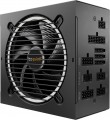 | 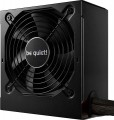 |
|---|---|---|
| be quiet! Pure Power 12 M BN344 | be quiet! System Power 10 BN330 | |
from $148.12 | from $463.00 | |
| User reviews | ||
| TOP sellers | ||
80 PLUS Gold Certificate. CWT platform. | ||
| Power | 850 W | 850 W |
| Form factor | ATX | ATX |
Specs | ||
| PFC | active | active |
| Efficiency | 93 % | 89 % |
| Cooling system | active | active |
| Fan size | 120 mm | 120 mm |
| Fan bearing | sliding | sliding |
| Certification | 80+ Gold | 80+ Gold |
| Cybenetics Efficiency | Platinum | |
| Cybenetics Noise | A - | |
| ATX12V version | 3.1 | 2.52 |
| EPS12V version | 2.92 | 2.92 |
Power connectors | ||
| MB/CPU power supply | 24+8+8(4+4) pin | 24+8+8(4+4) pin |
| SATA | 6 | 6 |
| MOLEX | 2 | 1 |
| PCIe 8pin (6+2) | 4 | 4 |
| PCIe 16pin | 1 pcs | |
| Cable system | modular | non-modular |
Cable length | ||
| MB | 550 mm | 550 mm |
| CPU | 600 mm | 600 mm |
| SATA | 650 mm | 450 mm |
| MOLEX | 800 mm | 790 mm |
| PCIe | 500 mm | 500 mm |
Max. power | ||
| +3.3V | 22 А | 22 А |
| +5V | 22 А | 22 А |
| +12V1 | 40 А | 40 А |
| +12V2 | 36 А | 36 А |
| -12V | 0.3 А | 0.3 А |
| +5Vsb | 3 А | 3 А |
| +12V | 850 W | 850 W |
| +3.3V +5V | 120 W | 120 W |
General | ||
| Over voltage protection (OVP) |  | |
| Over power protection (OPP) | | |
| Short circuit protection (SCP) | | |
| Protection | OTP, OCP, UVP, SIP | OTP, OCP, UVP, SIP |
| Noise level | 9 dB | 10 dB |
| Manufacturer's warranty | 10 years | 5 years |
| Dimensions (HxWxD) | 86x150x160 mm | 86x150x140 mm |
| Weight | 1.85 kg | 2.14 kg |
| Added to E-Catalog | february 2023 | december 2022 |


Compare be quiet! Pure Power 12 M and System Power 10
You may be interested in
My comparisons
be quiet! Pure Power 12 M often compared


be quiet! System Power 10 often compared


Glossary
Efficiency
Efficiency, in this case — the ratio of the power of the power supply (see "Power") to its power consumption. The higher the efficiency, the more efficient the power supply, the less energy it consumes from the network at the same output power, and the cheaper it is to operate. Efficiency may differ depending on the load; the characteristics can indicate both the minimum efficiency and its value at an average load (50%).
It should be noted that compliance with one or another level of 80PLUS efficiency directly depends on this indicator (for more details, see "Certificate").
It should be noted that compliance with one or another level of 80PLUS efficiency directly depends on this indicator (for more details, see "Certificate").
Cybenetics Efficiency
Cybenetics Efficiency is a power supply unit (PSU) energy efficiency certification system that serves as an alternative to the 80 PLUS standard. It is more accurate as it considers efficiency at various load levels (10%, 20%, 50%, 100%) and at different input voltages (115V, 230V). The labeling of this system is identical to 80 PLUS:
Bronze — overall efficiency from 82% to 85% at 115V input voltage and from 84% to 87% at 230V;
Silver — 85 – 87% and 87 – 89% respectively;
Gold — from 87% to 89% (115V) and from 89% to 91% (230V);
Platinum — 89 – 91% at 115V and 91 – 93% at 230V;
Titanium — 91 – 93% (115V) and 93 – 95% (230V);
Diamond — ≥ 93/95%.
Bronze — overall efficiency from 82% to 85% at 115V input voltage and from 84% to 87% at 230V;
Silver — 85 – 87% and 87 – 89% respectively;
Gold — from 87% to 89% (115V) and from 89% to 91% (230V);
Platinum — 89 – 91% at 115V and 91 – 93% at 230V;
Titanium — 91 – 93% (115V) and 93 – 95% (230V);
Diamond — ≥ 93/95%.
Cybenetics Noise
The Cybenetics Lambda Certification System evaluates the noise levels of power supply units (PSUs), providing consumers with information about their acoustic characteristics. As a result, you can rely not only on the efficiency of the PSU but also on its noise level. Cybenetics Lambda certification levels include:
Standard — from 40 dB(A) to 45 dB(A) – noticeable noise;
Standard+ — from 35 dB(A) to 40 dB(A) – noticeable noise;
Standard++ — from 30 dB(A) to 35 dB(A) – moderate noise;
A- — from 25 dB(A) to 30 dB(A) – moderately quiet;
A — from 20 dB(A) to 25 dB(A) – quiet;
A+ — from 15 dB(A) to 20 dB(A) – very quiet;
A++ — less than 15 dB(A) – nearly silent.
Standard — from 40 dB(A) to 45 dB(A) – noticeable noise;
Standard+ — from 35 dB(A) to 40 dB(A) – noticeable noise;
Standard++ — from 30 dB(A) to 35 dB(A) – moderate noise;
A- — from 25 dB(A) to 30 dB(A) – moderately quiet;
A — from 20 dB(A) to 25 dB(A) – quiet;
A+ — from 15 dB(A) to 20 dB(A) – very quiet;
A++ — less than 15 dB(A) – nearly silent.
ATX12V version
A standard for power supplies that supplements the ATX specifications regarding power supply along the 12 V line. Introduced into use since the time of the Intel Pentium 4 processor. In the first series of the standard, the +5 V line was mainly used; from version 2.0, the +12 V line was introduced to fully power the components computer. Also in the second generation, a 24-pin power connector appeared, used in most modern motherboards.
MOLEX
The number of Molex (IDE) connectors provided in the design of the power supply.
Initially, such a connector was intended to power peripherals for the IDE interface, primarily hard drives. And although the IDE itself is completely obsolete today and is not used in new components, however, the Molex power connector continues to be installed in power supplies, and almost without fail. Almost any modern PSU has at least 1 – 2 of these connectors, and in high-end models this number can be 7 or more. This situation is due to the fact that Molex IDE is a fairly universal standard, and with the help of the simplest adapters, components with a different power interface can be powered from it. For example, there are Molex - SATA adapters for drives, Molex - 6 pin for video cards, etc.
Initially, such a connector was intended to power peripherals for the IDE interface, primarily hard drives. And although the IDE itself is completely obsolete today and is not used in new components, however, the Molex power connector continues to be installed in power supplies, and almost without fail. Almost any modern PSU has at least 1 – 2 of these connectors, and in high-end models this number can be 7 or more. This situation is due to the fact that Molex IDE is a fairly universal standard, and with the help of the simplest adapters, components with a different power interface can be powered from it. For example, there are Molex - SATA adapters for drives, Molex - 6 pin for video cards, etc.
PCIe 16pin
The 16-pin PCIe power connector is designed to replace the existing 8-pin counterparts. It consists of twelve lines for current supply and four more for data transmission. The connector provides up to 600 watts of additional power, which is a fourfold increase in power compared to the 8-pin versions of the interface. Additional PCIe connectors of all formats are used to power those types of internal peripherals that no longer have enough with the 75 watts delivered directly through the PCIe slot on the motherboard.
Cable system
The cable system used in the power supply. According to this parameter, modular, semi- modular and non-modular devices are distinguished, here are their features:
— Not modular. The classic version of the design, used in computer power supplies from the very beginning and not losing popularity to this day. The wires in such systems have a non-detachable design, and additional cables are not provided for connection. As a result, the user has to deal with only those cables that the manufacturer provided, without the ability to remove or replace them (the only modifications available are the installation of additional accessories such as an extension cord or splitter). Because of this, such PSUs are less convenient than modular and semi-modular ones: their wires are often excessively long, and some of them are not used at all, while such an “economy” further clutters up the case, worsening air circulation and cooling efficiency. On the other hand, these shortcomings can be reduced to almost zero with careful selection of the PSU and careful wiring; and non-modular systems themselves are distinguished by reliability and at the same time low cost. It is because of these features that they are most common nowadays.
— Modular. Systems in which each cable is made detachable; special sockets are used for fastening wires. Thanks to this design, you can optimally organize the space inside the PC —...for example, remove unnecessary wires so that they do not interfere with air circulation in the system unit; replace a cable that is too long with a shorter wire (or vice versa); swap cables, etc. At the same time, modular systems are noticeably more expensive than non-modular ones, while they are considered somewhat less reliable due to the presence of "weak points" in the form of removable cable mounts.
— Semi-modular. A kind of compromise between the options described above: some of the wires in such power supplies are made non-removable, some are equipped with modular mounts. This makes it possible to partially combine the advantages and compensate for the disadvantages of the two systems: semi-modular PSUs are less expensive and more reliable than modular ones, and at the same time more convenient than non-modular ones. Usually, in systems of this type, the most important wires have a non-removable design, which are almost guaranteed to be used when assembling a PC, and secondary cables are equipped with removable mounts and can be removed if not needed. However, the specific features of a semi-modular PSU should be specified separately.
— Not modular. The classic version of the design, used in computer power supplies from the very beginning and not losing popularity to this day. The wires in such systems have a non-detachable design, and additional cables are not provided for connection. As a result, the user has to deal with only those cables that the manufacturer provided, without the ability to remove or replace them (the only modifications available are the installation of additional accessories such as an extension cord or splitter). Because of this, such PSUs are less convenient than modular and semi-modular ones: their wires are often excessively long, and some of them are not used at all, while such an “economy” further clutters up the case, worsening air circulation and cooling efficiency. On the other hand, these shortcomings can be reduced to almost zero with careful selection of the PSU and careful wiring; and non-modular systems themselves are distinguished by reliability and at the same time low cost. It is because of these features that they are most common nowadays.
— Modular. Systems in which each cable is made detachable; special sockets are used for fastening wires. Thanks to this design, you can optimally organize the space inside the PC —...for example, remove unnecessary wires so that they do not interfere with air circulation in the system unit; replace a cable that is too long with a shorter wire (or vice versa); swap cables, etc. At the same time, modular systems are noticeably more expensive than non-modular ones, while they are considered somewhat less reliable due to the presence of "weak points" in the form of removable cable mounts.
— Semi-modular. A kind of compromise between the options described above: some of the wires in such power supplies are made non-removable, some are equipped with modular mounts. This makes it possible to partially combine the advantages and compensate for the disadvantages of the two systems: semi-modular PSUs are less expensive and more reliable than modular ones, and at the same time more convenient than non-modular ones. Usually, in systems of this type, the most important wires have a non-removable design, which are almost guaranteed to be used when assembling a PC, and secondary cables are equipped with removable mounts and can be removed if not needed. However, the specific features of a semi-modular PSU should be specified separately.
Noise level
The noise level produced by the power supply.
Usually, the characteristics indicate the average value of the noise level during normal operation. The lower this value, the quieter the power supply and the more comfortable it is to use. However, it is worth noting that modern computer PSUs produce very little noise. So, in the quietest models, this figure does not exceed 20 dB — this is no louder than the rustling of leaves in a light breeze, such a sound is almost inaudible and is quite acceptable even in a residential area at night. Also acceptable for this application are noise sources of 21 – 25 dB(corresponding to a whisper at a distance of about 1 m) and 26 – 30 dB(wall clock ticking). Noise of more than 30 dB is already considered quite significant for computer PSUs; according to sanitary standards, such equipment in residential premises can only be used during the day.
When choosing a power supply for this indicator, it is worth considering a few points. First, noise reduction comes at a cost: it can affect the cooling performance and/or cost of the device. Secondly, the noise from the power supply is often lost against the background of louder PC components — for example, powerful cooling systems for the CPU or graphics card. Thirdly, the very environment where the PC is installed can be noisy — an example is a...n office or coworking. Thus, specifically looking for a low-noise model makes sense mainly in cases where maximum silence is crucial for you.
Usually, the characteristics indicate the average value of the noise level during normal operation. The lower this value, the quieter the power supply and the more comfortable it is to use. However, it is worth noting that modern computer PSUs produce very little noise. So, in the quietest models, this figure does not exceed 20 dB — this is no louder than the rustling of leaves in a light breeze, such a sound is almost inaudible and is quite acceptable even in a residential area at night. Also acceptable for this application are noise sources of 21 – 25 dB(corresponding to a whisper at a distance of about 1 m) and 26 – 30 dB(wall clock ticking). Noise of more than 30 dB is already considered quite significant for computer PSUs; according to sanitary standards, such equipment in residential premises can only be used during the day.
When choosing a power supply for this indicator, it is worth considering a few points. First, noise reduction comes at a cost: it can affect the cooling performance and/or cost of the device. Secondly, the noise from the power supply is often lost against the background of louder PC components — for example, powerful cooling systems for the CPU or graphics card. Thirdly, the very environment where the PC is installed can be noisy — an example is a...n office or coworking. Thus, specifically looking for a low-noise model makes sense mainly in cases where maximum silence is crucial for you.
Manufacturer's warranty
Manufacturer's warranty provided for this model.
In fact, this is the minimum service life promised by the manufacturer, subject to the rules of operation. There are both models with a small warranty up to 3 years, and more advanced power supplies, in which the warranty can reach 7, 10 years and even 12 years. In general , a 5-year warranty(for example) does not mean that the device will fail after the specified time. Most often, the actual service life of the device is much longer than the guaranteed one.
Specific warranty periods may vary even for similar drives from the same manufacturer. So not
In fact, this is the minimum service life promised by the manufacturer, subject to the rules of operation. There are both models with a small warranty up to 3 years, and more advanced power supplies, in which the warranty can reach 7, 10 years and even 12 years. In general , a 5-year warranty(for example) does not mean that the device will fail after the specified time. Most often, the actual service life of the device is much longer than the guaranteed one.
Specific warranty periods may vary even for similar drives from the same manufacturer. So not