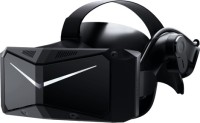
Pimax Crystal Light
 | When you make a purchase through links on our site, we may receive a affiliate commission. Buy! Pimax Crystal Light VR Headset for PC 2880x2880 per Eye 8K QLED Display with Local-Dimming Inside-Out Tracking PC VR HeadsetAmazon.comDelivery: in USA Report |

Pimax Crystal Light 20246DoF | ||||||||||||||||||||||||||||||||||||||||||
|
| |||||||||||||||||||||||||||||||||||||||||


The wired VR headset from Pimax, released in 2024, is primarily aimed at simulation enthusiasts (aviation, racing, and space), where image clarity and a wide field of view are critically more important than autonomy. The device connects to a computer via DisplayPort and works solely using its computing power, which, on one hand, excludes any limitations on battery life, but on the other, imposes serious demands on hardware.
The device requires a graphics card at the level of RTX 2080, with RTX 3070 and above recommended. The main trump card of the model is its pair of QLED panels with a resolution of 2880x2880 pixels per eye and a density of 35 pixels per degree, providing one of the sharpest images among consumer VR headsets: text in the cockpit or instruments on the panel can be read effortlessly.
Glass aspherical lenses form a wide area of focus with minimal distortion at the edges. The field of view for the Pimax Crystal Light VR glasses is about 130°, noticeably exceeding the standard 90–110° of most competitors and enhancing the peripheral vision sensation. The refresh rate switches between 72, 90, and 120 Hz depending on system performance. Tracking in six degrees of freedom is implemented through four built-in cameras using the SLAM algorithm without external base stations, although a faceplate supporting Lighthouse tracking can be purchased additionally if desired. The interpupillary distance is mechanically adjustable between 58–72 mm.
Always clarify the specifications and configuration of the product with the online store manager before purchasing.
Catalog Pimax 2026 - new arrivals, bestsellers, and the most relevant models Pimax.