
Comparison Roborock S8 vs Roborock S7
Add to comparison | 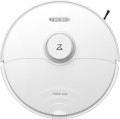 | 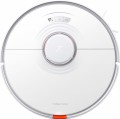 |
|---|---|---|
| Roborock S8 | Roborock S7 | |
from $399.99 | from $949.98 | |
| User reviews | ||
| TOP sellers | ||
Laser cartography. Vibrating floor cleaning system. Automatic rise of microfiber upon arrival on the carpet. | Memorization of up to four room maps. Laser cartography. Management with a voice assistant. Vibrating floor cleaning system. Automatic lifting of microfibre upon arrival on the carpet. | |
| Type | robot vacuum cleaner | robot vacuum cleaner |
| Cleaning | dry and wet side brush turbo brush wet wiping (vibration) | dry and wet side brush turbo brush wet wiping (vibration) |
| Water supply adjustment |  | |
Robot vacuum cleaner | ||
| Suction power | 6000 Pa | 2500 Pa |
| Dust container capacity | 400 ml | 470 ml |
| Water tank capacity | 300 ml | 300 ml |
| Power auto-adjustment | | |
| Fine filter | EPA 11 | EPA 11 |
| Building a room map | rangefinder + camera | rangefinder (laser) |
| Cleaning area limitation | via the app | via the app |
Features | ||
| Control via smartphone | | |
| Voice assistant | Amazon Alexa, Google Assistant, Xiaomi AI | |
| Scheduled cleaning | | |
| Object recognition | |  |
| Memory of several maps (floors) | | |
Battery | ||
| Battery capacity | 5.2 Ah | 5.2 Ah |
| Operating time | 180 min | 180 min |
| Charging time | 2 h | 2 h |
General | ||
| Cleaning area | 300 m² | 200 m² |
| Threshold clearance | 20 mm | |
| Noise level | 67 dB | 58 dB |
| Dimensions (HxWxD) | 9.6x35.3x35.3 cm | 9.6x35.35.3 cm |
| Color | ||
| Added to E-Catalog | may 2023 | july 2020 |


Compare Roborock S8 and S7
Robot vacuum cleaner Roborock S8 and Roborock S7 offer similar functions but have significant differences. The S8 has a more powerful suction power of 6000 Pa, providing more efficient cleaning compared to 2500 Pa of the S7. Both devices support dry and wet cleaning, but the S8 has a slightly smaller dustbin capacity (0.4 L compared to 0.47 L in S7). Both vacuums can be controlled via an app and feature power auto-adjust and vibrational wiping functions. However, the S7 supports voice commands through Amazon Alexa and Google Assistant, which may be convenient for users. The operating and charging times for both models are the same — 180 minutes and 2 hours respectively. The S8 is suitable for cleaning areas up to 300 m², while the S7 is up to 200 m², making the S8 more suitable for larger spaces. The noise level of the S7 is lower (58 dB versus 67 dB for the S8), which can be an important factor for users sensitive to noise.
You may be interested in
My comparisons
Roborock S8 often compared


Roborock S7 often compared


Glossary
Suction power
Measured in Pa, this indicator describes the robot vacuum cleaner's suction pressure: the higher it is, the easier it is for the device to pick up heavy debris and clean carpet pile. Values around 2,000–4,000 Pa are usually sufficient for regular cleaning of smooth floors, while 6,000–10,000 Pa and above are better suited for collecting hair, sand, and dirt from carpets or floor joints.
Dust container capacity
The dustbin capacity indicates how much dry debris fits in the robot vacuum’s built-in container before it needs to be emptied. Models with a 200–300 ml capacity are suitable for a small apartment and frequent cleaning cycles, while a 400–600 ml capacity is more convenient for larger areas, pets, or lots of hair. For robots with a self-emptying station, the size of the internal container is less important, as debris is automatically transferred to the docking station’s collection bin.
Building a room map
Map building allows the robot vacuum to remember the layout of the room, track covered areas, and plan a consistent cleaning route. The method used to create the map affects its accuracy, orientation speed, and the device’s ability to detect obstacles.
— With sensors. The robot creates an approximate map based on data from the gyroscope, motion sensors, wheels, and collisions with obstacles. This system is more affordable, but determines the exact position of walls and furniture less accurately, and accumulated errors may lead to repeated passes or missed areas.
— With a rangefinder. A laser rangefinder, or LiDAR, measures the distance to surrounding objects and creates an accurate map of the room before completing a full pass around it. It works reliably in low light, confidently detects walls and furniture, and supports room division and no-go zones.
— With a camera. The camera analyzes the surroundings and navigates using visual objects, helping refine the robot’s position and the room layout. Its advantage is the ability to distinguish individual objects, although performance depends more heavily on lighting.
— With a rangefinder and camera. The combined system uses LiDAR for accurate distance measurement and map building, and a camera to detect small objects on the floor. Such a robot not only navigates rooms confidently in any lighting, but also avoids cable...s, shoes, toys, and pet bowls more effectively.
— With sensors. The robot creates an approximate map based on data from the gyroscope, motion sensors, wheels, and collisions with obstacles. This system is more affordable, but determines the exact position of walls and furniture less accurately, and accumulated errors may lead to repeated passes or missed areas.
— With a rangefinder. A laser rangefinder, or LiDAR, measures the distance to surrounding objects and creates an accurate map of the room before completing a full pass around it. It works reliably in low light, confidently detects walls and furniture, and supports room division and no-go zones.
— With a camera. The camera analyzes the surroundings and navigates using visual objects, helping refine the robot’s position and the room layout. Its advantage is the ability to distinguish individual objects, although performance depends more heavily on lighting.
— With a rangefinder and camera. The combined system uses LiDAR for accurate distance measurement and map building, and a camera to detect small objects on the floor. Such a robot not only navigates rooms confidently in any lighting, but also avoids cable...s, shoes, toys, and pet bowls more effectively.
Voice assistant
Voice assistant lets you control the robot vacuum with short commands through a compatible smart speaker, smartphone, or smart home system. You can use voice commands to start and stop cleaning, return the device to the docking station, and on some models select a room or operating mode. This feature is especially convenient when your phone is not within reach, but the set of available commands depends on the robot model and supported platform.
Object recognition
A function in which the robot vacuum uses a camera and analysis algorithms to determine exactly what is on the floor. The device can distinguish cables, shoes, toys, pet bowls, and other small obstacles, then chooses a safe route around them. Compared to conventional sensors, object recognition does not simply detect an obstacle but identifies its type, reducing the risk of getting stuck, collisions, and cables wrapping around the brush.
Memory of several maps (floors)
Multiple map memory allows the robot vacuum to save separate layouts for different floors or rooms. When the device is moved, it recognizes the required map and uses the already defined rooms, no-go zones, and cleaning settings. This feature is especially useful for multi-story homes, as it eliminates the need to rescan the space every time the robot is moved.
Cleaning area
The cleaning area refers to the approximate room size the robot can cover on a single battery charge. In Eco mode, the device will cover more space than at maximum suction power or during intensive floor mopping. The value stated by the manufacturer is usually calculated for a relatively uncluttered room and may be lower in real conditions.
Threshold clearance
Threshold climbing indicates the maximum height of an obstacle that the robot vacuum can climb over on its own. A 15 mm level is usually sufficient for small floor covering joints, while 20 mm is better suited for standard interior door thresholds and carpets with a noticeable edge.
Noise level
The dB rating helps assess how noticeable the robot vacuum will be during cleaning. A level of 55–60 dB is typical of quiet robots, 60–70 dB is considered standard, and values above 70 dB are typical of the most powerful modes. The lower the rating, the less the device interferes with conversations, rest, or work.