
Comparison Dreame L10s Pro Gen2 vs Roborock S8
Add to comparison |  | 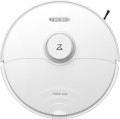 |
|---|---|---|
| Dreame L10s Pro Gen2 | Roborock S8 | |
from $23.99 | from $399.99 | |
| User reviews | ||
| TOP sellers | ||
Laser cartography. Vibrating floor cleaning system. Automatic rise of microfiber upon arrival on the carpet. | ||
| Type | robot vacuum cleaner | robot vacuum cleaner |
| Cleaning | dry and wet side brush turbo brush floor polisher (for wiping) | dry and wet side brush turbo brush wet wiping (vibration) |
| Water supply adjustment |  | |
Robot vacuum cleaner | ||
| Suction power | 7000 Pa | 6000 Pa |
| Dust container capacity | 470 ml | 400 ml |
| Water tank capacity | 300 ml | 300 ml |
| Power auto-adjustment | | |
| Fine filter | HEPA | EPA 11 |
| Building a room map | rangefinder + camera | rangefinder + camera |
| Cleaning area limitation | via the app | via the app |
Features | ||
| Control via smartphone | | |
| Voice assistant | Google Assistant, Amazon Alexa, Apple Siri | |
| Scheduled cleaning | | |
| Object recognition | | |
| Memory of several maps (floors) | |  |
Battery | ||
| Battery capacity | 5.2 Ah | 5.2 Ah |
| Operating time | 155 min | 180 min |
| Charging time | 2 h | |
General | ||
| Cleaning area | 145 m² | 300 m² |
| Threshold clearance | 20 mm | |
| Noise level | 74 dB | 67 dB |
| Dimensions (HxWxD) | 9.7x35x35 cm | 9.6x35.3x35.3 cm |
| Weight | 3.47 kg | |
| Color | ||
| Added to E-Catalog | july 2024 | may 2023 |


Compare Dreame L10s Pro Gen2 and Roborock S8
When comparing the Dreame Bot L10s Pro Gen2 and Roborock S8 robot vacuums, it's noteworthy that Dreame offers a higher suction power of 7000 Pa compared to Roborock's 6000 Pa, which can provide more efficient cleaning. However, the Roborock S8 has an advantage in cleaning area coverage—300 m² compared to Dreame's 200 m². Both devices support wet and dry cleaning, feature HEPA filters, and have the capability to connect to a smartphone. The Dreame Bot L10s Pro Gen2 operates for up to 155 minutes, while the Roborock S8 can work for up to 180 minutes. The noise level of the Roborock S8 is also lower—67 dB compared to Dreame's 74 dB. In terms of functionality, Roborock offers laser mapping and a vibrating wiping system, which can be beneficial for more thorough cleaning. Both devices have similar size and weight, but the Roborock S8 appears more advanced in terms of technology.
You may be interested in
My comparisons
Dreame L10s Pro Gen2 often compared


Roborock S8 often compared


Glossary
Cleaning
The cleaning method determines whether the robot can only collect dry debris or also wipe the floor covering with water, and which methods are available for this.
— Dry. The robot cleans the floor with brushes and an airflow, directing dust, crumbs, hair and pet fur into the dust container. This option is suitable for carpets and hard floors, but does not remove stains and marks from the floor.
— Dry and wet. The device combines debris suction with floor wiping using a damp attachment. Depending on the design, this may be a simple cloth or an active washing module that can better handle fresh stains and shoe marks.
— Side brushes. Small rotating elements that sweep debris along walls, near furniture and out of corners towards the main suction opening. One side brush on the edge of the body sweeps debris along walls, near furniture and out of corners towards the central suction channel. This design is usually sufficient, as the robot most often moves along obstacles with one particular side. Two brushes operate on both sides of the body and cover a wider strip of floor in one pass. This setup is especially convenient when moving along walls and between furniture, although on smooth floors fast brushes can sometimes scatter light debris.
— Extendable brush. A mov...able side brush automatically extends beyond the body when cleaning corners and areas near walls. Compared to a conventional fixed design, it reduces uncleaned areas where the robot body cannot get close enough.
— Turbo brush. A motorized module at the bottom of the robot that picks up debris and directs it into the suction channel. The working part may consist of a roller with bristles, rubber blades, or a combined surface. This system collects pet fur, hair and dirt from carpets more effectively than a simple suction opening, but bristled elements need regular cleaning to remove tangled hair.
— Floor scrubber. An active washing module with rotating mops or a roller that does not simply glide over the floor but mechanically scrubs away dirt. This system removes stains and marks better than a regular cloth.
— Extendable floor scrubber. One of the rotating mops shifts to the side and extends beyond the robot body. This allows the floor to be wiped closer to skirting boards, furniture legs and corners, where a standard fixed floor scrubber leaves a narrow dry strip.
— Vibration wiping. The washing platform rapidly moves the cloth back and forth, increasing friction against the surface. In terms of effectiveness, this option is between a passive cloth and rotating mops, effectively removing light stains and marks.
— Cloth wiping. A damp fabric attachment is fixed under the body and pulled across the floor as the robot moves. This simple solution is suitable for regular removal of fine dust and fresh marks, but barely scrubs off dried dirt.
— Dry. The robot cleans the floor with brushes and an airflow, directing dust, crumbs, hair and pet fur into the dust container. This option is suitable for carpets and hard floors, but does not remove stains and marks from the floor.
— Dry and wet. The device combines debris suction with floor wiping using a damp attachment. Depending on the design, this may be a simple cloth or an active washing module that can better handle fresh stains and shoe marks.
— Side brushes. Small rotating elements that sweep debris along walls, near furniture and out of corners towards the main suction opening. One side brush on the edge of the body sweeps debris along walls, near furniture and out of corners towards the central suction channel. This design is usually sufficient, as the robot most often moves along obstacles with one particular side. Two brushes operate on both sides of the body and cover a wider strip of floor in one pass. This setup is especially convenient when moving along walls and between furniture, although on smooth floors fast brushes can sometimes scatter light debris.
— Extendable brush. A mov...able side brush automatically extends beyond the body when cleaning corners and areas near walls. Compared to a conventional fixed design, it reduces uncleaned areas where the robot body cannot get close enough.
— Turbo brush. A motorized module at the bottom of the robot that picks up debris and directs it into the suction channel. The working part may consist of a roller with bristles, rubber blades, or a combined surface. This system collects pet fur, hair and dirt from carpets more effectively than a simple suction opening, but bristled elements need regular cleaning to remove tangled hair.
— Floor scrubber. An active washing module with rotating mops or a roller that does not simply glide over the floor but mechanically scrubs away dirt. This system removes stains and marks better than a regular cloth.
— Extendable floor scrubber. One of the rotating mops shifts to the side and extends beyond the robot body. This allows the floor to be wiped closer to skirting boards, furniture legs and corners, where a standard fixed floor scrubber leaves a narrow dry strip.
— Vibration wiping. The washing platform rapidly moves the cloth back and forth, increasing friction against the surface. In terms of effectiveness, this option is between a passive cloth and rotating mops, effectively removing light stains and marks.
— Cloth wiping. A damp fabric attachment is fixed under the body and pulled across the floor as the robot moves. This simple solution is suitable for regular removal of fine dust and fresh marks, but barely scrubs off dried dirt.
Suction power
Measured in Pa, this indicator describes the robot vacuum cleaner's suction pressure: the higher it is, the easier it is for the device to pick up heavy debris and clean carpet pile. Values around 2,000–4,000 Pa are usually sufficient for regular cleaning of smooth floors, while 6,000–10,000 Pa and above are better suited for collecting hair, sand, and dirt from carpets or floor joints.
Dust container capacity
The dustbin capacity indicates how much dry debris fits in the robot vacuum’s built-in container before it needs to be emptied. Models with a 200–300 ml capacity are suitable for a small apartment and frequent cleaning cycles, while a 400–600 ml capacity is more convenient for larger areas, pets, or lots of hair. For robots with a self-emptying station, the size of the internal container is less important, as debris is automatically transferred to the docking station’s collection bin.
Fine filter
Fine filter captures fine dust, pollen, and other particles that have passed through the main dust container, preventing them from returning to the room air. The higher the class, the more effective the filtration.
— EPA 10. Retains at least 85% of particles of the most penetrating size and provides basic fine filtration of the outgoing air.
— EPA 11. Captures at least 95% of fine particles, making it better suited for regular cleaning of dusty rooms.
— EPA 12. Provides efficiency from 99.5% and noticeably reduces the amount of fine dust returned to the room.
— HEPA 13. Captures at least 99.95% of the most difficult-to-retain particles and is especially useful in homes with allergy sufferers, children, or pets.
— HEPA 14. Retains from 99.995% of such particles and provides the highest level of filtration among the listed classes.
— EPA 10. Retains at least 85% of particles of the most penetrating size and provides basic fine filtration of the outgoing air.
— EPA 11. Captures at least 95% of fine particles, making it better suited for regular cleaning of dusty rooms.
— EPA 12. Provides efficiency from 99.5% and noticeably reduces the amount of fine dust returned to the room.
— HEPA 13. Captures at least 99.95% of the most difficult-to-retain particles and is especially useful in homes with allergy sufferers, children, or pets.
— HEPA 14. Retains from 99.995% of such particles and provides the highest level of filtration among the listed classes.
Voice assistant
Voice assistant lets you control the robot vacuum cleaner with short commands via a compatible smart speaker, smartphone, or smart home system. You can use your voice to start and stop cleaning, return the device to the docking station, and on some models, select a room or operating mode. This feature is especially convenient when your phone is not nearby, but the set of available commands depends on the robot model and the supported platform.
Memory of several maps (floors)
Multiple map memory allows the robot vacuum to save separate layouts for different floors or rooms. When the device is moved, it recognizes the required map and uses the already defined rooms, no-go zones, and cleaning settings. This feature is especially useful for multi-story homes, as it eliminates the need to rescan the space every time the robot is moved.
Operating time
Battery life determines how much area the robot vacuum can clean before returning to the docking station. Actual performance depends on the selected mode, suction power, floor type, operation of the mops or roller, and layout complexity. Therefore, the stated maximum time is usually achieved in a gentle mode and will be noticeably shorter during intensive cleaning.
Charging time
Full charging cycle of the robot vacuum to restore the battery from the minimum level to 100%. The process usually takes several hours and depends on the battery capacity and charging system power. However, with regular returns to the base, this parameter rarely affects cleaning convenience.
Cleaning area
The cleaning area refers to the approximate room size the robot can cover on a single battery charge. In Eco mode, the device will cover more space than at maximum suction power or during intensive floor mopping. The value stated by the manufacturer is usually calculated for a relatively uncluttered room and may be lower in real conditions.