
Comparison Roborock Q7 Max vs Roborock Q7 Max+
Add to comparison | 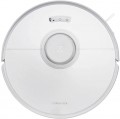 | 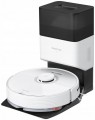 |
|---|---|---|
| Roborock Q7 Max | Roborock Q7 Max+ | |
from $217.48 | from $329.99 | |
| User reviews | ||
| TOP sellers | ||
Save multiple room maps. Management with a voice assistant. It differs from S7 in the absence of a vibration system for wiping floors and auto-raising microfiber. | Docking station with dust bag. Save multiple room maps. Management with a voice assistant. It differs from S7+ in the absence of a vibration system for wiping floors and auto-raising microfibre. | |
| Type | robot vacuum cleaner | robot vacuum cleaner |
| Cleaning | dry and wet side brush turbo brush wiping with a cloth | dry and wet side brush turbo brush wiping with a cloth |
| Water supply adjustment |  | |
Robot vacuum cleaner | ||
| Suction power | 4200 Pa | 4200 Pa |
| Dust container capacity | 470 ml | 470 ml |
| Water tank capacity | 300 ml | 300 ml |
| Power auto-adjustment | | |
| Fine filter | HEPA | HEPA |
| Building a room map | rangefinder (laser) | rangefinder (laser) |
| Cleaning area limitation | via the app | via the app |
Features | ||
| Control via smartphone | | |
| Voice assistant | Google Assistant, Amazon Alexa, Apple Siri | Google Assistant, Amazon Alexa, Apple Siri |
| Scheduled cleaning | | |
| Memory of several maps (floors) | | |
Self-cleaning station | ||
| Dust collector station | disposable bag | |
Battery | ||
| Battery capacity | 5.2 Ah | 5.2 Ah |
| Operating time | 180 min | 180 min |
General | ||
| Cleaning area | 240 m² | 240 m² |
| Threshold clearance | 20 mm | 20 mm |
| Noise level | 67 dB | 67 dB |
| Dimensions (HxWxD) | 9.7x35x35 cm | 9.7x35x35 cm |
| Color | ||
| Added to E-Catalog | may 2022 | may 2022 |


Compare Roborock Q7 Max and Q7 Max+
Roborock Q7 Max and Roborock Q7 Max+ are robot vacuum cleaners with the same features, such as a suction power of 4200 Pa, the ability for dry and wet cleaning, and a HEPA filter. Both devices support control through a smartphone and voice assistants, have the same cleaning area of 240 m², and a noise level of 67 dB. However, the Q7 Max+ stands out with the presence of a docking station with a dust collection bag, which simplifies maintenance, while the Q7 Max does not have this feature. Both devices have similar sizes and a runtime of up to 180 minutes, making them competitive in their class.
You may be interested in
Roborock Q7 Max often compared


Roborock Q7 Max+ often compared

Glossary
Dust collector station
The dust collector of the self-cleaning station is used to collect debris that is automatically emptied from the robot vacuum cleaner’s internal container. Its design affects maintenance frequency, user contact with dust, and the need to purchase consumables.
— Disposable bag. Debris is stored in a sealed dust collector, which is usually designed for several weeks of regular cleaning. It is easy to replace without spilling dust, but further use involves the cost of compatible bags.
— Cyclone container. Dust and debris accumulate in a rigid removable container that can be emptied repeatedly and reinstalled. This solution is more economical and allows you to see the fill level, but is less hygienic than a bag and requires more thorough maintenance.
— Disposable bag. Debris is stored in a sealed dust collector, which is usually designed for several weeks of regular cleaning. It is easy to replace without spilling dust, but further use involves the cost of compatible bags.
— Cyclone container. Dust and debris accumulate in a rigid removable container that can be emptied repeatedly and reinstalled. This solution is more economical and allows you to see the fill level, but is less hygienic than a bag and requires more thorough maintenance.