
Comparison Blackview Tab 12 Pro 128 GB vs Oscal Pad 10 128 GB
Add to comparison | 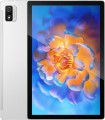 | 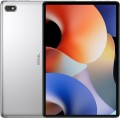 |
|---|---|---|
| Blackview Tab 12 Pro 128 GB | Oscal Pad 10 128 GB | |
from $179.99 | from $109.99 | |
| TOP sellers | ||
6 GB RAM expansion technology. Widevine L1 support for streaming services. | Widevine L1 support. 6 GB RAM expansion. | |
| Operating system | Android 12 | Android 12 |
Screen | ||
| Screen | 10.1 " 1920x1200 px 224 ppi IPS 60 Hz light sensor | 10.1 " 1920x1200 px 224 ppi IPS 60 Hz light sensor |
| Brightness | 300 nit | 350 nit |
| Screen to body ratio | 79 % | 68 % |
Hardware | ||
| Processor (graphics) | Unisoc T606 (Mali-G57) | Unisoc T606 (Mali-G57) |
| CPU speed | 1.6 GHz | 1.6 GHz |
| CPU cores | 8 | 8 |
| RAM | 8 GB | 8 GB |
| RAM type | LPDDR4X | |
| Storage capacity | 128 GB | 128 GB |
| Storage type | eMMC | |
| Card reader |  | |
| Max. memory card storage | 1024 GB | 1024 GB |
Test results | ||
| AnTuTu Benchmark | 251 000 points | 227 000 points |
| Geekbench | 1388 points | |
Communication | ||
| SIM card | x2 nano-SIM | x2 nano-SIM |
| Communication standard | 4G (LTE) | 4G (LTE) |
| Wi-Fi | Wi-Fi 5 (802.11aс) | Wi-Fi 5 (802.11aс) |
| Bluetooth | v5.0 | v5.0 |
| Connections | USB-C mini-Jack (3.5 mm) | USB-C |
Navigation | ||
| GPS | | |
| GLONASS | | |
| Galileo support | | |
| Digital compass |  | |
Camera | ||
| Main | 13 MP flash | 13 MP flash |
| Full HD filming (1080p) | 1920x1080 px 30 fps | |
| Camera (front) | 5 MP | 8 MP |
Features | ||
| More features | FM receiver | |
| Acoustics | stereo | stereo |
Power source | ||
| Battery capacity | 6580 mAh | 6580 mAh |
| Operating time (PCMark) | 4.5 | |
| Charger power | 10 W | |
General | ||
| Case | | |
| Material | metal | plastic |
| Size | 238.5x157.5x7.4 mm | 241.3x160x8.9 mm |
| Weight | 430 g | 536 g |
| Color | ||
| Added to E-Catalog | july 2023 | december 2022 |


Compare Blackview Tab 12 Pro and Oscal Pad 10
You may be interested in
My comparisons
Blackview Tab 12 Pro often compared


Oscal Pad 10 often compared


Glossary
Brightness
The maximum brightness in nits provided by the tablet screen.
The brighter the display, the more readable the picture remains on it under intense ambient light. Also, high brightness is important for the correct display of HDR content. However, a large margin for this indicator affects the cost and power consumption of the screen. Manufacturers can specify standard, maximum, and peak brightness values. At the same time, an equal sign cannot be put between the maximum and peak brightness. The first indicates the ability of the screen to produce the specified brightness over its entire area, while the peak one - in a limited area and for a short time (mainly for HDR content).
The brighter the display, the more readable the picture remains on it under intense ambient light. Also, high brightness is important for the correct display of HDR content. However, a large margin for this indicator affects the cost and power consumption of the screen. Manufacturers can specify standard, maximum, and peak brightness values. At the same time, an equal sign cannot be put between the maximum and peak brightness. The first indicates the ability of the screen to produce the specified brightness over its entire area, while the peak one - in a limited area and for a short time (mainly for HDR content).
Screen to body ratio
This parameter shows how much of the tablet's front panel area is on the display. The higher the display/body ratio, the thinner the frames and the more compact the tablet (with the same diagonal), the more elegant and aesthetically pleasing it looks. This indicator is also important when holding the tablet with both hands at once (for example, in games): thin frames or even frameless models allow you to reach further with your fingers without removing your hands from the device.
RAM type
The type of random access memory (RAM) installed in the tablet.
All modern devices use LPDDR format RAM ( LPDDR4, LPDDR4x, LPDDR5, LPDDR5x). In addition to its miniature size, it differs from regular computer RAM by supporting special data transfer formats (16- and 32-bit memory buses). But the versions of such memory can be different:
— LPDDR3. The earliest generation of LPDDR of the current ones — presented in 2012, implemented in devices since 2013. Standardly operates at speeds up to 1600 MT/s (megatransactions per second) and a frequency of up to 933 MHz; the “enhanced” version supports speeds up to 2133 MT/s. Nowadays, this standard is rare, mainly among outdated devices.
— LPDDR4. The successor to LPDDR3, officially presented in August 2014 (although the first hardware developments were released back in late 2013). The operating speed, compared to its predecessor, has doubled — up to 3200 MT/s; the frequency has grown to 1600 MHz; and the power consumption has decreased by 40%. In addition, the data transfer format has changed — in particular, two 16-bit buses are used instead of one 32-bit, and some security improvements have been introduced into the standard. — LPDDR4x. An improved version of LPDDR4 with reduced power consumption — the standard uses a voltage of 0.6 V instead of 1.1 V. In addition, this type...of RAM has some improvements aimed at increasing the speed (it reaches 4266 MT/s) and general optimization of operation — for example, a single-channel mode has appeared for undemanding applications. Thanks to such characteristics, this version of memory has become much more widespread than the original LPDDR4.
— LPDDR5. Further development of "mobile" RAM, officially announced in early 2019. The operating speed in this version has been increased to 6400 MT/s, a differential signal format has been introduced to improve resistance to interference and errors, and dynamic frequency and voltage control has been implemented to reduce power consumption.
— LPDDR5x. A more energy-efficient and faster version of LPDDR5 RAM. Its data transfer rate has been increased to 8533 MT/s, and the peak throughput indicator has been increased to 8.5 Gbps. The number of memory banks per channel in LPDDR5x is always 16.
All modern devices use LPDDR format RAM ( LPDDR4, LPDDR4x, LPDDR5, LPDDR5x). In addition to its miniature size, it differs from regular computer RAM by supporting special data transfer formats (16- and 32-bit memory buses). But the versions of such memory can be different:
— LPDDR3. The earliest generation of LPDDR of the current ones — presented in 2012, implemented in devices since 2013. Standardly operates at speeds up to 1600 MT/s (megatransactions per second) and a frequency of up to 933 MHz; the “enhanced” version supports speeds up to 2133 MT/s. Nowadays, this standard is rare, mainly among outdated devices.
— LPDDR4. The successor to LPDDR3, officially presented in August 2014 (although the first hardware developments were released back in late 2013). The operating speed, compared to its predecessor, has doubled — up to 3200 MT/s; the frequency has grown to 1600 MHz; and the power consumption has decreased by 40%. In addition, the data transfer format has changed — in particular, two 16-bit buses are used instead of one 32-bit, and some security improvements have been introduced into the standard. — LPDDR4x. An improved version of LPDDR4 with reduced power consumption — the standard uses a voltage of 0.6 V instead of 1.1 V. In addition, this type...of RAM has some improvements aimed at increasing the speed (it reaches 4266 MT/s) and general optimization of operation — for example, a single-channel mode has appeared for undemanding applications. Thanks to such characteristics, this version of memory has become much more widespread than the original LPDDR4.
— LPDDR5. Further development of "mobile" RAM, officially announced in early 2019. The operating speed in this version has been increased to 6400 MT/s, a differential signal format has been introduced to improve resistance to interference and errors, and dynamic frequency and voltage control has been implemented to reduce power consumption.
— LPDDR5x. A more energy-efficient and faster version of LPDDR5 RAM. Its data transfer rate has been increased to 8533 MT/s, and the peak throughput indicator has been increased to 8.5 Gbps. The number of memory banks per channel in LPDDR5x is always 16.
Storage type
The specification primarily determines the memory speed and, accordingly, the overall flow Rate of the device (especially when working with large amounts of data or resource-intensive applications). Nowadays, there are two basic specifications - eMMC (embedded Multimedia Memory Card) and UFS (Universal Flash Storage); each of them has several versions. In general, the fastest and most advanced drives today are those with UFS 3.1 and UFS 4.0, but they also cost accordingly, and therefore are used mainly in premium tablets. A more detailed description of these standards looks like this:
— eMMC. One of the simplest and most accessible solid-state memory standards — for example, this is the specification used by most flash drives. In tablets and other portable gadgets, this standard was generally accepted until 2016, when UFS began to be introduced; however, it is still quite common — mainly due to its low cost and low power consumption. eMMC speeds are noticeably lower than UFS. Thus, in the current version of eMMC 5.1A (2019), the read speed is up to 400 MB/s, and the earlier and more common version of eMMC 5.1 provides up to 250 MB/s in read mode, up to 125 MB/s in sequential write mode, and only up to 7.16 MB/s for random write (in other words, in application mode).
— UFS. A solid-state drive standard created as a faster and more advanced successor to eMMC. In addition to increased data...exchange rates, UFS also changed its operating format — it is fully duplex, meaning that reading and writing can be done simultaneously (while in eMMC these processes were performed in turns). Efficiency in random read and write mode was also significantly increased, which had a positive effect on the quality of work with applications. Specific data exchange rates and operating features depend on the UFS version; these days, the following options can be found on the market:
— eMMC. One of the simplest and most accessible solid-state memory standards — for example, this is the specification used by most flash drives. In tablets and other portable gadgets, this standard was generally accepted until 2016, when UFS began to be introduced; however, it is still quite common — mainly due to its low cost and low power consumption. eMMC speeds are noticeably lower than UFS. Thus, in the current version of eMMC 5.1A (2019), the read speed is up to 400 MB/s, and the earlier and more common version of eMMC 5.1 provides up to 250 MB/s in read mode, up to 125 MB/s in sequential write mode, and only up to 7.16 MB/s for random write (in other words, in application mode).
— UFS. A solid-state drive standard created as a faster and more advanced successor to eMMC. In addition to increased data...exchange rates, UFS also changed its operating format — it is fully duplex, meaning that reading and writing can be done simultaneously (while in eMMC these processes were performed in turns). Efficiency in random read and write mode was also significantly increased, which had a positive effect on the quality of work with applications. Specific data exchange rates and operating features depend on the UFS version; these days, the following options can be found on the market:
- 2.0. The earliest version; it was released back in 2013. Provides data transfer speeds of up to 600 MB/s on one line and up to 1.2 GB/s on two lines, the maximum available in this version. The newer version 2.1 has the same indicators, but it is supplemented with a number of important innovations. Therefore, UFS 2.0 memory is very rarely used in tablets.
- 2.1. The first of the widely used versions; it was released in 2016. In terms of speed, it is no different from the version 2.0 described above, and the main differences are in some improvements. In particular, UFS 2.1 introduced a drive status ("health") indicator, the ability to remotely update the firmware, and a number of solutions aimed at increasing overall reliability.
- 2.2. An evolution of the UFS 2.x standard, introduced in summer 2020. The key improvement is the introduction of the WriteBooster feature (originally introduced in UFS 3.1); this feature allows for a significant increase in write speed and, therefore, overall flow Rate in tasks such as launching applications.
- 3.0. Version released in 2018 and implemented in hardware a year later. The throughput was increased to 2.9 GB/s on two lines (1.45 GB/s on one), new versions of the electronic protocol M-PHY (physical layer) and UniPro based on it were implemented, the reliability of data handling was increased, and the temperature range of the controllers was expanded (in theory, it can range from -40 °C to 105 °C).
- 3.1. The successor to the UFS 3.0 standard, officially introduced in early 2020. It is positioned as a specification created specifically for high-flow Rate mobile devices and aimed at increasing operating speed while minimizing power consumption. To this end, UFS 3.1 implements a number of innovations: a non-volatile Write Booster cache to speed up writing; a special DeepSleep power-saving mode for relatively simple and inexpensive systems; as well as the Performance Throttling Notification function, which allows the drive to send signals to the control system about overheating. In addition, this standard may additionally provide support for the HPB extension, which increases the read speed.
- 4.0. UFS 4.0 doubles the bandwidth per lane (23.2 Gbps per lane) and improves power efficiency by approximately 46% (compared to the previous 3.1 specification). UFS 4.0 memory modules provide maximum read speeds of up to 4,200 MB/s and write speeds of up to 2,800 MB/s.
AnTuTu Benchmark
The result shown by a device when undergoing a performance test (benchmark) in the AnTuTu Benchmark.
AnTuTu Benchmark is a comprehensive test designed specifically for mobile devices, primarily smartphones and tablets. It evaluates the performance of the processor, memory, graphics, and input/output systems, providing a clear impression of the system's capabilities. The better the performance, the higher the score. According to AnTuTu, top models are those that score more than 1M points.
As with any benchmark, this test does not provide absolute precision; for more details on measurement inaccuracies, see the "3DMark Gamer's Benchmark" section.
AnTuTu Benchmark is a comprehensive test designed specifically for mobile devices, primarily smartphones and tablets. It evaluates the performance of the processor, memory, graphics, and input/output systems, providing a clear impression of the system's capabilities. The better the performance, the higher the score. According to AnTuTu, top models are those that score more than 1M points.
As with any benchmark, this test does not provide absolute precision; for more details on measurement inaccuracies, see the "3DMark Gamer's Benchmark" section.
Geekbench
The result shown by the device when passing the performance test (benchmark) Geekbench.
Geekbench is a specialized benchmark designed for processors. Since version 4.0, the test has also been applied to graphics accelerators, and towards the end of 2019, a benchmark edition numbered "5" was released. In the specifications of portable gadgets, data is usually given specifically for the CPU. During testing, Geekbench simulates loads that occur during the execution of real tasks and takes into account both the capabilities of a single core and the efficiency of simultaneous multi-core operation. Thanks to this, the final results give a good characterization of the processor's capabilities in everyday use. Moreover, the test is cross-platform and allows for the comparison of CPUs from different devices (smartphones, tablets, laptops, PCs). The reference information only provides values for the multithreaded test for the processor.
Geekbench is a specialized benchmark designed for processors. Since version 4.0, the test has also been applied to graphics accelerators, and towards the end of 2019, a benchmark edition numbered "5" was released. In the specifications of portable gadgets, data is usually given specifically for the CPU. During testing, Geekbench simulates loads that occur during the execution of real tasks and takes into account both the capabilities of a single core and the efficiency of simultaneous multi-core operation. Thanks to this, the final results give a good characterization of the processor's capabilities in everyday use. Moreover, the test is cross-platform and allows for the comparison of CPUs from different devices (smartphones, tablets, laptops, PCs). The reference information only provides values for the multithreaded test for the processor.
Connections
— microUSB. A smaller version of the USB connector, widely used in modern tablets as a universal interface. MicroUSB is mainly used for charging the battery and connecting the device to a computer, and with USB OTG support, flash drives and other accessories can also be connected (of course, an adapter will be required to work with a full-sized USB plug in such cases). This connector is gradually being replaced by the more convenient and advanced USB-C (see below), but it is still a long way from completely disappearing.
— USB-C. It has similar dimensions to microUSB (see above) and has replaced it, but differs in connector design—it is symmetrical, allowing the plug to be connected either way. In terms of application, this interface is also similar to microUSB, with the caveat that USB-C often features support for the advanced standard of 10Gbps, which provides speeds up to 10 Gbps. Moreover, implementing fast charging through such a connector is easier—some fast charging technologies were initially created for USB-C.
— USB4. A high-speed revision of the USB interface introduced in 2019. It only uses symmetrical USB-C type connectors and does not have its own data format—instead, such a connection is used to transmit information across multiple standards: USB 20Gbps and DisplayPort as mandatory, and PCI-E as an option. Anoth...er feature is that USB4 is based on the Thunderbolt protocol. It should also be noted that this USB revision allows for "daisy chain" device connections and by default supports Power Delivery technology, optimizing the charging process of external gadgets (provided that they also implement this technology).
The maximum data transfer speed for such a connector should not be less than 10 Gbps, but variants with speeds of 20 Gbps and even 40 Gbps are often found (depending on the technologies and standards supported by the specific port). Meanwhile, USB4 ports are fully compatible with USB-C interface peripherals.
— DisplayPort Alt Mode. A function that allows transmitting video signals through a USB-C port. This means that a tablet can be connected to an external display (monitor, TV, etc.) directly via a USB-C cable, without the need for additional adapters or converters. For using DisplayPort Alt Mode, support is required on both the gadget and the connected device (monitor, TV), as well as a suitable USB-C cable capable of transmitting video. Note that this capability is often implemented in tablets with two USB-C ports, where one supplies power and the other outputs a signal to an additional monitor.
— USB-A 2.0. A full-sized USB port that complies with version 2.0. This port allows connecting standard USB peripherals to a tablet, such as flash drives or keyboards; however, due to its large size, it is rarely found, mainly in business models and "hybrids" equipped with docking stations (in such cases, the port may be located on the docking station). Version 2.0 supports data transfer speeds up to 480 Mbps.
— USB-A 5Gbps. A version of USB previously known as USB 3.2 gen1 or USB 3.0. It uses the traditional full-sized USB connector and provides operation speeds up to 4.8 Gbps—10 times higher than the previous 2.0 version—as well as higher power capacity. Additionally, USB-A 2.0 peripherals can also be connected to these connectors.
— HDMI. A digital interface specifically created for transmitting HD content: high-definition video and multi-channel sound. It is very popular in video equipment, particularly used in almost all modern TVs and often found in projectors, media players, and so on. Therefore, HDMI support will be very useful if you plan to stream video from your tablet to an external screen. In portable devices, a reduced miniHDMI or microHDMI connector is usually used; however, finding a cable for such a port is not problematic.
— Mini-jack (3.5 mm). A standard 3.5 mm mini-Jack socket. This plug is used by the vast majority of modern wired headphones, headsets, and portable speakers, which is why the 3.5 mm port typically plays the role of an audio jack in most tablets. While there are generally no issues with headphones and speakers, it doesn't hurt to check separately for compatibility with headsets—these devices have their own connection specifics. It should also be noted that there are tablets without a 3.5 mm jack—they are usually designed for specialized accessories connected via a proprietary connector or for wireless Bluetooth audio equipment.
— USB-C. It has similar dimensions to microUSB (see above) and has replaced it, but differs in connector design—it is symmetrical, allowing the plug to be connected either way. In terms of application, this interface is also similar to microUSB, with the caveat that USB-C often features support for the advanced standard of 10Gbps, which provides speeds up to 10 Gbps. Moreover, implementing fast charging through such a connector is easier—some fast charging technologies were initially created for USB-C.
— USB4. A high-speed revision of the USB interface introduced in 2019. It only uses symmetrical USB-C type connectors and does not have its own data format—instead, such a connection is used to transmit information across multiple standards: USB 20Gbps and DisplayPort as mandatory, and PCI-E as an option. Anoth...er feature is that USB4 is based on the Thunderbolt protocol. It should also be noted that this USB revision allows for "daisy chain" device connections and by default supports Power Delivery technology, optimizing the charging process of external gadgets (provided that they also implement this technology).
The maximum data transfer speed for such a connector should not be less than 10 Gbps, but variants with speeds of 20 Gbps and even 40 Gbps are often found (depending on the technologies and standards supported by the specific port). Meanwhile, USB4 ports are fully compatible with USB-C interface peripherals.
— DisplayPort Alt Mode. A function that allows transmitting video signals through a USB-C port. This means that a tablet can be connected to an external display (monitor, TV, etc.) directly via a USB-C cable, without the need for additional adapters or converters. For using DisplayPort Alt Mode, support is required on both the gadget and the connected device (monitor, TV), as well as a suitable USB-C cable capable of transmitting video. Note that this capability is often implemented in tablets with two USB-C ports, where one supplies power and the other outputs a signal to an additional monitor.
— USB-A 2.0. A full-sized USB port that complies with version 2.0. This port allows connecting standard USB peripherals to a tablet, such as flash drives or keyboards; however, due to its large size, it is rarely found, mainly in business models and "hybrids" equipped with docking stations (in such cases, the port may be located on the docking station). Version 2.0 supports data transfer speeds up to 480 Mbps.
— USB-A 5Gbps. A version of USB previously known as USB 3.2 gen1 or USB 3.0. It uses the traditional full-sized USB connector and provides operation speeds up to 4.8 Gbps—10 times higher than the previous 2.0 version—as well as higher power capacity. Additionally, USB-A 2.0 peripherals can also be connected to these connectors.
— HDMI. A digital interface specifically created for transmitting HD content: high-definition video and multi-channel sound. It is very popular in video equipment, particularly used in almost all modern TVs and often found in projectors, media players, and so on. Therefore, HDMI support will be very useful if you plan to stream video from your tablet to an external screen. In portable devices, a reduced miniHDMI or microHDMI connector is usually used; however, finding a cable for such a port is not problematic.
— Mini-jack (3.5 mm). A standard 3.5 mm mini-Jack socket. This plug is used by the vast majority of modern wired headphones, headsets, and portable speakers, which is why the 3.5 mm port typically plays the role of an audio jack in most tablets. While there are generally no issues with headphones and speakers, it doesn't hurt to check separately for compatibility with headsets—these devices have their own connection specifics. It should also be noted that there are tablets without a 3.5 mm jack—they are usually designed for specialized accessories connected via a proprietary connector or for wireless Bluetooth audio equipment.
Digital compass
A sensor that allows you to determine the direction to the cardinal points. Uses the earth's magnetic field, like a conventional mechanical compass, so the accuracy of the readings can be quite low. However, tablets are rarely used for high-precision compass navigation, and this disadvantage is not critical.
Full HD filming (1080p)
The resolution and maximum frame rate provided by the main camera when recording Full HD (1080p) video at normal speed, without slow motion (if available).
The standard resolution for this format is 1920x1080. Note that this can be either the maximum shooting resolution or one of the relatively simple options in addition to more advanced standards (such as UltraHD 4K). At the same time, Full HD is considered more than a decent resolution by modern standards, and at the same time, it can be supported even by fairly simple and inexpensive tablets.
As for the frame rate, there are actually two values in normal shooting - Full HD 30 fps and Full HD 60 fps. A higher frame rate allows you to achieve very smooth display of dynamic scenes - even fast-moving objects in the frame are seen as clearly as possible, with almost no blurring. However, the low shooting speed also has its advantages - it allows you to reduce the amount of material being shot. Therefore, tablets that support 60 fps may have the ability to reduce the frame rate to 30 fps. But speeds above 60 fps are already used for shooting slow-motion video (slow-mo); see "Slow-mo" for more on this.
The standard resolution for this format is 1920x1080. Note that this can be either the maximum shooting resolution or one of the relatively simple options in addition to more advanced standards (such as UltraHD 4K). At the same time, Full HD is considered more than a decent resolution by modern standards, and at the same time, it can be supported even by fairly simple and inexpensive tablets.
As for the frame rate, there are actually two values in normal shooting - Full HD 30 fps and Full HD 60 fps. A higher frame rate allows you to achieve very smooth display of dynamic scenes - even fast-moving objects in the frame are seen as clearly as possible, with almost no blurring. However, the low shooting speed also has its advantages - it allows you to reduce the amount of material being shot. Therefore, tablets that support 60 fps may have the ability to reduce the frame rate to 30 fps. But speeds above 60 fps are already used for shooting slow-motion video (slow-mo); see "Slow-mo" for more on this.