
Comparison Verbatim 43889 vs Verbatim 43888
Add to comparison | 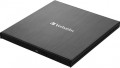 | 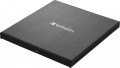 |
|---|---|---|
| Verbatim 43889 | Verbatim 43888 | |
| Compare prices 1 | from $166.05 | |
| TOP sellers | ||
| Type | external (slim) | external (slim) |
| Writes | DVD±R BD-R (Blu-Ray) | CD-R CD-RW DVD±R DVD±RW BD-R (Blu-Ray) BD-RE (Blu-Ray) |
| Interface | USB-C 5Gbps | USB-C 5Gbps |
Features | ||
| DL (for DVD) |  |  |
| DL (for Blu-ray) | | |
| Disc loading | pull out | pull out |
| Weight | 215 g | 215 g |
Write speed | ||
| CD-R | 24 x | |
| CD-RW | 16 x | |
| DVD±R | 8 x | 8 x |
| DVD±R DL | 6 x | |
| DVD±RW | 8 x | |
| DVD-RAM | 5 x | |
| BD-R | 6 x | 6 x |
| BD-R DL | 6 x | |
| BD-RE | 2 x | |
| BD-RE DL | 2 x | |
Read speed | ||
| CD | 24 x | |
| DVD | 8 x | |
| Blu-Ray | 6 x | |
| Color | ||
| Added to E-Catalog | august 2023 | august 2023 |



Compare Verbatim 43889 and 43888
Both drives, Verbatim 43889 and Verbatim 43888, are external and feature a sliding loading mechanism and USB-C 3.2 gen1 connectivity. However, Verbatim 43888 supports more media types, including CD-R, CD-RW, and DVD±RW, and also has DL support for DVD and Blu-Ray, while Verbatim 43889 does not support DL. The write speeds for DVD±R are the same for both models — 8x, but Verbatim 43888 offers a wider range of speeds for other formats. Both devices weigh 215 g and are available in black.
Price comparison
You may be interested in
My comparisons
Verbatim 43889 often compared


Verbatim 43888 often compared


Glossary
Writes
The types of optical discs that the drive can handle. In this case, we mean read-only work.
Historically, CD came first, then DVD, and even later, Blu-ray. The general rule for compatibility of discs and drives is as follows: earlier types of discs are readable in later drives, but not vice versa, and discs of the same type (for example, DVD) are interchangeable (with rare exceptions, which are discussed below).
The specific types of carriers used today are as follows:
— CD-R. Recordable (once) CD. The standard capacity is 700 MB. Supported by all modern drives, regardless of type.
— CD-RW. The rewritable CD version (see above) is also readable by almost all modern drives.
— DVD+R. Recordable DVDs. Technically they are divided into DVD-R and DVD+R, in fact they do not differ in almost anything. Standard capacity — 4.7 GB; double-sided and double-layer recording can reach 17 GB, however, dual-layer discs are not supported by all drives.
— DVD+RW. Rewritable DVD version (see above). Both DVD-RW and DVD+RW are supported almost without limitation by the corresponding drives.
— DVD-RAM. A special kind of rewritable DVD — designed for frequent rewriting, withstand 100 times more rewrite cycles than RW, however, unlike other DVDs, they are not...readable by all DVD drives. Initially, they were produced in protective cartridges, but later disks without cartridges and drives for them appeared; the possibility of operation of the drive with a cartridge should also be specified separately in each case.
— BD-ROM (Blu-Ray). High-capacity optical discs, originally designed to store high-definition video. The standard capacity is 25 GB, there are double-layer versions of 50 GB, but they are not supported by all drives. The index "ROM" means the impossibility of recording.
— BD-R (Blu-Ray). Blu-ray discs (see above) with write-once capability.
— BD-RE (Blu-Ray). Rewritable (Recordable Erasable) version of Blu-Ray discs (see above).
Historically, CD came first, then DVD, and even later, Blu-ray. The general rule for compatibility of discs and drives is as follows: earlier types of discs are readable in later drives, but not vice versa, and discs of the same type (for example, DVD) are interchangeable (with rare exceptions, which are discussed below).
The specific types of carriers used today are as follows:
— CD-R. Recordable (once) CD. The standard capacity is 700 MB. Supported by all modern drives, regardless of type.
— CD-RW. The rewritable CD version (see above) is also readable by almost all modern drives.
— DVD+R. Recordable DVDs. Technically they are divided into DVD-R and DVD+R, in fact they do not differ in almost anything. Standard capacity — 4.7 GB; double-sided and double-layer recording can reach 17 GB, however, dual-layer discs are not supported by all drives.
— DVD+RW. Rewritable DVD version (see above). Both DVD-RW and DVD+RW are supported almost without limitation by the corresponding drives.
— DVD-RAM. A special kind of rewritable DVD — designed for frequent rewriting, withstand 100 times more rewrite cycles than RW, however, unlike other DVDs, they are not...readable by all DVD drives. Initially, they were produced in protective cartridges, but later disks without cartridges and drives for them appeared; the possibility of operation of the drive with a cartridge should also be specified separately in each case.
— BD-ROM (Blu-Ray). High-capacity optical discs, originally designed to store high-definition video. The standard capacity is 25 GB, there are double-layer versions of 50 GB, but they are not supported by all drives. The index "ROM" means the impossibility of recording.
— BD-R (Blu-Ray). Blu-ray discs (see above) with write-once capability.
— BD-RE (Blu-Ray). Rewritable (Recordable Erasable) version of Blu-Ray discs (see above).
DL (for DVD)
Possibility of operation of the drive with two-layer DVD-discs(see "DVD±R"). The use of two layers for recording information doubles the capacity of the disc, but such media is only compatible with special drives.
DL (for Blu-ray)
Ability to drive dual-layer Blu-Ray discs(for details, see " BD-ROM (Blu-Ray) ")