
Comparison Verbatim 43886 vs Verbatim 43888
Add to comparison |  | 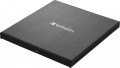 |
|---|---|---|
| Verbatim 43886 | Verbatim 43888 | |
from $73.49 | from $166.05 | |
| TOP sellers | ||
| Type | external | external (slim) |
| Writes | CD-R CD-RW DVD±R DVD±RW | CD-R CD-RW DVD±R DVD±RW BD-R (Blu-Ray) BD-RE (Blu-Ray) |
| Interface | USB-C 5Gbps | USB-C 5Gbps |
Features | ||
| DL (for DVD) |  | |
| DL (for Blu-ray) |  | |
| Disc loading | pull out | pull out |
| Weight | 237 g | 215 g |
Write speed | ||
| CD-R | 24 x | 24 x |
| CD-RW | 24 x | 16 x |
| DVD±R | 8 x | 8 x |
| DVD±R DL | 6 x | 6 x |
| DVD±RW | 8 x | 8 x |
| DVD-RAM | 5 x | |
| BD-R | 6 x | |
| BD-R DL | 6 x | |
| BD-RE | 2 x | |
| BD-RE DL | 2 x | |
Read speed | ||
| CD | 24 x | 24 x |
| DVD | 8 x | 8 x |
| Blu-Ray | 6 x | |
| Color | ||
| Added to E-Catalog | september 2023 | august 2023 |


Compare Verbatim 43886 and 43888
You may be interested in
My comparisons
Verbatim 43886 often compared

Verbatim 43888 often compared


Glossary
Type
— External. A drive designed to be connected as an external device. Such drives have a USB or eSATA interface (see "Connection") and are designed for frequent connection and disconnection. They are useful for laptops that do not have their own built-in drive, and for desktop PCs if there is no room in the case for installing an additional drive, or it needs to be connected to different computers.
— External slim. The compact version of the external drive (see above) — these models have a much thinner thickness, which makes them especially convenient when transporting, for example, in a laptop bag.
— Internal. Drives designed for installation in desktop PC cases, in 5.25" slots. They are installed as a permanently functioning part of the system and do not require frequent reconnection. The connection is made via the IDE or SATA interface (see "Connection").
— Internal slim. A kind of internal drives (see above), designed for installation in laptops, where full-sized internal drives simply do not fit due to size. They differ in more compact dimensions (first of all, in thickness) and in the loading mechanism (for more details, see "Disk loading mechanism").
— External slim. The compact version of the external drive (see above) — these models have a much thinner thickness, which makes them especially convenient when transporting, for example, in a laptop bag.
— Internal. Drives designed for installation in desktop PC cases, in 5.25" slots. They are installed as a permanently functioning part of the system and do not require frequent reconnection. The connection is made via the IDE or SATA interface (see "Connection").
— Internal slim. A kind of internal drives (see above), designed for installation in laptops, where full-sized internal drives simply do not fit due to size. They differ in more compact dimensions (first of all, in thickness) and in the loading mechanism (for more details, see "Disk loading mechanism").
Writes
The types of optical discs that the drive can handle. In this case, we mean read-only work.
Historically, CD came first, then DVD, and even later, Blu-ray. The general rule for compatibility of discs and drives is as follows: earlier types of discs are readable in later drives, but not vice versa, and discs of the same type (for example, DVD) are interchangeable (with rare exceptions, which are discussed below).
The specific types of carriers used today are as follows:
— CD-R. Recordable (once) CD. The standard capacity is 700 MB. Supported by all modern drives, regardless of type.
— CD-RW. The rewritable CD version (see above) is also readable by almost all modern drives.
— DVD+R. Recordable DVDs. Technically they are divided into DVD-R and DVD+R, in fact they do not differ in almost anything. Standard capacity — 4.7 GB; double-sided and double-layer recording can reach 17 GB, however, dual-layer discs are not supported by all drives.
— DVD+RW. Rewritable DVD version (see above). Both DVD-RW and DVD+RW are supported almost without limitation by the corresponding drives.
— DVD-RAM. A special kind of rewritable DVD — designed for frequent rewriting, withstand 100 times more rewrite cycles than RW, however, unlike other DVDs, they are not...readable by all DVD drives. Initially, they were produced in protective cartridges, but later disks without cartridges and drives for them appeared; the possibility of operation of the drive with a cartridge should also be specified separately in each case.
— BD-ROM (Blu-Ray). High-capacity optical discs, originally designed to store high-definition video. The standard capacity is 25 GB, there are double-layer versions of 50 GB, but they are not supported by all drives. The index "ROM" means the impossibility of recording.
— BD-R (Blu-Ray). Blu-ray discs (see above) with write-once capability.
— BD-RE (Blu-Ray). Rewritable (Recordable Erasable) version of Blu-Ray discs (see above).
Historically, CD came first, then DVD, and even later, Blu-ray. The general rule for compatibility of discs and drives is as follows: earlier types of discs are readable in later drives, but not vice versa, and discs of the same type (for example, DVD) are interchangeable (with rare exceptions, which are discussed below).
The specific types of carriers used today are as follows:
— CD-R. Recordable (once) CD. The standard capacity is 700 MB. Supported by all modern drives, regardless of type.
— CD-RW. The rewritable CD version (see above) is also readable by almost all modern drives.
— DVD+R. Recordable DVDs. Technically they are divided into DVD-R and DVD+R, in fact they do not differ in almost anything. Standard capacity — 4.7 GB; double-sided and double-layer recording can reach 17 GB, however, dual-layer discs are not supported by all drives.
— DVD+RW. Rewritable DVD version (see above). Both DVD-RW and DVD+RW are supported almost without limitation by the corresponding drives.
— DVD-RAM. A special kind of rewritable DVD — designed for frequent rewriting, withstand 100 times more rewrite cycles than RW, however, unlike other DVDs, they are not...readable by all DVD drives. Initially, they were produced in protective cartridges, but later disks without cartridges and drives for them appeared; the possibility of operation of the drive with a cartridge should also be specified separately in each case.
— BD-ROM (Blu-Ray). High-capacity optical discs, originally designed to store high-definition video. The standard capacity is 25 GB, there are double-layer versions of 50 GB, but they are not supported by all drives. The index "ROM" means the impossibility of recording.
— BD-R (Blu-Ray). Blu-ray discs (see above) with write-once capability.
— BD-RE (Blu-Ray). Rewritable (Recordable Erasable) version of Blu-Ray discs (see above).
DL (for Blu-ray)
Ability to drive dual-layer Blu-Ray discs(for details, see " BD-ROM (Blu-Ray) ")