
Comparison Grand-X CH-790 vs XOKO WC-350
Add to comparison | 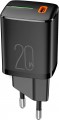 | 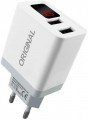 |
|---|---|---|
| Grand-X CH-790 | XOKO WC-350 | |
| Outdated Product | Expecting restock | |
| TOP sellers | ||
| Type | mains charger | mains charger |
| USB-A ports | 2 pcs | |
| USB-C ports | 1 pcs | |
| Max. power (USB) | 20 W | |
| Fast charge | Quick Charge 4.0 Power Delivery | Quick Charge 3.0 |
| Features | work indicator | display |
| Material | plastic | |
| Color | ||
| Added to E-Catalog | june 2023 | march 2022 |


Compare Grand-X CH-790 and XOKO WC-350
You may be interested in
My comparisons
Glossary
USB-A ports
The number of USB ports in the device design. Note that this refers only to classical, full-sized ports — the so-called USB-A; the number of USB-C ports, if available, is specified separately (see below).
The number of USB ports (of any type) corresponds to the number of gadgets that can be simultaneously connected to the charger using adapter cables or plugs for the corresponding port. At the same time, it should be noted that not all chargers are capable of providing full power to all charging outputs at once; for more details, see "Charging Current". As for the specific number of ports (USB-A and/or USB-C), nowadays relatively simple chargers with 1 port or 2 ports are the most popular. This is because individual chargers are usually purchased for one or two specific gadgets, and a larger number of charging outputs is comparatively rarely required. Nevertheless, you can easily find models with 3 ports and even more in the market.
The number of USB ports (of any type) corresponds to the number of gadgets that can be simultaneously connected to the charger using adapter cables or plugs for the corresponding port. At the same time, it should be noted that not all chargers are capable of providing full power to all charging outputs at once; for more details, see "Charging Current". As for the specific number of ports (USB-A and/or USB-C), nowadays relatively simple chargers with 1 port or 2 ports are the most popular. This is because individual chargers are usually purchased for one or two specific gadgets, and a larger number of charging outputs is comparatively rarely required. Nevertheless, you can easily find models with 3 ports and even more in the market.
USB-C ports
The number of USB-C ports provided in the design of the charger.
USB-C is a relatively new type of connector; it is slightly larger than microUSB and features a reversible design that allows you to insert the plug either way. Despite its compact size, these charging ports can offer quite advanced capabilities — particularly high power delivery and various quick charging technologies. On the other hand, in gadget chargers, this type of port is noticeably less common than full-sized USB (USB-A) ports and comes in smaller quantities — one, rarely two, and as a rarity three USB-C ports. This is because detachable cables typically rely on standard USB ports, which are easier to use with removable cables, and installing such ports in a charger (even a compact one) is not difficult. Therefore, in practice, it only makes sense to specifically look for a device with USB-C if you already have a compatible cable (or a gadget with a suitable plug).
USB-C is a relatively new type of connector; it is slightly larger than microUSB and features a reversible design that allows you to insert the plug either way. Despite its compact size, these charging ports can offer quite advanced capabilities — particularly high power delivery and various quick charging technologies. On the other hand, in gadget chargers, this type of port is noticeably less common than full-sized USB (USB-A) ports and comes in smaller quantities — one, rarely two, and as a rarity three USB-C ports. This is because detachable cables typically rely on standard USB ports, which are easier to use with removable cables, and installing such ports in a charger (even a compact one) is not difficult. Therefore, in practice, it only makes sense to specifically look for a device with USB-C if you already have a compatible cable (or a gadget with a suitable plug).
Max. power (USB)
The maximum energy level that the charger can deliver to a specific port. This parameter determines the charging speed of the gadget and the ability to power high-demand devices, such as laptops.
It's important to note that when using multiple ports simultaneously, the total power of the unit is often distributed among them, reducing the speed for each individual port. For example, a 65W adapter can deliver full power to a single laptop, but when a second smartphone is connected, it will share the resources, limiting the main port to, say, 45W. To achieve the stated maximum, it's necessary to use a quality cable, and the device being charged must support the corresponding charging power.
It's important to note that when using multiple ports simultaneously, the total power of the unit is often distributed among them, reducing the speed for each individual port. For example, a 65W adapter can deliver full power to a single laptop, but when a second smartphone is connected, it will share the resources, limiting the main port to, say, 45W. To achieve the stated maximum, it's necessary to use a quality cable, and the device being charged must support the corresponding charging power.
Fast charge
Fast charging technology supported by the device.
By itself, fast charging, as the name suggests, reduces the charging time compared to the standard procedure. For this, increased voltage and/or current power is used, as well as a special smart process control. But the possibilities and features of such charging may be different, depending on the specific technology used in the device. The same technology must be supported by the charger too — this is the only way to 100% guarantee correct operation. However some types of fast charging are mutually compatible — this point should be clarified separately, and compatibility is not always full.
Nowadays, the following technologies are most widely used: Quick Charge of different versions (3.0, 4.0, 5.0), Power Delivery (version 3.0, 3.1, 3.2), Pump Express, Samsung Adaptive Fast Charging, Huawei Fast Charge Protocol, Huawei SuperCharge Protocol, OPPO VOOC, OnePlus Dash Charge. Here is a brief description of each of them:
— Quick Charge (1.0, 2.0, 3.0, 4.0, 5.0). Technology created by Qua...lcomm and used in gadgets with Qualcomm CPUs. The later the version, the more perfect the technology: for example, Quick Charge 2.0 has 3 fixed voltage options, and version 3.0 has a smooth adjustment in the range from 3.6 to 20 V. Most often, gadgets with a newer version of Quick Charge are compatible with more old charging devices, but for full use, an exact match in versions is desirable.
Also note that certain versions of Quick Charge have become the basis for some other technologies. However, the mutual compatibility of chargers and gadgets with support for these technologies needs to be clarified separately.
— Pump Express. Own development of MediaTek, used in portable devices with CPUs of this brand. Also available in several versions, with improvements and additions as it develops.
— Power delivery. Native fast charging technology for the USB-C connector. Used by many brands, found mainly in chargers and gadgets equipped with this type of connector. Presented in several versions.
— Samsung Adaptive Fast Charging. Samsung's proprietary fast charging technology. It has been used without any changes since 2015, so it looks rather modest compared to newer standards. Nevertheless, it is able to provide good speed, especially in the first 50% of the charge.
— Huawei FastCharge Protocol. One of Huawei's proprietary technologies. Formally similar to Quick Charge 2.0, but used with both Qualcomm and other brands of mobile CPUs, so compatibility is not guaranteed. In general, it is considered obsolete, gradually being replaced by more advanced standards like the SuperCharge Protocol.
— Huawei SuperCharge Protocol. Another proprietary technology from Huawei introduced in 2016; for 2021 is available in several versions. In some devices, the power of such charging exceeds 60 V — not a record, but a very solid indicator.
— Oppo VOOC. OPPO technology, used both in branded smartphones and in products from other brands. Available in several versions; The latest (for 2021) version of SuperVOOC is for 2-cell batteries and is sometimes listed as a separate technology called Oppo SuperVOOC Flash Charge.
— OnePlus Dash Charge. A relatively old proprietary standard from OnePlus. An interesting feature is that in some gadgets, the effectiveness of Dash Charge is practically independent of the use of the screen: when the display is on, the battery charges at almost the same rate as when it is off. Technically a licensed version of OPPO's VOOC, however, these technologies are not compatible. Since 2018, Dash Charge has been phased out by Warp Charge, but this newer technology is rarely used in separately sold chargers.
In addition, on the market you can find chargers that support rarer and more specific formats of work; the features of these formats can be clarified by special sources.
By itself, fast charging, as the name suggests, reduces the charging time compared to the standard procedure. For this, increased voltage and/or current power is used, as well as a special smart process control. But the possibilities and features of such charging may be different, depending on the specific technology used in the device. The same technology must be supported by the charger too — this is the only way to 100% guarantee correct operation. However some types of fast charging are mutually compatible — this point should be clarified separately, and compatibility is not always full.
Nowadays, the following technologies are most widely used: Quick Charge of different versions (3.0, 4.0, 5.0), Power Delivery (version 3.0, 3.1, 3.2), Pump Express, Samsung Adaptive Fast Charging, Huawei Fast Charge Protocol, Huawei SuperCharge Protocol, OPPO VOOC, OnePlus Dash Charge. Here is a brief description of each of them:
— Quick Charge (1.0, 2.0, 3.0, 4.0, 5.0). Technology created by Qua...lcomm and used in gadgets with Qualcomm CPUs. The later the version, the more perfect the technology: for example, Quick Charge 2.0 has 3 fixed voltage options, and version 3.0 has a smooth adjustment in the range from 3.6 to 20 V. Most often, gadgets with a newer version of Quick Charge are compatible with more old charging devices, but for full use, an exact match in versions is desirable.
Also note that certain versions of Quick Charge have become the basis for some other technologies. However, the mutual compatibility of chargers and gadgets with support for these technologies needs to be clarified separately.
— Pump Express. Own development of MediaTek, used in portable devices with CPUs of this brand. Also available in several versions, with improvements and additions as it develops.
— Power delivery. Native fast charging technology for the USB-C connector. Used by many brands, found mainly in chargers and gadgets equipped with this type of connector. Presented in several versions.
— Samsung Adaptive Fast Charging. Samsung's proprietary fast charging technology. It has been used without any changes since 2015, so it looks rather modest compared to newer standards. Nevertheless, it is able to provide good speed, especially in the first 50% of the charge.
— Huawei FastCharge Protocol. One of Huawei's proprietary technologies. Formally similar to Quick Charge 2.0, but used with both Qualcomm and other brands of mobile CPUs, so compatibility is not guaranteed. In general, it is considered obsolete, gradually being replaced by more advanced standards like the SuperCharge Protocol.
— Huawei SuperCharge Protocol. Another proprietary technology from Huawei introduced in 2016; for 2021 is available in several versions. In some devices, the power of such charging exceeds 60 V — not a record, but a very solid indicator.
— Oppo VOOC. OPPO technology, used both in branded smartphones and in products from other brands. Available in several versions; The latest (for 2021) version of SuperVOOC is for 2-cell batteries and is sometimes listed as a separate technology called Oppo SuperVOOC Flash Charge.
— OnePlus Dash Charge. A relatively old proprietary standard from OnePlus. An interesting feature is that in some gadgets, the effectiveness of Dash Charge is practically independent of the use of the screen: when the display is on, the battery charges at almost the same rate as when it is off. Technically a licensed version of OPPO's VOOC, however, these technologies are not compatible. Since 2018, Dash Charge has been phased out by Warp Charge, but this newer technology is rarely used in separately sold chargers.
In addition, on the market you can find chargers that support rarer and more specific formats of work; the features of these formats can be clarified by special sources.
Features
— Operation indicator. In some models it also provides additional information about operating modes, malfunctions, etc. Most often, such a light indicator is in the form of a separate light or a clearly visible backlight system. And additional information can be provided by changing the colour of the backlight, by blinking, etc. However, even without these features, the operation indicator provides additional convenience in use. In particular, it allows you to determine whether the charger is receiving power and working normally — this can be useful when diagnosing various problems. It is also possible to use non-standard backlighting — for example, as a night light that makes it easier to navigate in an unlit room (especially since gadgets are often put on charge just at night).
— Display. Own display on the charger case. This is usually the simplest screen with a few characters, but it is enough to display various additional information that makes life easier for the user: current voltage and current values, fast charging status, error codes, etc. On the other hand, this complicates the design, but in fact such information is required less often; Therefore, very few chargers with displays are produced.
— Detachable charger power cable. Cable for connecting the charger to the power source, which has a removable design. By itself, connecting to a power outlet using a separate wire (both re...movable and non-removable) is rarely used in charger devices — mainly in devices for which the “plug on the case” type design is not suitable (this is primarily wireless models, as well as wired charger devices with an abundance of connectors and corresponding dimensions). Specifically, the removable design is convenient in two ways: firstly, the wire can be removed and compactly folded for storage and transportation, and secondly, if the cable is damaged, it can simply be replaced, no need to bother with repairs. The disadvantages include an increased probability of losing the cable, as well as a slightly lower reliability than with a non-removable design (the latter, however, becomes noticeable only with frequent connections/disconnections that wear out the connector).
— Non-detachable charger power cable. Cable for connecting the charger to the power source, rigidly fixed to the device and not intended to be disconnected. It occurs much less frequently than the removable one described above, since it is less convenient if necessary to compactly fold the device; and if the wire is damaged, most likely, you will have to carry the charger to a service centre. On the other hand, you can lose such a wire only together with the charger itself.
— Display. Own display on the charger case. This is usually the simplest screen with a few characters, but it is enough to display various additional information that makes life easier for the user: current voltage and current values, fast charging status, error codes, etc. On the other hand, this complicates the design, but in fact such information is required less often; Therefore, very few chargers with displays are produced.
— Detachable charger power cable. Cable for connecting the charger to the power source, which has a removable design. By itself, connecting to a power outlet using a separate wire (both re...movable and non-removable) is rarely used in charger devices — mainly in devices for which the “plug on the case” type design is not suitable (this is primarily wireless models, as well as wired charger devices with an abundance of connectors and corresponding dimensions). Specifically, the removable design is convenient in two ways: firstly, the wire can be removed and compactly folded for storage and transportation, and secondly, if the cable is damaged, it can simply be replaced, no need to bother with repairs. The disadvantages include an increased probability of losing the cable, as well as a slightly lower reliability than with a non-removable design (the latter, however, becomes noticeable only with frequent connections/disconnections that wear out the connector).
— Non-detachable charger power cable. Cable for connecting the charger to the power source, rigidly fixed to the device and not intended to be disconnected. It occurs much less frequently than the removable one described above, since it is less convenient if necessary to compactly fold the device; and if the wire is damaged, most likely, you will have to carry the charger to a service centre. On the other hand, you can lose such a wire only together with the charger itself.