
Comparison Oculus Go 64 GB vs Lenovo Explorer
Add to comparison | 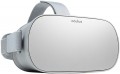 | 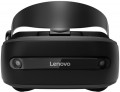 |
|---|---|---|
| Oculus Go 64 GB | Lenovo Explorer | |
| Outdated Product | from $350.00 | |
| TOP sellers | ||
Oculus Go is a standalone VR headset that does not require connection to a computer or smartphone. Controller included. Spatial Sound Technology. 3D location tracking. Mi VR Standalone and Oculus Go devices have the same specifications, the difference is that Mi VR Standalone will be presented exclusively in China. | 2 Inside-out motion detection cameras. Voice control system Cortana. Cortana is available in select markets, experience may vary by region. | |
| Device type | VR glasses | VR glasses |
| Purpose (compatibility) | autonomous device | Windows |
Specs | ||
| Screen resolution | 2560x1440 px | 2880x1440 px |
| Field of view | 100 ° | 110 ° |
| Built-in memory | 64 GB | |
| RAM | 3 GB | |
| CPU | Snapdragon 821 | |
| Refresh rate | 60 fps | 90 fps |
| 6DoF motion tracking |  |  |
| Accelerometer | | |
| Gyroscope | | |
| Proximity sensor | | |
| Lens distance adjusting | | |
| Pupillary distance adjustment | | |
Multimedia | ||
| Bluetooth | v 4.0 | |
| Wi-Fi | Wi-Fi 5 (802.11ac) | |
| Headphones | | |
| Headphone output | | |
General | ||
| Controller | | |
| Battery capacity | 2600 mAh | |
| Material | plastic | plastic |
| Dimensions (HxWxD) | 105x190x115 mm | 185x102x95 mm |
| Weight | 468 g | 380 g |
| Added to E-Catalog | may 2019 | september 2018 |


Compare Oculus Go 64 GB and Lenovo Explorer
You may be interested in
Oculus Go 64 GB often compared


Lenovo Explorer often compared


Glossary
Purpose (compatibility)
The signal source in VR headsets reveals where exactly the image comes from and who performs the main "heavy" graphic processing. In one case, the image is generated by a powerful PC or console, in another — a mobile phone, and for FPV goggles, the signal comes directly from the drone via a radio channel. Stand-alone devices that do not require connection to external gadgets deserve special mention. The chosen signal source affects the image quality, latency, the range of available games and applications, as well as how the VR headset is connected — via cable, Wi-Fi, Bluetooth, or through a specialized transmitter.
— Stand-alone Device. VR headsets where the headset itself acts as the signal source: it has a mobile processor, video chip, memory, and its own operating system inside, so the image is generated directly in the headset, not on a computer or phone. The user wears the headset, connects to Wi-Fi, and launches games and apps from the built-in store — no wires, no PC, and no mandatory smartphone at hand. Such solutions are closer in power to a good Android smartphone and fall short of a Windows PC setup, but are noticeably more convenient than mobile headsets, where everything is tied to the phone: no need to insert the device into the casing, monitor heating, or charge two devices at once. Stand-alone VR headsets are especially suitable for everyday games, fitness, and education, where freedom of movement and ease of launc...h are more important than maximum graphic settings.
— Android. VR headsets are tied to Google's mobile platform and work either in tandem with a smartphone or independently as an Android stand-alone device. In the first case, the phone is inserted into the headset casing or connected to it wirelessly, forming the image and transmitting it to the headset's screens, in the second case, the headset contains a built-in chipset, memory, and app store, and the phone is used only for setup and streaming. This signal source makes VR mobile: a smartphone and headset are enough to run simple games, 360 videos, and educational apps without a powerful PC, but in terms of graphics, these solutions fall short of full-fledged PC and console systems.
— iOS (iPhone). Similar in concept to Android, but tailored to the Apple ecosystem and iPhone smartphones. In this case, the VR headset receives an image either from the phone itself, installed in the headset casing, or through a special streaming/mirroring mode from the iPhone via Wi-Fi or Lightning/USB-C cable. iOS support means that the user can access a large number of applications, 360 videos, and educational content from the App Store, while the system is generally simpler and more reliable in setup, but the choice of "real" VR games is smaller than in the Android or Windows world.
— Windows. VR headsets work in conjunction with a PC running Windows, which is fully responsible for 3D graphics output. Typically, the headset connects via USB-C / DisplayPort or via Wi-Fi in streaming mode, and the headset acts as a "display with sensors." This signal source provides the most advanced VR gaming: major gaming platforms, simulators, mods are supported, and the quality and stability depend on the computer's graphics card and processor.
— MacOS. VR headsets can receive images from Apple computers — iMac, MacBook, and other models with macOS. Here, VR is more often used for demonstrations, design, 3D viewing, and professional applications than hardcore gaming, so stable integration and proper driver operation are more important than maximum performance. Connection is usually through USB-C / Thunderbolt and specialized software, and the choice of native VR content for macOS is noticeably more modest than for Windows.
— PlayStation. VR headsets are designed to work with PS4 or PS5 consoles, which render all graphics. Proprietary HDMI/USB connections and Sony's own protocols are used here, and the headset itself is optimized for the console's ecosystem. This option provides a predictable experience: PS VR games are carefully adapted to the specific model of headset, latency is minimal, and the user does not need to think about drivers or hardware configuration.
— Xbox. The Xbox signal source implies compatibility with the console in display mode or via an intermediate PC. In the traditional sense, Xbox lacks complete VR support, so the headset is more often used as an external display rather than a comprehensive VR solution with game space tracking. If the manufacturer still declares Xbox as a signal source, it is worth carefully studying the description: most often these are specific scenarios like a "cinema" or streaming output, rather than full VR projects.
— Drone (quadcopter). A separate class of VR headsets where the image comes directly from the drone's camera in real-time via radio channel. Such goggles have a receiver operating on specific frequencies and protocols inside, so compatibility is usually strictly tied to a specific system: the headset "understands" only those video transmitters and modules for which it was originally designed. The main task here is to ensure minimal latency so the pilot can safely and accurately control the drone "first-person" rather than launching ordinary games, and it is crucial to check in advance whether the goggles will work correctly with your FPV set or if it will require changing the camera/transmitter to the required standard.
— Stand-alone Device. VR headsets where the headset itself acts as the signal source: it has a mobile processor, video chip, memory, and its own operating system inside, so the image is generated directly in the headset, not on a computer or phone. The user wears the headset, connects to Wi-Fi, and launches games and apps from the built-in store — no wires, no PC, and no mandatory smartphone at hand. Such solutions are closer in power to a good Android smartphone and fall short of a Windows PC setup, but are noticeably more convenient than mobile headsets, where everything is tied to the phone: no need to insert the device into the casing, monitor heating, or charge two devices at once. Stand-alone VR headsets are especially suitable for everyday games, fitness, and education, where freedom of movement and ease of launc...h are more important than maximum graphic settings.
— Android. VR headsets are tied to Google's mobile platform and work either in tandem with a smartphone or independently as an Android stand-alone device. In the first case, the phone is inserted into the headset casing or connected to it wirelessly, forming the image and transmitting it to the headset's screens, in the second case, the headset contains a built-in chipset, memory, and app store, and the phone is used only for setup and streaming. This signal source makes VR mobile: a smartphone and headset are enough to run simple games, 360 videos, and educational apps without a powerful PC, but in terms of graphics, these solutions fall short of full-fledged PC and console systems.
— iOS (iPhone). Similar in concept to Android, but tailored to the Apple ecosystem and iPhone smartphones. In this case, the VR headset receives an image either from the phone itself, installed in the headset casing, or through a special streaming/mirroring mode from the iPhone via Wi-Fi or Lightning/USB-C cable. iOS support means that the user can access a large number of applications, 360 videos, and educational content from the App Store, while the system is generally simpler and more reliable in setup, but the choice of "real" VR games is smaller than in the Android or Windows world.
— Windows. VR headsets work in conjunction with a PC running Windows, which is fully responsible for 3D graphics output. Typically, the headset connects via USB-C / DisplayPort or via Wi-Fi in streaming mode, and the headset acts as a "display with sensors." This signal source provides the most advanced VR gaming: major gaming platforms, simulators, mods are supported, and the quality and stability depend on the computer's graphics card and processor.
— MacOS. VR headsets can receive images from Apple computers — iMac, MacBook, and other models with macOS. Here, VR is more often used for demonstrations, design, 3D viewing, and professional applications than hardcore gaming, so stable integration and proper driver operation are more important than maximum performance. Connection is usually through USB-C / Thunderbolt and specialized software, and the choice of native VR content for macOS is noticeably more modest than for Windows.
— PlayStation. VR headsets are designed to work with PS4 or PS5 consoles, which render all graphics. Proprietary HDMI/USB connections and Sony's own protocols are used here, and the headset itself is optimized for the console's ecosystem. This option provides a predictable experience: PS VR games are carefully adapted to the specific model of headset, latency is minimal, and the user does not need to think about drivers or hardware configuration.
— Xbox. The Xbox signal source implies compatibility with the console in display mode or via an intermediate PC. In the traditional sense, Xbox lacks complete VR support, so the headset is more often used as an external display rather than a comprehensive VR solution with game space tracking. If the manufacturer still declares Xbox as a signal source, it is worth carefully studying the description: most often these are specific scenarios like a "cinema" or streaming output, rather than full VR projects.
— Drone (quadcopter). A separate class of VR headsets where the image comes directly from the drone's camera in real-time via radio channel. Such goggles have a receiver operating on specific frequencies and protocols inside, so compatibility is usually strictly tied to a specific system: the headset "understands" only those video transmitters and modules for which it was originally designed. The main task here is to ensure minimal latency so the pilot can safely and accurately control the drone "first-person" rather than launching ordinary games, and it is crucial to check in advance whether the goggles will work correctly with your FPV set or if it will require changing the camera/transmitter to the required standard.
Screen resolution
Resolution of built-in displays in glasses equipped with such equipment — that is, models for PC / consoles, as well as standalone devices (see "Intended use").
The higher the resolution, the more smooth and detailed the “picture” is given out by glasses, all other things being equal. Thanks to the development of technology nowadays, models with Full HD (1920x1080) screens and even higher resolutions are not uncommon. On the other hand, this parameter significantly affects the cost of points. In addition, it is worth remembering that in order to fully work with high-resolution displays, you need powerful graphics capable of playing relevant content. In the case of glasses for PCs and set-top boxes, this puts forward corresponding requirements for external devices, and in standalone models you have to use advanced integrated video adapters (which affects the cost even more).
The higher the resolution, the more smooth and detailed the “picture” is given out by glasses, all other things being equal. Thanks to the development of technology nowadays, models with Full HD (1920x1080) screens and even higher resolutions are not uncommon. On the other hand, this parameter significantly affects the cost of points. In addition, it is worth remembering that in order to fully work with high-resolution displays, you need powerful graphics capable of playing relevant content. In the case of glasses for PCs and set-top boxes, this puts forward corresponding requirements for external devices, and in standalone models you have to use advanced integrated video adapters (which affects the cost even more).
Field of view
The viewing angle provided by virtual reality glasses is the angular size of the space that falls into the user's field of view. Usually, the characteristics indicate the size of this space horizontally; however, if you need the most accurate information, this point needs to be specified separately.
The wider the viewing angle — the more the game space the user can see without turning his head, the more powerful the immersion effect and the less likely that the image will be subject to the "tunnel vision" effect. On the other hand, making the field of view too wide also does not make sense, given the characteristics of the human eye. In general, a large viewing angle is considered to be an angle of 100° or more. On the other hand, there are models where this indicator is 30° or even less — these are, usually, specific devices (for example, drone piloting glasses and augmented reality glasses), where such characteristics are quite justified given the overall functionality.
The wider the viewing angle — the more the game space the user can see without turning his head, the more powerful the immersion effect and the less likely that the image will be subject to the "tunnel vision" effect. On the other hand, making the field of view too wide also does not make sense, given the characteristics of the human eye. In general, a large viewing angle is considered to be an angle of 100° or more. On the other hand, there are models where this indicator is 30° or even less — these are, usually, specific devices (for example, drone piloting glasses and augmented reality glasses), where such characteristics are quite justified given the overall functionality.
Built-in memory
The size of the built-in storage installed in the glasses.
Such storage is only found in standalone devices (see "Purpose")—it's used for storing firmware and various additional content (applications, panoramic movies, etc.). The larger the storage size, the more content can be stored on the device; on the other hand, this characteristic directly impacts the price. It's also worth considering that some models allow the built-in storage to be expanded with a memory card (see "Card Reader" for more details).
For modern virtual reality glasses, the minimum storage size is 16 GB—installing smaller storage is technically impractical. In advanced models, this capacity can reach 128 GB.
Such storage is only found in standalone devices (see "Purpose")—it's used for storing firmware and various additional content (applications, panoramic movies, etc.). The larger the storage size, the more content can be stored on the device; on the other hand, this characteristic directly impacts the price. It's also worth considering that some models allow the built-in storage to be expanded with a memory card (see "Card Reader" for more details).
For modern virtual reality glasses, the minimum storage size is 16 GB—installing smaller storage is technically impractical. In advanced models, this capacity can reach 128 GB.
RAM
The amount of random access memory (RAM) installed in glasses.
This parameter is relevant only for independent devices (see "Intended use"). Theoretically, the more RAM in the gadget, the higher its power, the faster it is able to work and the better it handles with “heavy” tasks. However, in fact, this characteristic has more reference than practical value. Firstly, the capabilities of standalone glasses are also highly dependent on the processor and video adapter used. Secondly, the amount of memory is selected in such a way that the glasses are guaranteed to be able to cope with the tasks for which they were originally intended. Actually, problems can only arise with the launch of very demanding applications or resource-intensive video (for example, 4K panoramic videos); so paying attention to the amount of RAM makes sense only if you plan to use glasses for such purposes.
As for specific volumes, they in modern devices range from 2 to 4 GB.
This parameter is relevant only for independent devices (see "Intended use"). Theoretically, the more RAM in the gadget, the higher its power, the faster it is able to work and the better it handles with “heavy” tasks. However, in fact, this characteristic has more reference than practical value. Firstly, the capabilities of standalone glasses are also highly dependent on the processor and video adapter used. Secondly, the amount of memory is selected in such a way that the glasses are guaranteed to be able to cope with the tasks for which they were originally intended. Actually, problems can only arise with the launch of very demanding applications or resource-intensive video (for example, 4K panoramic videos); so paying attention to the amount of RAM makes sense only if you plan to use glasses for such purposes.
As for specific volumes, they in modern devices range from 2 to 4 GB.
CPU
The model of the processor installed in the glasses.
This information is indicated mainly for stand-alone devices (see "Intended use") — it is in them that the capabilities of the glasses as a whole directly depend on the processor model. And knowing the name of the chip, you can find detailed data on it and evaluate its effectiveness. At the same time, in fact, such a need arises extremely rarely: manufacturers choose processors in such a way that glasses can be used for their main purpose without any problems. So when choosing, you should pay attention to more practical parameters — display resolution, refresh rate, etc.
This information is indicated mainly for stand-alone devices (see "Intended use") — it is in them that the capabilities of the glasses as a whole directly depend on the processor model. And knowing the name of the chip, you can find detailed data on it and evaluate its effectiveness. At the same time, in fact, such a need arises extremely rarely: manufacturers choose processors in such a way that glasses can be used for their main purpose without any problems. So when choosing, you should pay attention to more practical parameters — display resolution, refresh rate, etc.
Refresh rate
The refresh rate supported by the glasses' built-in screens, in simple terms, is the maximum frame rate that the screens are capable of delivering.
Recall that screens are provided in models for PC / consoles and in stand-alone devices (see "Intended use"). And the quality of the picture directly depends on this indicator: other things being equal, a higher frame rate provides a smoother image, without jerks and with good detail in dynamic scenes. The flip side of these benefits is an increase in price.
It is also worth considering that in some cases the actual frame rate will not be limited by the capabilities of the glasses, but by the characteristics of the external device or the properties of the content being played. For example, a relatively weak PC graphics card may not be able to pull out a high frame rate signal, or a certain frame rate may be set in the game and not provide boosting. Therefore, you should not chase after large values and points with a frequency of 90 fps will be enough.
Recall that screens are provided in models for PC / consoles and in stand-alone devices (see "Intended use"). And the quality of the picture directly depends on this indicator: other things being equal, a higher frame rate provides a smoother image, without jerks and with good detail in dynamic scenes. The flip side of these benefits is an increase in price.
It is also worth considering that in some cases the actual frame rate will not be limited by the capabilities of the glasses, but by the characteristics of the external device or the properties of the content being played. For example, a relatively weak PC graphics card may not be able to pull out a high frame rate signal, or a certain frame rate may be set in the game and not provide boosting. Therefore, you should not chase after large values and points with a frequency of 90 fps will be enough.
6DoF motion tracking
6DoF tracking in VR headsets provides a full sense of "presence": the system reacts not only to head turns but also to real movements—forward-backward, side-to-side, and up-down, plus three axes of rotation. Unlike the simplified 3DoF, where the user seems to be anchored to one spot and can only look around, 6DoF allows you to lean toward objects, step back, crouch, or peek around corners—all these movements are accurately mirrored in the virtual scene. For this, the headset uses cameras and sensors (inside-out tracking) or external base stations, constantly calculating the position of the helmet and controllers in the room. In games and simulations, such tracking makes interaction with the world feel natural: you can actually "dodge" attacks, reach for levers, walk around the room, and in professional applications—practice gestures, body, and hand movements with high precision and without feeling unnatural limitations.
Proximity sensor
The presence of a sensor in the glasses that reacts to approaching the user's face.
A similar sensor is used to automatically switch between operating and standby modes: for example, when the user takes off the glasses, the sensor turns off the built-in screens (or the phone, if it is connected to the glasses via a connector), saving battery power and equipment life, and when put on, it turns on points for full functionality.
A similar sensor is used to automatically switch between operating and standby modes: for example, when the user takes off the glasses, the sensor turns off the built-in screens (or the phone, if it is connected to the glasses via a connector), saving battery power and equipment life, and when put on, it turns on points for full functionality.