
Comparison HTC Vive Cosmos vs HTC Vive Pro
Add to comparison | 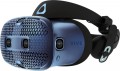 | 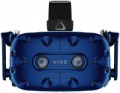 |
|---|---|---|
| HTC Vive Cosmos | HTC Vive Pro | |
from $832.00 | from $621.58 | |
| User reviews | ||
| TOP sellers | ||
To work, you need to connect to a computer or smartphone. The design of the device has 4 cameras (2 front, 2 side). Thanks to the presence of cameras and controllers, there is no need for external motion tracking devices. Requires the use of two controllers to track the movements of the user. | Headphones have a built-in amplifier. Dual front camera. Increased resolution of AMOLED matrices. Comfortable fit. Huge library of PC games. Requires a relatively powerful PC and a lot of free space in the room. | |
| Device type | VR glasses | VR glasses |
| Purpose (compatibility) | Windows | Windows |
Specs | ||
| Screen resolution | 2880x1700 px | 2880x1600 px |
| Field of view | 110 ° | 110 ° |
| Refresh rate | 90 fps | 90 fps |
| 6DoF motion tracking |  | |
| Accelerometer | | |
| Gyroscope | | |
| Proximity sensor | |  |
| Lens distance adjusting | | |
| Pupillary distance adjustment | | |
Multimedia | ||
| USB-A | | |
| USB-C | + | |
| DisplayPort | v1.2 | v1.2 |
| Bluetooth | + | |
| Microphone | | |
| Headphones | | |
General | ||
| Controller | | |
| Track camera | | |
| Material | plastic | plastic |
| Added to E-Catalog | january 2019 | january 2018 |


Compare HTC Vive Cosmos and Vive Pro
You may be interested in
My comparisons
HTC Vive Cosmos often compared


HTC Vive Pro often compared


Glossary
Screen resolution
Resolution of built-in displays in glasses equipped with such equipment — that is, models for PC / consoles, as well as standalone devices (see "Intended use").
The higher the resolution, the more smooth and detailed the “picture” is given out by glasses, all other things being equal. Thanks to the development of technology nowadays, models with Full HD (1920x1080) screens and even higher resolutions are not uncommon. On the other hand, this parameter significantly affects the cost of points. In addition, it is worth remembering that in order to fully work with high-resolution displays, you need powerful graphics capable of playing relevant content. In the case of glasses for PCs and set-top boxes, this puts forward corresponding requirements for external devices, and in standalone models you have to use advanced integrated video adapters (which affects the cost even more).
The higher the resolution, the more smooth and detailed the “picture” is given out by glasses, all other things being equal. Thanks to the development of technology nowadays, models with Full HD (1920x1080) screens and even higher resolutions are not uncommon. On the other hand, this parameter significantly affects the cost of points. In addition, it is worth remembering that in order to fully work with high-resolution displays, you need powerful graphics capable of playing relevant content. In the case of glasses for PCs and set-top boxes, this puts forward corresponding requirements for external devices, and in standalone models you have to use advanced integrated video adapters (which affects the cost even more).
Proximity sensor
The presence of a sensor in the glasses that reacts to approaching the user's face.
A similar sensor is used to automatically switch between operating and standby modes: for example, when the user takes off the glasses, the sensor turns off the built-in screens (or the phone, if it is connected to the glasses via a connector), saving battery power and equipment life, and when put on, it turns on points for full functionality.
A similar sensor is used to automatically switch between operating and standby modes: for example, when the user takes off the glasses, the sensor turns off the built-in screens (or the phone, if it is connected to the glasses via a connector), saving battery power and equipment life, and when put on, it turns on points for full functionality.
USB-A
The presence of at least one USB-A port in the glasses. This is a full-sized USB port, the same type as standard USB ports on computers and laptops. However, its functions may vary depending on the functionality of the glasses (see "Purpose"). For models for PCs and consoles, USB-A is one of the connection ports used in conjunction with a video interface like HDMI or DisplayPort: the video interface transmits the image, while the USB connection transmits data from sensors on the glasses necessary for changing the picture and creating an "immersion effect". In standalone devices, USB-A is used for connecting various additional accessories — for example, flash drives with applications or other content. This port may also be used for charging the battery, although such use is generally not typical for it.
USB-C
Presence of a USB-C port in glasses. This is a relatively new type of USB port, with miniature size (slightly larger than microUSB) and a convenient reversible design, allowing the plug to be connected either way. It can be found in glasses of different purposes and, accordingly, designed for various applications. For example, in models for PCs/consoles, this port is used similarly to traditional USB-A — for main connection, alongside HDMI or DisplayPort interfaces. In standalone devices, in turn, USB-C is mainly intended for battery charging and connection to a computer for direct file exchange, settings management, firmware updates, etc.
It should also be noted that this section might specify the USB version that the USB-C port corresponds to. Currently, two versions are relevant — 5Gbps and 10Gbps; for VR glasses, the difference between them is generally not significant.
It should also be noted that this section might specify the USB version that the USB-C port corresponds to. Currently, two versions are relevant — 5Gbps and 10Gbps; for VR glasses, the difference between them is generally not significant.
Bluetooth
The presence of a Bluetooth module in the glasses; The Bluetooth version to which this module corresponds can also be specified here.
Bluetooth is a technology created for direct wireless connection between various devices. This technology is found in all types of VR glasses (see “Purpose”), although most models with its support are independent devices. In any case, the most popular way to use Bluetooth in virtual reality glasses is to broadcast sound wirelessly. Moreover, the format of such a broadcast may be different, depending on the specifics of the glasses themselves. Thus, standalone devices broadcast the reproduced sound to external headphones. Models for PCs and smartphones may have built-in headphones, and here the sound is transmitted via Bluetooth to the glasses from an external device; Audio from the built-in microphone can be transmitted in the opposite direction.
In addition, there are other possible ways to use Bluetooth, such as directly exchanging files with another device or connecting game controllers. Such capabilities are found exclusively in stand-alone glasses; the specific functionality for each model should be clarified separately.
As for the versions, the oldest one used in VR glasses today is Bluetooth 3.0, the newest is Bluetooth 5.0. However, the differences between different versions for such devices are not fundamental; this information is provided mainly for reference purposes.
Bluetooth is a technology created for direct wireless connection between various devices. This technology is found in all types of VR glasses (see “Purpose”), although most models with its support are independent devices. In any case, the most popular way to use Bluetooth in virtual reality glasses is to broadcast sound wirelessly. Moreover, the format of such a broadcast may be different, depending on the specifics of the glasses themselves. Thus, standalone devices broadcast the reproduced sound to external headphones. Models for PCs and smartphones may have built-in headphones, and here the sound is transmitted via Bluetooth to the glasses from an external device; Audio from the built-in microphone can be transmitted in the opposite direction.
In addition, there are other possible ways to use Bluetooth, such as directly exchanging files with another device or connecting game controllers. Such capabilities are found exclusively in stand-alone glasses; the specific functionality for each model should be clarified separately.
As for the versions, the oldest one used in VR glasses today is Bluetooth 3.0, the newest is Bluetooth 5.0. However, the differences between different versions for such devices are not fundamental; this information is provided mainly for reference purposes.
Microphone
The presence of a microphone in the design of VR glasses.
This function is mainly equipped with models for PC / consoles (see "Intended use"). The built-in microphone is mainly used for voice communication in online games. At the same time, it often turns out to be more convenient than a desktop microphone or a microphone built into a headset: glasses can interfere with the comfortable wearing of a headset, and a desktop device is not applicable because at least the user’s head (or even the whole body) is constantly moving in VR games, and constantly it is impossible to be at the optimal distance from the microphone.
For added convenience, your own microphone can be made retractable or removable.
This function is mainly equipped with models for PC / consoles (see "Intended use"). The built-in microphone is mainly used for voice communication in online games. At the same time, it often turns out to be more convenient than a desktop microphone or a microphone built into a headset: glasses can interfere with the comfortable wearing of a headset, and a desktop device is not applicable because at least the user’s head (or even the whole body) is constantly moving in VR games, and constantly it is impossible to be at the optimal distance from the microphone.
For added convenience, your own microphone can be made retractable or removable.
Controller
The presence of a controller — an additional control device — is included in the delivery of glasses.
The design and functionality of such an accessory may be different. So, the most popular option is specialized game controllers with a characteristic look — a handle with an analogue lever and buttons. There can be two such handles at once, under both hands; and in some models they are also used to control gestures. The movement of the hands can be tracked both by sensors in the controllers themselves and by cameras on the glasses. There are also simpler solutions — for example, portable gamepads or remote controls for controlling video playback.
The design and functionality of such an accessory may be different. So, the most popular option is specialized game controllers with a characteristic look — a handle with an analogue lever and buttons. There can be two such handles at once, under both hands; and in some models they are also used to control gestures. The movement of the hands can be tracked both by sensors in the controllers themselves and by cameras on the glasses. There are also simpler solutions — for example, portable gamepads or remote controls for controlling video playback.