
Comparison Polaroid PLAY vs Myriwell RP200B
Add to comparison | 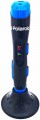 | 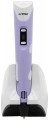 |
|---|---|---|
| Polaroid PLAY | Myriwell RP200B | |
| Outdated Product | Outdated Product | |
| TOP sellers | ||
Plastic feed speed adjustment. Automatic filament ejection after 10 min. inaction. Mains powered and via USB. Stand for vertical parking handles. | ||
| Product Type | hot printing | hot printing |
| Filament Material | PLA | PLA |
| Min thread diameter | 1.75 mm | 1.75 mm |
| Nozzle Diameter | 0.6 mm | 0.7 mm |
| Print Speed | 40 mm/s | |
Features | ||
| Temperature Adjust |  | |
| Number of Speeds | 4 | 3 |
| USB powered | | |
| Auto Power Off | | |
| Display |  | |
General | ||
| Tip Material | ceramics | ceramics |
| Stand | | |
| Country of brand origin | USA | China |
| Dimensions | 185x35x45 mm | 187x44x30 mm |
| Thickness | 35 mm | 30 mm |
| Weight | 150 g | 96 g |
| Added to E-Catalog | july 2017 | march 2017 |


Compare Polaroid PLAY and Myriwell RP200B
You may be interested in
My comparisons
Polaroid PLAY often compared


Myriwell RP200B often compared


Glossary
Nozzle Diameter
The diameter of the nozzle provided in the pen.
The larger the nozzle, the thicker the lines produced by the pen will be (ceteris paribus; the actual thickness of the lines will also depend on the type of plastic and the adjusted temperature). In the thinnest models, the nozzle diameter is less than 0.5 mm, in the thickest models it is about 0.9 mm. Most modern 3D pens have nozzles in the range of 0.6 – 0.7 mm — this value is considered the most versatile and convenient for practical use.
The larger the nozzle, the thicker the lines produced by the pen will be (ceteris paribus; the actual thickness of the lines will also depend on the type of plastic and the adjusted temperature). In the thinnest models, the nozzle diameter is less than 0.5 mm, in the thickest models it is about 0.9 mm. Most modern 3D pens have nozzles in the range of 0.6 – 0.7 mm — this value is considered the most versatile and convenient for practical use.
Print Speed
The material feed rate provided by the pen. The higher this speed, the faster you can work with this model; on the other hand, the rapid supply of material requires increased accuracy and serious skills. The maximum value of this parameter in modern 3D pens is about 40 mm/s. Models with adjusted speed is also available (see below); for them, usually, the highest speed of operation is given in the specs.
Number of Speeds
The number of fixed speed settings provided in the pen. This spec is specified only if there is more than one such setting.
The speed control allows you to adjust the mode of operation to the circumstances: for example, a low speed will be convenient for fine work, and a high speed is so for large elements. And the more speed settings there are in the pen, the wider the choice for the user to configure the device more accurately. In the most advanced models, the number of speeds can reach eight.
Note that the speed adjust can be not only stepwise, but also smooth (see above).
The speed control allows you to adjust the mode of operation to the circumstances: for example, a low speed will be convenient for fine work, and a high speed is so for large elements. And the more speed settings there are in the pen, the wider the choice for the user to configure the device more accurately. In the most advanced models, the number of speeds can reach eight.
Note that the speed adjust can be not only stepwise, but also smooth (see above).
Display
The availability of a built-in display. Usually, these are the simplest single-colour screens that display the basic operating parameters — speed and/or temperature. However, even such a display makes the pen more convenient and allows you to get important information about its operation.
Country of brand origin
The country of origin indicated in the specifications of the device. Note that this is far from necessarily the place of actual manufacturing: frequently the “homeland” of the brand or the location of the manufacturer’s HQ is indicated as the country of origin of products. Additionally, giving the importance to this parameter, it should be taken into account that many “national” stereotypes are unfounded: in the modern world, the quality of a product depends not so much on its country of origin, but on the price category and the overall reputation of the manufacturer. So, paying attention to the country of origin makes sense only if you fundamentally want (or do not want) to support a brand from a certain country.