
Comparison Intertool AT-3020 vs Forte CD-10M
Add to comparison | 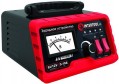 | 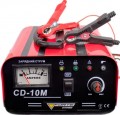 |
|---|---|---|
| Intertool AT-3020 | Forte CD-10M | |
| Outdated Product | Outdated Product | |
| User reviews | ||
| TOP sellers | ||
| Device | charger | charger |
| Type | transformer | |
Specs | ||
| Battery compatibility | WET/EFB (Lead-Acid) | WET/EFB (Lead-Acid) |
| Battery voltage | 6 В 12 В | 6 В 12 В |
| Min. charging current | 2.5 А | |
| Max. charging current | 10 А | 10 А |
| Current adjustment | stepless adjustment | stepless adjustment |
| Battery capacity 12V | 1 – 120 Ah | 20 – 120 Ah |
| Features | ammeter charging indicator overcharge protection | ammeter charging indicator overcharge protection |
General | ||
| Power source | 230 В | 230 В |
| Power consumption (charge) | 120 W | |
| Size | 150x140x90 mm | |
| Weight | 0.95 kg | 1.3 kg |
| Added to E-Catalog | march 2018 | january 2018 |


Compare Intertool AT-3020 and Forte CD-10M
You may be interested in
My comparisons
Intertool AT-3020 often compared


Forte CD-10M often compared


Glossary
Type
— Transformer. The design of such devices is based on a transformer with a rectifier, operating on the principle of electromagnetic induction. It converts alternating power from the network into a small direct power for charging the battery. Transformer chargers are distinguished by increased reliability, simple design and low cost. At the same time, they have large dimensions and solid weight.
— Pulse (inverter). Pulse (inverter) chargers affect the battery by supplying high-frequency pulses of low-amperage power. Using pulse chargers, it is possible to supply both direct and alternating power; sometimes they are used for mixed or combined charging of batteries. The vast majority of such chargers operate in an autonomous mode with automatic parameter control. Also, pulse chargers are many times more compact and lighter than transformer counterparts, but they are more expensive.
— Pulse (inverter). Pulse (inverter) chargers affect the battery by supplying high-frequency pulses of low-amperage power. Using pulse chargers, it is possible to supply both direct and alternating power; sometimes they are used for mixed or combined charging of batteries. The vast majority of such chargers operate in an autonomous mode with automatic parameter control. Also, pulse chargers are many times more compact and lighter than transformer counterparts, but they are more expensive.
Min. charging current
The smallest current that the charger can provide in charging mode. See "Maximum charging current.
This parameter in our catalog is indicated only for those models that have several current adjustments (see below).
This parameter in our catalog is indicated only for those models that have several current adjustments (see below).
Battery capacity 12V
The capacity of batteries with an operating voltage of 12 V, for which a starter charger can be used. As a rule, modern units are not designed for one specific value, but for a range of capacities, which greatly facilitates the search filter according to the required parameters.
Note that although the discrepancy between the rechargeable battery in terms of capacity is not as critical as in terms of current or voltage, this does not mean that this parameter should not be paid attention to. Both too capacious and too “small” a battery will cause the charger to work in an off-design mode, which is harmful to both the “charger” and the battery, and can even lead to accidents.
Note that although the discrepancy between the rechargeable battery in terms of capacity is not as critical as in terms of current or voltage, this does not mean that this parameter should not be paid attention to. Both too capacious and too “small” a battery will cause the charger to work in an off-design mode, which is harmful to both the “charger” and the battery, and can even lead to accidents.
Power consumption (charge)
Electrical power consumed by the charger during operation. Both the amount of electricity “consumed” by the unit and the load it creates on the power grid depend on this indicator (with a power of more than 5 kW, connection is required according to special rules). Note that high current (see above) requires high power.
For universal starting-charging models (see "Type"), this paragraph indicates the power consumed in the charging mode; keep in mind that in start-up mode, power consumption can be several times higher.
For universal starting-charging models (see "Type"), this paragraph indicates the power consumed in the charging mode; keep in mind that in start-up mode, power consumption can be several times higher.