
Comparison B.Well WI-922 vs B.Well WI-911
Add to comparison | 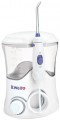 | 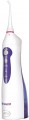 |
|---|---|---|
| B.Well WI-922 | B.Well WI-911 | |
| Outdated Product | Outdated Product | |
| User reviews | ||
| TOP sellers | ||
Attachments for two users. Long battery life. | ||
| Type | irrigator | irrigator |
| Nozzles | 7 no. standard (single jet) orthodontic (for braces) periodontological (pocket cleaning) for implants for tongue cleaning | 2 no. standard (single jet) |
Specs | ||
| Intensity modes | 10 | 2 |
| Additional modes | impulse (Pulse) | |
| Pulsation rate | 1.6 thousand/min | |
| Irrigator pressure | up to 120 PSI | |
| Water tank capacity | 600 ml | 150 ml |
Features | ||
| 360° nozzle rotation |  |  |
Power supply | ||
| Power source | network | rechargeable battery |
| Max. operating time | 70 min | |
| Full charging time | 8 h | |
General | ||
| Nozzle compartment | | |
| Case / cover | | |
| Dimensions | 55x195x70 mm | |
| Weight | 253 g | |
| Color | ||
| Added to E-Catalog | february 2019 | august 2014 |


Compare B.Well WI-922 and WI-911
You may be interested in
My comparisons
B.Well WI-922 often compared


B.Well WI-911 often compared


Glossary
Nozzles
No translation necessary.
Intensity modes
The number of intensity levels indicates how precisely the water pressure can be adjusted to match gum sensitivity and specific tasks. Low values are suitable for getting used to the irrigator and gentle treatment, while high values are for more intensive cleaning of food residues from between teeth. Intensity should not be confused with cleaning modes, which alter the nature of pulsations or the water delivery algorithm.
Additional modes
Additional operating modes change the water flow pattern and allow the irrigator to be adapted to gum sensitivity or a specific care task.
— Delicate. Uses lower pressure or a gentler pulse pattern for sensitive gums and gradual adaptation to the irrigator. Also suitable for the first procedures after fitting braces or orthodontic appliances.
— Deep cleaning. Enhances the jet effect or cyclically changes its intensity for more thorough treatment of interdental spaces and the gumline. Unlike the standard mode, the program may include pauses for sequential movement between areas.
— Gum massage. Alternates the strength or frequency of pulses, creating a gentle pulsating effect along the gumline. The mode is mainly intended for additional gum care rather than replacing the main cleaning of interdental spaces.
— Whitening. A special program for removing surface pigmented stains, usually used together with a suitable nozzle or branded product. It can refresh the appearance of teeth but does not change their natural color and does not replace professional whitening.
— Pulse. A switchable mode with pronounced alternation in water pulse strength, designed for gum massage or more dynamic cleaning. It should not be confused with the regular pulsating water flow..., which is used continuously in many irrigators and cannot be switched off.
— Delicate. Uses lower pressure or a gentler pulse pattern for sensitive gums and gradual adaptation to the irrigator. Also suitable for the first procedures after fitting braces or orthodontic appliances.
— Deep cleaning. Enhances the jet effect or cyclically changes its intensity for more thorough treatment of interdental spaces and the gumline. Unlike the standard mode, the program may include pauses for sequential movement between areas.
— Gum massage. Alternates the strength or frequency of pulses, creating a gentle pulsating effect along the gumline. The mode is mainly intended for additional gum care rather than replacing the main cleaning of interdental spaces.
— Whitening. A special program for removing surface pigmented stains, usually used together with a suitable nozzle or branded product. It can refresh the appearance of teeth but does not change their natural color and does not replace professional whitening.
— Pulse. A switchable mode with pronounced alternation in water pulse strength, designed for gum massage or more dynamic cleaning. It should not be confused with the regular pulsating water flow..., which is used continuously in many irrigators and cannot be switched off.
Pulsation rate
The number of pulsations per minute indicates the rhythm of the water jet's impact on teeth and gums. Frequent impulses sequentially loosen and wash away impurities, and the flow feels more continuous and gentle. However, for example, 1800 pulsations per minute are not necessarily more effective than 1200, as the result also depends on the water jet's strength, the nozzle, and the irrigator's design.
Irrigator pressure
The irrigator pressure determines the force of the water jet and directly affects cleaning intensity. Values around 20–40 PSI are suitable for getting used to the device and gentle care, while 70–100 PSI provides more powerful rinsing of hard-to-reach areas. A wide range allows you to select a comfortable flow strength for gums, implants, braces, and different nozzles.
Water tank capacity
The reservoir capacity directly affects the duration of irrigation without refilling. About 200 ml is usually sufficient for a short daily procedure, 300-400 ml for a more thorough cleaning of the entire oral cavity, and a capacity of 500 ml is convenient for braces, extended care, or use by multiple family members. The actual consumption also depends on the pressure, selected nozzle, and jet speed.
360° nozzle rotation
360° nozzle rotation allows you to turn it around its axis and direct the stream at the desired angle without changing the position of the irrigator handle. This makes it easier to clean the inner sides of teeth, distant molars, the gum line, and areas around braces or implants. The user needs to bend their wrist and reposition the device less, making cleaning more precise and comfortable.
Power source
— Battery. A rechargeable power source provides portable operation without constant connection to a power outlet. This is the most convenient option for bathrooms and travel, but the device needs to be recharged periodically, and over time, the battery capacity may decrease.
— Mains. Power from the outlet is mainly characteristic of stationary irrigators with a separate reservoir. They can maintain a stable water pressure for a long time, but are not suitable for autonomous use and require safe placement near a power source.
— Batteries. Replaceable power elements make the irrigator independent of the charger and power grid. They are convenient to replace on the go, but with frequent use, this method becomes more expensive than a battery and creates additional consumables. Such models can be counted on the fingers of one hand.
— Mains. Power from the outlet is mainly characteristic of stationary irrigators with a separate reservoir. They can maintain a stable water pressure for a long time, but are not suitable for autonomous use and require safe placement near a power source.
— Batteries. Replaceable power elements make the irrigator independent of the charger and power grid. They are convenient to replace on the go, but with frequent use, this method becomes more expensive than a battery and creates additional consumables. Such models can be counted on the fingers of one hand.
Max. operating time
The maximum operating time indicates how long a portable oral irrigator can function on a single battery charge. For a better understanding of the values, note that one cleaning session takes about 2 minutes, meaning the irrigator works around 4 minutes per day (per person). However, actual autonomy depends on the water pressure, selected mode, and battery condition.
In our catalog, the parameter is specified in minutes, despite manufacturers' bold claims of 30 days of operation. In such cases, it is recalculated into 2 sessions of 2 minutes per day. Thus, 30 days equal 120 minutes.
In our catalog, the parameter is specified in minutes, despite manufacturers' bold claims of 30 days of operation. In such cases, it is recalculated into 2 sessions of 2 minutes per day. Thus, 30 days equal 120 minutes.