
Comparison Profit M ESP-01 vs ProfitM ESP 02
Add to comparison | 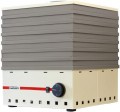 | 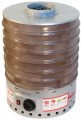 |
|---|---|---|
| Profit M ESP-01 | ProfitM ESP 02 | |
| Outdated Product | Outdated Product | |
| User reviews | ||
| TOP sellers | ||
| Type | vertical fruit dryer | vertical fruit dryer |
| Drying levels | 7 pcs | 7 pcs |
| Total capacity | 35 L | 20 L |
| Power consumption | 820 W | 820 W |
Specs | ||
| Thermostat |  | |
| Temperature range | 30 – 90 °C | 30 – 90 °C |
| Location of the fan (heater) | bottom | bottom |
| Control | control knob | control knob |
| Overheat protection |  | |
| Tray material | plastic | stainless steel |
| Dimensions | 360x455x360 mm | 450x320x320 mm |
| Weight | 11.2 kg | |
| Added to E-Catalog | may 2018 | july 2017 |


Compare Profit M ESP-01 and ProfitM ESP 02
You may be interested in
My comparisons
Profit M ESP-01 often compared

ProfitM ESP 02 often compared


Glossary
Total capacity
The total volume of all dryer trays. The larger the volume, the more products can be loaded into the device at a time. For modern dryers, a capacity of up to 10 L is considered relatively small, from 11 to 15 L — medium, from 16 to 20 L — high, and the largest models can hold more than 20 L.
Note that if you plan to dry several different types of fruits or vegetables at the same time, it is worth considering not only the total volume of the dryer, but also the number of trays (see above).
Note that if you plan to dry several different types of fruits or vegetables at the same time, it is worth considering not only the total volume of the dryer, but also the number of trays (see above).
Overheat protection
Security system that turns off the power to the dryer when the critical temperature in the working chambers is reached. This does not only save food from overdrying, but also prevents more serious consequences in the first place, such as a breakdown or even an ignition in the dryer, which is fraught with fire.
Tray material
The material from which the complete trays of the dryer are made.
— Plastic. Inexpensive, but at the same time very practical material. In terms of strength and overall reliability, the plastic is inferior to metal, however, during normal use of the dryer, this difference is not noticeable. In addition, if such trays are made in the form of complete compartments, their walls can be made transparent so that you can observe the contents without interrupting the process and without knocking down the temperature regime. However the transparent walls gradually become cloudy due to the low resistance of plastic to scratches — however, it takes a lot of time for this moment to become a serious inconvenience. Thus, most modern dryers use plastic trays.
— Stainless steel. The main advantages of metal trays are strength and resistance to overheating. On the other hand, these advantages rarely turn out to be significant, and steel is more expensive than plastic. In addition, if metal trays are made in the form of separate compartments, they are opaque, and to check the condition of the products, you will have to open these compartments, lowering the temperature and disrupting the process. . For models with a rear fan (see above), this point is not relevant — they usually have a transparent door; however, such devices are not cheap. Thus, this tray material is rare nowadays — mainly among advanced dryers.
— Plastic. Inexpensive, but at the same time very practical material. In terms of strength and overall reliability, the plastic is inferior to metal, however, during normal use of the dryer, this difference is not noticeable. In addition, if such trays are made in the form of complete compartments, their walls can be made transparent so that you can observe the contents without interrupting the process and without knocking down the temperature regime. However the transparent walls gradually become cloudy due to the low resistance of plastic to scratches — however, it takes a lot of time for this moment to become a serious inconvenience. Thus, most modern dryers use plastic trays.
— Stainless steel. The main advantages of metal trays are strength and resistance to overheating. On the other hand, these advantages rarely turn out to be significant, and steel is more expensive than plastic. In addition, if metal trays are made in the form of separate compartments, they are opaque, and to check the condition of the products, you will have to open these compartments, lowering the temperature and disrupting the process. . For models with a rear fan (see above), this point is not relevant — they usually have a transparent door; however, such devices are not cheap. Thus, this tray material is rare nowadays — mainly among advanced dryers.