
Comparison Fire-Maple FMS-X3 vs Fire-Maple Star X2
Add to comparison | 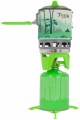 | 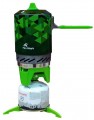 |
|---|---|---|
| Fire-Maple FMS-X3 | Fire-Maple Star X2 | |
| Compare prices 1 | Compare prices 11 | |
| User reviews | ||
| TOP sellers | ||
Container for cooking and storage. Wind protection. Stand for gas bottle. | ||
| Type | integrated gas system | integrated gas system |
| Fuel | gas | gas |
| Balloon mount | threaded | threaded |
Specs | ||
| Power | 2200 W | 2200 W |
| Fuel consumption | 158 g/h | |
| Continuous operation time | 270 min | |
| Boiling time for 1 L of water | 185 с | |
| Power regulator |  | |
| Piezo ignition | | |
General | ||
| Cooking container | | |
| Wind protection |  | |
| Replaceable balloons | FMS-G2 FMS-G3, FMS-G5 | |
| Case included | | |
| Dimensions | 133x185 mm | 133x205 mm |
| Weight | 600 g | 600 g |
| Added to E-Catalog | february 2019 | july 2016 |


Compare Fire-Maple FMS-X3 and Star X2
Both burners, Fire-Maple FMS-X3 and Fire-Maple Star X2, are integrated gas systems with a power of 2200 W and a threaded cartridge mount. However, the Star X2 offers wind protection, which can be important when used outdoors. The boiling time for 1 liter of water for the Star X2 is 185 seconds, making it more efficient in this aspect. Both devices come with a case included and weigh 600 g, but the Star X2 has slightly larger dimensions (133x205 mm compared to 133x185 mm for the FMS-X3).
Price comparison
You may be interested in
My comparisons
Fire-Maple FMS-X3 often compared


Fire-Maple Star X2 often compared


Glossary
Fuel consumption
The amount of fuel required for the normal operation of the burner for a certain time; usually stated in grams per hour. Different manufacturers may calculate fuel consumption differently, but most often it is indicated for normal operation, when the burner produces the power indicated in the documentation (see "Power"). Knowing the fuel consumption and the capacity of the cylinder used (see "Replaceable cylinders") or the built-in tank (see "Filling volume"), you can easily calculate the time of continuous operation of the burner.
Continuous operation time
The time that the burner is able to work without changing the cylinder or refilling the tank. Usually, the characteristics indicate the operating time at maximum power (see above); at lower power, the actual operating time may be longer than stated. However, it is best to evaluate and compare different models by directly claimed battery life.
Another important nuance is that battery life directly depends on the volume of the fuel tank — and many modern burners are designed for interchangeable cylinders produced in different volumes. Therefore, the characteristics may indicate for which cylinder model the continuous operation time is given (and for multi -fuel models, the type of fuel should also be specified). If there are no such data, the tank capacity required for a certain time can be calculated from fuel consumption: for example, gas consumption of 180 g / h and battery life of 120 min (2 h) mean that the data are given for a cylinder of at least 360 g (400 mL) gas. With other volumes, the time of continuous operation will differ accordingly.
Another important nuance is that battery life directly depends on the volume of the fuel tank — and many modern burners are designed for interchangeable cylinders produced in different volumes. Therefore, the characteristics may indicate for which cylinder model the continuous operation time is given (and for multi -fuel models, the type of fuel should also be specified). If there are no such data, the tank capacity required for a certain time can be calculated from fuel consumption: for example, gas consumption of 180 g / h and battery life of 120 min (2 h) mean that the data are given for a cylinder of at least 360 g (400 mL) gas. With other volumes, the time of continuous operation will differ accordingly.
Boiling time for 1 L of water
Approximate time required to boil 1 liter of cold water on the burner. Of course, in fact, the boiling time may differ from the claimed one, since it is affected by the shape and material of the dishes, ambient temperature, etc.; however, this parameter quite clearly characterizes the overall efficiency of the device, it is quite possible to compare different models with each other. At the same time, it should be taken into account that when working with other volumes, the time may not change in direct proportion: for example, if 1 liter requires 300 s, then 2 liters may require not 600 s, but more, but 0.5 L — not 150 s, but less.
Wind protection
The burner has a special curtaincovering the flame from the sides. Such a curtain can have a different design: it can be built-in (folding), removable, and can even be made in the form of a screen completely separate from the burner, installed directly on the ground. Anyway, the main purpose of this device is to protect the flame from strong winds. In addition, the curtain can be useful for camouflage — for example, when hunting or during a military-tactical game, when the light from the flame can give the user away.
Replaceable balloons
Models of cylinders for the use of which the burner is structurally designed. Usually, the cylinders specified in the specifications are guaranteed to be compatible with the burner in the standard configuration — up to the point that for models equipped with adapters for different types of fasteners (for example, from thread to collet, see "Cylinder Mount"), this paragraph often indicates both regular and "non-native" cylinders.
Knowing the names of the cylinders, you can easily find fuel for the burner in specialized stores.
Knowing the names of the cylinders, you can easily find fuel for the burner in specialized stores.