
Comparison Hyundai L5100S vs Husqvarna LC356V
Add to comparison | 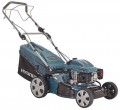 | 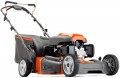 |
|---|---|---|
| Hyundai L5100S | Husqvarna LC356V | |
from $409.03 up to $449.84 | from $729.16 up to $985.96 | |
| User reviews | ||
| TOP sellers | ||
Mulching function. Side ejection. Spacious combination bag. The fitting for flushing the deck. | ||
| Type | lawn mower | lawn mower |
| Motor type | petrol | petrol |
Mowing | ||
| Cutting width | 51 cm | 56 cm |
| Cutting system | rotary | rotary |
| Min. cutting height | 25 mm | 32 mm |
| Max. cutting height | 75 mm | 108 mm |
| Number of height settings | 9 | |
| Cutting height adjustment | synchronous | manual |
Cleaning | ||
| Mulching |  | |
| Grass ejection | side ejection rear ejection in a bag | side ejection rear ejection in a bag |
| Bag type | combined | soft |
| Bag volume | 70 L | 68 L |
| Full bag indicator | |  |
Design | ||
| Features | self-propelled handle height adjustment cleaning nozzle | self-propelled handle height adjustment cleaning nozzle |
| Wheel drive | rear | rear |
| Speed adjustment | | |
In box | ||
| Nozzles | 2-tooth blade | 2-tooth blade |
Motor | ||
| ICE type | 4-stroke | 4-stroke |
| Motor model | HYUNDAI ICV180 | Honda GCV160 |
| Engine size | 173 cm³ | 160 cm³ |
| Motor power | 5.17 hp | 3.8 hp |
| Motor power | 3800 W | 2800 W |
| Fuel tank volume | 1 L | 0.9 L |
General | ||
| Deck material | steel | steel |
| Front wheel diameter | 20.3 cm | 20 cm |
| Rear wheel diameter | 25.4 cm | 20 cm |
| Noise level | 98 dB | |
| Weight | 39.1 kg | 37.7 kg |
| Added to E-Catalog | april 2016 | august 2014 |


Compare Hyundai L5100S and Husqvarna LC356V
Lawn mowers Hyundai L5100S and Husqvarna LC356V have similar characteristics, but there are key differences. The Hyundai L5100S features a cutting width of 51 cm and engine power of 3800 W, making it suitable for maintaining large areas. It also offers mulching and a 70 L combined bag. On the other hand, the Husqvarna LC356V has a cutting width of 56 cm and power of 2800 W, allowing it to handle tall grass more effectively thanks to 9 levels of cutting height adjustment. Users praise it for its ease of starting and good build quality. Overall, if you need a powerful and versatile model, the Hyundai L5100S is a good choice, whereas the Husqvarna LC356V is suitable for those who value ease of use.
You may be interested in
My comparisons
Hyundai L5100S often compared


Husqvarna LC356V often compared


Glossary
Cutting width
The capture width provided by the unit, in other words, the width of the strip of land cultivated in one pass. In fact, this size corresponds to the width of the working nozzle.
The large working width is useful when processing large open spaces, as it allows you to finish the job in a small number of passes. On the other hand, for hard-to-reach places, relatively narrow tools are better suited, able to go where a wider unit will not fit. In addition, the width of the tool directly affects the weight and price.
In general, it makes sense to compare in terms of working width only units of the same type (see above). However, it is worth noting here that trimmers do not differ so much from each other — most models capture from 25 to 45 cm (and a wide processing band is provided by moving the nozzle from side to side). As for the other types, in the most modest models the capture width does not exceed 40 cm, in the heaviest and most powerful it can be 56 – 60 cm or even more(in mini tractors — up to 1.5 m).
The large working width is useful when processing large open spaces, as it allows you to finish the job in a small number of passes. On the other hand, for hard-to-reach places, relatively narrow tools are better suited, able to go where a wider unit will not fit. In addition, the width of the tool directly affects the weight and price.
In general, it makes sense to compare in terms of working width only units of the same type (see above). However, it is worth noting here that trimmers do not differ so much from each other — most models capture from 25 to 45 cm (and a wide processing band is provided by moving the nozzle from side to side). As for the other types, in the most modest models the capture width does not exceed 40 cm, in the heaviest and most powerful it can be 56 – 60 cm or even more(in mini tractors — up to 1.5 m).
Min. cutting height
The minimum cutting height provided by the lawnmower — that is, the smallest height of grass that can remain after the passage of the machine. It makes sense to pay attention to this indicator mainly in cases where the lawn is planned to be cut as short as possible. In addition, the lower the minimum height (with the same maximum), the wider the height adjustment range of this model.
Max. cutting height
The maximum cutting height that the lawn mower can achieve is the maximum height of grass that can be left after the machine has passed.
This parameter is relevant mainly for those cases when you want to leave the grass on the lawn relatively long. In addition, lawn mowers with high cutting heights have a wide range of mowing adjustments.
This parameter is relevant mainly for those cases when you want to leave the grass on the lawn relatively long. In addition, lawn mowers with high cutting heights have a wide range of mowing adjustments.
Number of height settings
The number of cutting height settings provided by the lawn mower. The more such settings (with the same adjustment range) — the more accurately you can choose the mowing height. Note that in some robots (see "Type") this number reaches 30 or more with a range of 30 to 60 mm; in other words, you can select the height to the nearest millimetre.
Cutting height adjustment
The cutting height adjustment method provided in the machine.
— Synchronous. Adjustment carried out "in one movement" — as opposed to the manual described below. In traditional lawn mowers, it is usually carried out by a lever that changes the height of all wheels at the same time; in other units, not the wheels, but the cutting tool itself, can be adjusted in height. Anyway, synchronous adjustment is much more convenient than manual adjustment, and for some devices (for example, robots and riders, see "Type") this is generally the only technically possible option. However, in classic mowers, such a system complicates and increases the cost of construction.
— Manual. The meaning of this type of adjustment depends on the type of device. So, for trimmers, this is almost the only possible way by definition: in them, the cutting height is regulated by how high the operator holds the working nozzle. In lawn mowers, manual adjustment means that you need to separately adjust the height of each axle, and even each individual wheel. Such systems are simpler and cheaper than synchronous systems, but less convenient to use.
— Synchronous. Adjustment carried out "in one movement" — as opposed to the manual described below. In traditional lawn mowers, it is usually carried out by a lever that changes the height of all wheels at the same time; in other units, not the wheels, but the cutting tool itself, can be adjusted in height. Anyway, synchronous adjustment is much more convenient than manual adjustment, and for some devices (for example, robots and riders, see "Type") this is generally the only technically possible option. However, in classic mowers, such a system complicates and increases the cost of construction.
— Manual. The meaning of this type of adjustment depends on the type of device. So, for trimmers, this is almost the only possible way by definition: in them, the cutting height is regulated by how high the operator holds the working nozzle. In lawn mowers, manual adjustment means that you need to separately adjust the height of each axle, and even each individual wheel. Such systems are simpler and cheaper than synchronous systems, but less convenient to use.
Bag type
A type of bag used in a lawn mower to collect grass clippings.
— Hard. Bags (containers) made of a hard material, usually plastic. Such a container is more convenient to unload than a soft one, it is more durable and reliable, but it weighs a little more.
— Soft. The advantages of soft fabric bags are primarily low weight and the ability to fold after hours, which can facilitate storage. In addition, the degree of fullness of such a bag can be controlled by eye without any special indicators. On the other hand, soft bags are very inconvenient to unload.
— Combined. Bags that combine soft and hard materials in construction; the upper part is usually made solid. This combination makes it easier to unload the bag and at the same time allows it to be rolled up quite compactly for storage.
— Is absent. The absence of a bag is characteristic of some varieties of mowing units — in particular, mowers and trimmers (see "Type"). In classic lawn mowers, it usually means that this model does not involve collecting grass — all cut vegetation remains on the ground. At the same time, most of these models have the function of mulching (see above), however, there are exceptions.
— Hard. Bags (containers) made of a hard material, usually plastic. Such a container is more convenient to unload than a soft one, it is more durable and reliable, but it weighs a little more.
— Soft. The advantages of soft fabric bags are primarily low weight and the ability to fold after hours, which can facilitate storage. In addition, the degree of fullness of such a bag can be controlled by eye without any special indicators. On the other hand, soft bags are very inconvenient to unload.
— Combined. Bags that combine soft and hard materials in construction; the upper part is usually made solid. This combination makes it easier to unload the bag and at the same time allows it to be rolled up quite compactly for storage.
— Is absent. The absence of a bag is characteristic of some varieties of mowing units — in particular, mowers and trimmers (see "Type"). In classic lawn mowers, it usually means that this model does not involve collecting grass — all cut vegetation remains on the ground. At the same time, most of these models have the function of mulching (see above), however, there are exceptions.
Bag volume
The volume of the grass clipping bag supplied with the lawn mower. Manufacturers select this volume depending on the power, performance and overall level of the unit, however, similar models may differ in this indicator. In such cases, it is worth considering that a larger bag takes longer to fill and needs to be unloaded less often, but it weighs more and takes up more space (even when empty). Mostly the difference in the volume of the bag is 5 liters and there are lawn mowers for 35, 40, 45, 50, 55, 60, 65, 70 and more liters.
Full bag indicator
Indicator indicating the degree of filling of the bag. The design and capabilities of such an indicator can be different: for example, in some models it only gives an overflow signal, in others it allows you to determine the amount of grass in the bag at any time. However, anyway, this function provides additional convenience: it allows you to evaluate the fullness without removing the bag and without interrupting work.
Speed adjustment
The ability to change the speed of the self-propelled unit (see "Features"). In the absence of this function, you need to pay special attention to the maximum speed, since "non-adjustable" lawnmowers have, in fact, two modes — parking and full speed. But if there is an adjustment, you can adjust the speed of movement to the specifics of the situation. For example, slow motion will be the best mode for dense, long-term uncut grass (or if the operator for some reason cannot follow the mower quickly); and high speed will allow you to quickly cope with a large volume of relatively simple work.