
Comparison DeWALT DWE576K vs DeWALT DWE575K
Add to comparison | 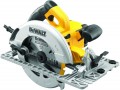 | 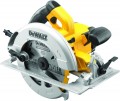 |
|---|---|---|
| DeWALT DWE576K | DeWALT DWE575K | |
from $395.80 | from $199.20 up to $244.48 | |
| User reviews | ||
| TOP sellers | ||
Tilt angle up to 57°. Cast sole. Light weight (for its power class). | Tilt angle up to 57°. Light weight (for its power class). Reinforced cord. Vacuum cleaner connection. Model DWE575 comes without a case, model DWE575K comes with a case | |
| Product type | circular | circular |
| Type | portable | portable |
| Power source | mains (230 V) | mains (230 V) |
Motor | ||
| Engine location | transversely | transversely |
| Power | 1600 W | 1600 W |
| No load blade speed | 5200 rpm | 5200 rpm |
Cutting equipment | ||
| Bar/blade size | 190 mm | 190 mm |
| Bore diameter | 30 mm | 30 mm |
| Cutting depth | 61 mm | 67 mm |
| Cutting depth (45° angle) | 43 mm | 49 mm |
| Saw angle | 57 ° | 57 ° |
Features | ||
| In box | saw blade case (bag) | saw blade case (bag) |
General | ||
| Noise level | 99 dB | 99 dB |
| Weight | 4 kg | 4 kg |
| Added to E-Catalog | september 2013 | february 2013 |


Compare DeWALT DWE576K and DWE575K
You may be interested in
My comparisons
DeWALT DWE576K often compared


DeWALT DWE575K often compared
Glossary
Cutting depth
The greatest depth of cut provided by the saw.
In most types of saws (see “Device”), the depth of cut directly depends on both the engine power and the size of the tyre / disk. The specifications give a value for the maximum allowable size of the working nozzle; when using nozzles of a smaller size, the depth of cut, respectively, will be less. But in band saws, this depth is rather weakly related to the actual length of the tape — it is determined primarily by the length of the open section of the tape, which is directly involved in the work.
Anyway, the greater depth of cut makes the tool more versatile, but comes at the cost of weight, price, and electricity/fuel consumption. So when choosing, it is worth considering the real features of the planned work and the dimensions of the workpieces that are planned to be cut. As for specific values, the most modest tools provide a depth of up to 50 mm ; 50 – 75 mm is considered a low indicator, 75 – 100 mm is average, 100 – 125 mm is above average, 125 – 150 mm is already quite an impressive thickness, and the most powerful modern saws can have a cutting depth of more than 150 mm.
In most types of saws (see “Device”), the depth of cut directly depends on both the engine power and the size of the tyre / disk. The specifications give a value for the maximum allowable size of the working nozzle; when using nozzles of a smaller size, the depth of cut, respectively, will be less. But in band saws, this depth is rather weakly related to the actual length of the tape — it is determined primarily by the length of the open section of the tape, which is directly involved in the work.
Anyway, the greater depth of cut makes the tool more versatile, but comes at the cost of weight, price, and electricity/fuel consumption. So when choosing, it is worth considering the real features of the planned work and the dimensions of the workpieces that are planned to be cut. As for specific values, the most modest tools provide a depth of up to 50 mm ; 50 – 75 mm is considered a low indicator, 75 – 100 mm is average, 100 – 125 mm is above average, 125 – 150 mm is already quite an impressive thickness, and the most powerful modern saws can have a cutting depth of more than 150 mm.
Cutting depth (45° angle)
Maximum cutting depth achieved when sawing at a 45° bevel.
This feature is indicated only for those models that are originally designed for sawing at an angle — for example, due to the special design of the attachment for the blade / blade (in stationary models, see "Type") or due to the inclined support platform (in manual) . The maximum angle of inclination of the saw in such models can be different (see below for more details), however, 45 ° is considered the standard option, so it is for this inclination that data on the depth of cut is given.
The general meaning of this parameter is quite obvious. On the one hand, a greater depth of cut allows you to cope with thicker workpieces and generally gives you more options; on the other hand, an increase in depth requires an increase in the size of the disk / canvas and an increase in power, which, accordingly, affects the price, dimensions and consumption of electricity / fuel.
This feature is indicated only for those models that are originally designed for sawing at an angle — for example, due to the special design of the attachment for the blade / blade (in stationary models, see "Type") or due to the inclined support platform (in manual) . The maximum angle of inclination of the saw in such models can be different (see below for more details), however, 45 ° is considered the standard option, so it is for this inclination that data on the depth of cut is given.
The general meaning of this parameter is quite obvious. On the one hand, a greater depth of cut allows you to cope with thicker workpieces and generally gives you more options; on the other hand, an increase in depth requires an increase in the size of the disk / canvas and an increase in power, which, accordingly, affects the price, dimensions and consumption of electricity / fuel.