
Comparison DeWALT DW714 vs Makita LS1040
Add to comparison | 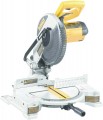 | 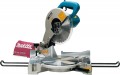 |
|---|---|---|
| DeWALT DW714 | Makita LS1040 | |
| Outdated Product | Compare prices 2 | |
| User reviews | ||
| TOP sellers | ||
Precise angle setting accuracy. Light weight. | Electronic engine brake. Enlarged disc diameter. Protection against accidental start. Bevel cut depth 95 mm. Convenient replacement of brushes. Model LS1040 is non-illuminated and model LS1040F is illuminated. Model LS1040N differs from model LS1040 in that it takes into account the new requirements for IEC/EN/AS/NZS 62841 safety standards | |
| Product type | miter power saws | miter power saws |
| Type | stationary | stationary |
| Power source | mains (230 V) | mains (230 V) |
Motor | ||
| Power | 1650 W | 1650 W |
| No load blade speed | 4600 rpm | 4600 rpm |
Cutting equipment | ||
| Bar/blade size | 254 mm | 260 mm |
| Bore diameter | 30 mm | 30 mm |
| Cutting depth | 89 mm | 93 mm |
| Cutting depth (45° angle) | 50 mm | 53 mm |
| Cutting width | 130 mm | 95 mm |
| Saw angle | 45 ° | 45 ° |
| Saw angle | 52 ° | 52 ° |
Protective functions | ||
| Motor brake |  |  |
Features | ||
| In box | dust collector | dust collector |
General | ||
| Noise level | 104 dB | 101 dB |
| Size | 530x476x532 mm | |
| Weight | 13.1 kg | 12.4 kg |
| Added to E-Catalog | november 2017 | may 2010 |



Compare DeWALT DW714 and Makita LS1040
Price comparison
You may be interested in
DeWALT DW714 often compared

Makita LS1040 often compared


Glossary
Bar/blade size
The largest tyre size (in chain saws) or disc (in circular saws and some others, see "Device") that is allowed for this tool. Tyres are sized by working length, rims by diameter.
A larger bar/wheel allows for deeper cuts but requires more powerful motors. Therefore, this parameter cannot be exceeded — this can lead to an overload of the engine with all the corresponding troubles. However, in many models with a disc it is physically impossible to install a nozzle with a diameter larger than the maximum allowable.
Also note that saws with similar bar/blade sizes may differ in maximum depth of cut (mostly due to differences in design or power). As for the specific dimensions, they depend on the type of saw (see "Device"). For example, large discs of 450 – 500 mm are found exclusively in stationary chain saws, the maximum figure for cutting models is 400 – 450 mm, for trimming — 300 – 350 mm, and sizes of 500 – 550 mm or more clearly indicate that speech It's about a chainsaw chainsaw bar. Detailed recommendations regarding the choice of a tool for a given size can be found in special sources.
A larger bar/wheel allows for deeper cuts but requires more powerful motors. Therefore, this parameter cannot be exceeded — this can lead to an overload of the engine with all the corresponding troubles. However, in many models with a disc it is physically impossible to install a nozzle with a diameter larger than the maximum allowable.
Also note that saws with similar bar/blade sizes may differ in maximum depth of cut (mostly due to differences in design or power). As for the specific dimensions, they depend on the type of saw (see "Device"). For example, large discs of 450 – 500 mm are found exclusively in stationary chain saws, the maximum figure for cutting models is 400 – 450 mm, for trimming — 300 – 350 mm, and sizes of 500 – 550 mm or more clearly indicate that speech It's about a chainsaw chainsaw bar. Detailed recommendations regarding the choice of a tool for a given size can be found in special sources.
Cutting depth
The greatest depth of cut provided by the saw.
In most types of saws (see “Device”), the depth of cut directly depends on both the engine power and the size of the tyre / disk. The specifications give a value for the maximum allowable size of the working nozzle; when using nozzles of a smaller size, the depth of cut, respectively, will be less. But in band saws, this depth is rather weakly related to the actual length of the tape — it is determined primarily by the length of the open section of the tape, which is directly involved in the work.
Anyway, the greater depth of cut makes the tool more versatile, but comes at the cost of weight, price, and electricity/fuel consumption. So when choosing, it is worth considering the real features of the planned work and the dimensions of the workpieces that are planned to be cut. As for specific values, the most modest tools provide a depth of up to 50 mm ; 50 – 75 mm is considered a low indicator, 75 – 100 mm is average, 100 – 125 mm is above average, 125 – 150 mm is already quite an impressive thickness, and the most powerful modern saws can have a cutting depth of more than 150 mm.
In most types of saws (see “Device”), the depth of cut directly depends on both the engine power and the size of the tyre / disk. The specifications give a value for the maximum allowable size of the working nozzle; when using nozzles of a smaller size, the depth of cut, respectively, will be less. But in band saws, this depth is rather weakly related to the actual length of the tape — it is determined primarily by the length of the open section of the tape, which is directly involved in the work.
Anyway, the greater depth of cut makes the tool more versatile, but comes at the cost of weight, price, and electricity/fuel consumption. So when choosing, it is worth considering the real features of the planned work and the dimensions of the workpieces that are planned to be cut. As for specific values, the most modest tools provide a depth of up to 50 mm ; 50 – 75 mm is considered a low indicator, 75 – 100 mm is average, 100 – 125 mm is above average, 125 – 150 mm is already quite an impressive thickness, and the most powerful modern saws can have a cutting depth of more than 150 mm.
Cutting depth (45° angle)
Maximum cutting depth achieved when sawing at a 45° bevel.
This feature is indicated only for those models that are originally designed for sawing at an angle — for example, due to the special design of the attachment for the blade / blade (in stationary models, see "Type") or due to the inclined support platform (in manual) . The maximum angle of inclination of the saw in such models can be different (see below for more details), however, 45 ° is considered the standard option, so it is for this inclination that data on the depth of cut is given.
The general meaning of this parameter is quite obvious. On the one hand, a greater depth of cut allows you to cope with thicker workpieces and generally gives you more options; on the other hand, an increase in depth requires an increase in the size of the disk / canvas and an increase in power, which, accordingly, affects the price, dimensions and consumption of electricity / fuel.
This feature is indicated only for those models that are originally designed for sawing at an angle — for example, due to the special design of the attachment for the blade / blade (in stationary models, see "Type") or due to the inclined support platform (in manual) . The maximum angle of inclination of the saw in such models can be different (see below for more details), however, 45 ° is considered the standard option, so it is for this inclination that data on the depth of cut is given.
The general meaning of this parameter is quite obvious. On the one hand, a greater depth of cut allows you to cope with thicker workpieces and generally gives you more options; on the other hand, an increase in depth requires an increase in the size of the disk / canvas and an increase in power, which, accordingly, affects the price, dimensions and consumption of electricity / fuel.
Cutting width
The kerf width determines the maximum size of the cutting line, and therefore the maximum width of the workpiece that the saw can cut through in one go. The value of the kerf width depends primarily on the diameter of the saw blade. Additionally, the stroke of the broach mechanism should also be taken into account. Saws with a pulling mechanism provide a cut that exceeds the diameter of the cutting blade.
Motor brake
A feature that quickly stops the saw's attachment after releasing the button or trigger. Depending on the type of tool, this could be the blade, blade, or chain, which stops rotating noticeably faster than with a regular stop by inertia. Motor brake enhances safety because after finishing the cut, the working part doesn't spin for extra seconds. Compared to saws without a motor brake, the tool becomes more convenient for frequent short operations and hand position changes. In practice, this is especially useful for precise cuts, working on a workbench, and in situations where it's important to quickly put away the saw after cutting.
Noise level
The noise level produced by the saw during operation. Note that this parameter is rather approximate, because in fact, the “loudness of the work” depends not only on the tool, but also on the material being processed and the characteristics of the environment. Nevertheless, the data given in the characteristics make it possible to assess the comfort of working with the tool. The lower this indicator, the less discomfort the noise will cause, and at high values, even special hearing protection may be needed.
Note that the noise level is usually measured in decibels, and this unit is not linear: for example, a difference of 3 dB corresponds to a difference of 2 times, 10 dB — to 10 times. Therefore, it is easiest to evaluate the noise level using comparative tables. Here is a simplified version of such a table for the range in which modern saws operate:
70 dB — loud conversation of several people in close proximity;
75 dB — a cry in the immediate vicinity;
80 dB — truck engine, mechanical alarm ringing;
85 dB — loud scream;
90 dB — freight car at a distance of 7 – 10 m;
95 dB — subway car at a distance of 7 – 10 m;
100 dB — industrial shop;
110 dB — tractor engine;
120 dB — demolition hammer, thunder from a close lightning strike (pain threshold of auditory perception).
Note that the noise level is usually measured in decibels, and this unit is not linear: for example, a difference of 3 dB corresponds to a difference of 2 times, 10 dB — to 10 times. Therefore, it is easiest to evaluate the noise level using comparative tables. Here is a simplified version of such a table for the range in which modern saws operate:
70 dB — loud conversation of several people in close proximity;
75 dB — a cry in the immediate vicinity;
80 dB — truck engine, mechanical alarm ringing;
85 dB — loud scream;
90 dB — freight car at a distance of 7 – 10 m;
95 dB — subway car at a distance of 7 – 10 m;
100 dB — industrial shop;
110 dB — tractor engine;
120 dB — demolition hammer, thunder from a close lightning strike (pain threshold of auditory perception).
Size
General dimensions of the saw. For a stationary tool (see "Type"), this parameter determines primarily the amount of space that will be required for installation; problems with this can only arise in very tight spaces, so in most cases the dimensions of a stationary saw do not need to be given special attention. In the case of hand-held models, the small size makes it easier to work in hard-to-reach places and improves overall usability. On the other hand, a compact tool inevitably turns out to be low-power; and some jobs by definition require large, heavy saws, with large bar lengths or blade diameters.
Weight
The total weight of the tool. For petrol models (see "Power Source"), usually, dry weight is indicated, excluding fuel.
In general, it makes sense to pay attention to this parameter primarily when choosing a hand tool. At the same time, note that higher power, a more capacious battery or a capacious tank will inevitably affect weight. However, tools with similar characteristics can and do differ markedly in weight. And here it is worth considering that a lighter model will be more comfortable to work with, but weight reduction may affect reliability and/or cost. In addition, a more massive tool is more stable, it is not so prone to jerks under uneven loads. If we talk about specific numbers, then a weight of 3 kg or less is considered very light, 3–5 kg is relatively small, 5–7 kg is medium, 7–10 kg is significant, and some powerful tools (mainly gasoline) weigh and over 10 kg.
As for stationary saws, weight is of secondary importance for them — it mainly affects the ease of transportation.
In general, it makes sense to pay attention to this parameter primarily when choosing a hand tool. At the same time, note that higher power, a more capacious battery or a capacious tank will inevitably affect weight. However, tools with similar characteristics can and do differ markedly in weight. And here it is worth considering that a lighter model will be more comfortable to work with, but weight reduction may affect reliability and/or cost. In addition, a more massive tool is more stable, it is not so prone to jerks under uneven loads. If we talk about specific numbers, then a weight of 3 kg or less is considered very light, 3–5 kg is relatively small, 5–7 kg is medium, 7–10 kg is significant, and some powerful tools (mainly gasoline) weigh and over 10 kg.
As for stationary saws, weight is of secondary importance for them — it mainly affects the ease of transportation.