
Comparison DeWALT DW714 vs DeWALT DW713
Add to comparison | 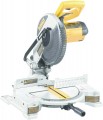 | 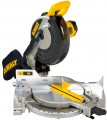 |
|---|---|---|
| DeWALT DW714 | DeWALT DW713 | |
| Outdated Product | from $21.76 | |
| TOP sellers | ||
Precise angle setting accuracy. Light weight. | 11 position precision scale. Electronic engine brake. Illumination (in model with XPS index). Enlarged disc diameter. Table extensions are sold separately. | |
| Product type | miter power saws | miter power saws |
| Type | stationary | stationary |
| Power source | mains (230 V) | mains (230 V) |
Motor | ||
| Power | 1650 W | 1600 W |
| No load blade speed | 4600 rpm | 5000 rpm |
Cutting equipment | ||
| Bar/blade size | 254 mm | 250 mm |
| Bore diameter | 30 mm | 30 mm |
| Cutting depth | 89 mm | 89 mm |
| Cutting depth (45° angle) | 50 mm | |
| Cutting width | 130 mm | 162 mm |
| Saw angle | 45 ° | 48 ° |
| Saw angle | 52 ° | 50 ° |
Protective functions | ||
| Motor brake |  |  |
Features | ||
| In box | dust collector | dust collector |
General | ||
| Noise level | 104 dB | 102 dB |
| Size | 600x425x485 mm | |
| Weight | 13.1 kg | 15 kg |
| Added to E-Catalog | november 2017 | may 2016 |


Compare DeWALT DW714 and DW713
You may be interested in
DeWALT DW714 often compared

DeWALT DW713 often compared

Glossary
Power
Saw motor power in watts. For petrol tools (see "Power Source"), horsepower is additionally indicated, see below for details.
The higher the power, the better the tool is suitable for voluminous work and hard materials, the greater the depth of cut it can provide and the easier it can cope with significant loads. In addition, for different types of saws and different types of materials, the actual power values \u200b\u200bcan also be different. For example, a power of 2.5 – 3 kW is actually the limit for chain saws, but in chain saws this is an average figure, among such tools there are models of 3 – 4 kW and even more. Detailed selection recommendations for various cases can be found in special sources.
The higher the power, the better the tool is suitable for voluminous work and hard materials, the greater the depth of cut it can provide and the easier it can cope with significant loads. In addition, for different types of saws and different types of materials, the actual power values \u200b\u200bcan also be different. For example, a power of 2.5 – 3 kW is actually the limit for chain saws, but in chain saws this is an average figure, among such tools there are models of 3 – 4 kW and even more. Detailed selection recommendations for various cases can be found in special sources.
No load blade speed
The maximum speed of the disk, provided by a saw of the appropriate design — disk, cut-off, etc. (see "Device").
Note that most of these saws use gearboxes, so that the blade revolutions are much lower than the engine revolutions (see above). This achieves an increase in torque, which in the case of saws is often more important than the high speed of the blade.
As for the specific number of revolutions, it is first of all worth noting that only saws with the same disc diameter can be compared according to this indicator. In these cases, higher speeds provide better performance, but the trade-off is reduced torque; such saws do better with relatively "light" materials. Conversely, low speeds reduce productivity, but allow the blade to effectively "bite" even into dense, stubborn workpieces. More specific recommendations regarding the choice of a saw according to the number of revolutions of the blade can be found in special sources.
Note that most of these saws use gearboxes, so that the blade revolutions are much lower than the engine revolutions (see above). This achieves an increase in torque, which in the case of saws is often more important than the high speed of the blade.
As for the specific number of revolutions, it is first of all worth noting that only saws with the same disc diameter can be compared according to this indicator. In these cases, higher speeds provide better performance, but the trade-off is reduced torque; such saws do better with relatively "light" materials. Conversely, low speeds reduce productivity, but allow the blade to effectively "bite" even into dense, stubborn workpieces. More specific recommendations regarding the choice of a saw according to the number of revolutions of the blade can be found in special sources.
Bar/blade size
The largest tyre size (in chain saws) or disc (in circular saws and some others, see "Device") that is allowed for this tool. Tyres are sized by working length, rims by diameter.
A larger bar/wheel allows for deeper cuts but requires more powerful motors. Therefore, this parameter cannot be exceeded — this can lead to an overload of the engine with all the corresponding troubles. However, in many models with a disc it is physically impossible to install a nozzle with a diameter larger than the maximum allowable.
Also note that saws with similar bar/blade sizes may differ in maximum depth of cut (mostly due to differences in design or power). As for the specific dimensions, they depend on the type of saw (see "Device"). For example, large discs of 450 – 500 mm are found exclusively in stationary chain saws, the maximum figure for cutting models is 400 – 450 mm, for trimming — 300 – 350 mm, and sizes of 500 – 550 mm or more clearly indicate that speech It's about a chainsaw chainsaw bar. Detailed recommendations regarding the choice of a tool for a given size can be found in special sources.
A larger bar/wheel allows for deeper cuts but requires more powerful motors. Therefore, this parameter cannot be exceeded — this can lead to an overload of the engine with all the corresponding troubles. However, in many models with a disc it is physically impossible to install a nozzle with a diameter larger than the maximum allowable.
Also note that saws with similar bar/blade sizes may differ in maximum depth of cut (mostly due to differences in design or power). As for the specific dimensions, they depend on the type of saw (see "Device"). For example, large discs of 450 – 500 mm are found exclusively in stationary chain saws, the maximum figure for cutting models is 400 – 450 mm, for trimming — 300 – 350 mm, and sizes of 500 – 550 mm or more clearly indicate that speech It's about a chainsaw chainsaw bar. Detailed recommendations regarding the choice of a tool for a given size can be found in special sources.
Cutting depth (45° angle)
Maximum cutting depth achieved when sawing at a 45° bevel.
This feature is indicated only for those models that are originally designed for sawing at an angle — for example, due to the special design of the attachment for the blade / blade (in stationary models, see "Type") or due to the inclined support platform (in manual) . The maximum angle of inclination of the saw in such models can be different (see below for more details), however, 45 ° is considered the standard option, so it is for this inclination that data on the depth of cut is given.
The general meaning of this parameter is quite obvious. On the one hand, a greater depth of cut allows you to cope with thicker workpieces and generally gives you more options; on the other hand, an increase in depth requires an increase in the size of the disk / canvas and an increase in power, which, accordingly, affects the price, dimensions and consumption of electricity / fuel.
This feature is indicated only for those models that are originally designed for sawing at an angle — for example, due to the special design of the attachment for the blade / blade (in stationary models, see "Type") or due to the inclined support platform (in manual) . The maximum angle of inclination of the saw in such models can be different (see below for more details), however, 45 ° is considered the standard option, so it is for this inclination that data on the depth of cut is given.
The general meaning of this parameter is quite obvious. On the one hand, a greater depth of cut allows you to cope with thicker workpieces and generally gives you more options; on the other hand, an increase in depth requires an increase in the size of the disk / canvas and an increase in power, which, accordingly, affects the price, dimensions and consumption of electricity / fuel.
Cutting width
The kerf width determines the maximum size of the cutting line, and therefore the maximum width of the workpiece that the saw can cut through in one go. The value of the kerf width depends primarily on the diameter of the saw blade. Additionally, the stroke of the broach mechanism should also be taken into account. Saws with a pulling mechanism provide a cut that exceeds the diameter of the cutting blade.
Saw angle
The maximum angle at which the working part of the saw can be tilted relative to the vertical. It can be indicated not only for stationary tools, but also for manual ones — in the event that the design provides for a support platform. It is worth paying attention to this parameter if you have to deal with oblique cuts: making such cuts by setting the saw to a certain angle is much more convenient than adjusting this angle manually.
Saw angle
The largest angle at which the working part of the saw can be rotated relative to the standard position (note that we are not talking about tilt, but about turning from side to side). This feature is often found in miter saws (see Device) which are not limited to straight cuts; turning the saw is the most convenient, and sometimes the only way to cut the workpiece obliquely.
Motor brake
A feature that quickly stops the saw's attachment after releasing the button or trigger. Depending on the type of tool, this could be the blade, blade, or chain, which stops rotating noticeably faster than with a regular stop by inertia. Motor brake enhances safety because after finishing the cut, the working part doesn't spin for extra seconds. Compared to saws without a motor brake, the tool becomes more convenient for frequent short operations and hand position changes. In practice, this is especially useful for precise cuts, working on a workbench, and in situations where it's important to quickly put away the saw after cutting.
Noise level
The noise level produced by the saw during operation. Note that this parameter is rather approximate, because in fact, the “loudness of the work” depends not only on the tool, but also on the material being processed and the characteristics of the environment. Nevertheless, the data given in the characteristics make it possible to assess the comfort of working with the tool. The lower this indicator, the less discomfort the noise will cause, and at high values, even special hearing protection may be needed.
Note that the noise level is usually measured in decibels, and this unit is not linear: for example, a difference of 3 dB corresponds to a difference of 2 times, 10 dB — to 10 times. Therefore, it is easiest to evaluate the noise level using comparative tables. Here is a simplified version of such a table for the range in which modern saws operate:
70 dB — loud conversation of several people in close proximity;
75 dB — a cry in the immediate vicinity;
80 dB — truck engine, mechanical alarm ringing;
85 dB — loud scream;
90 dB — freight car at a distance of 7 – 10 m;
95 dB — subway car at a distance of 7 – 10 m;
100 dB — industrial shop;
110 dB — tractor engine;
120 dB — demolition hammer, thunder from a close lightning strike (pain threshold of auditory perception).
Note that the noise level is usually measured in decibels, and this unit is not linear: for example, a difference of 3 dB corresponds to a difference of 2 times, 10 dB — to 10 times. Therefore, it is easiest to evaluate the noise level using comparative tables. Here is a simplified version of such a table for the range in which modern saws operate:
70 dB — loud conversation of several people in close proximity;
75 dB — a cry in the immediate vicinity;
80 dB — truck engine, mechanical alarm ringing;
85 dB — loud scream;
90 dB — freight car at a distance of 7 – 10 m;
95 dB — subway car at a distance of 7 – 10 m;
100 dB — industrial shop;
110 dB — tractor engine;
120 dB — demolition hammer, thunder from a close lightning strike (pain threshold of auditory perception).