
Comparison Redmond RS-721 vs Kenwood DS 400
Add to comparison | 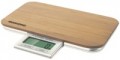 | 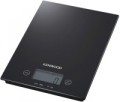 |
|---|---|---|
| Redmond RS-721 | Kenwood DS 400 | |
from $23.84 up to $42.00 | from $27.76 up to $36.64 | |
| User reviews | ||
| TOP sellers | ||
Retractable display. The maximum measurement weight is up to 10 kg. Switching from grams to ounces. Compact dimensions. Very sensitive control buttons. The screen is not waterproof. | Glass platform. Maximum weight 8 kg. Automatic shutdown. | |
| Type of scales | tabletop | tabletop |
| Mechanism | electronic | electronic |
| Maximum weight measurement | 10 kg | 8 kg |
| Division price | 2 g | 2 g |
| Units of measurement | g / lbs / oz | |
Features | ||
| Functions | tarocompensation automatic shutdown | tarocompensation automatic shutdown |
General | ||
| Platform material | wood | glass |
| Dimensions | 220x170x18 mm | |
| Color | ||
| Added to E-Catalog | july 2012 | may 2013 |


Compare Redmond RS-721 and Kenwood DS 400
You may be interested in
My comparisons
Kenwood DS 400 often compared

Glossary
Maximum weight measurement
The maximum weight allowed on the platform of this model of scales. Exceeding this parameter may result in the scales at best being unable to display accurate data, and at worst, breaking completely. Obviously, the maximum weight is directly related to its purpose, but even kitchen scales can weigh up to 5 kg or up to 20 kg.
In fact, the largest maximum weight measurements are found with floor scales, which can measure up to 200 kg or even more. The most delicate ones are jewelry models (see "Type"). It is also noted that in mechanical devices (see "Mechanism"), the scale is usually graduated up to the maximum weight.
Currently, the market offers scales with the following maximum weights: up to 1 kg, up to 5 kg, up to 10 kg, up to 50 kg, up to 150 kg, up to 200 kg.
In fact, the largest maximum weight measurements are found with floor scales, which can measure up to 200 kg or even more. The most delicate ones are jewelry models (see "Type"). It is also noted that in mechanical devices (see "Mechanism"), the scale is usually graduated up to the maximum weight.
Currently, the market offers scales with the following maximum weights: up to 1 kg, up to 5 kg, up to 10 kg, up to 50 kg, up to 150 kg, up to 200 kg.
Units of measurement
Scales are capable of tracking in various units of measurement, allowing measurements by both mass and volume. Among the most common units of measurement, we highlight the following:
— Grams (g) — a unit of weight measurement belonging to the metric system. Grams are used in tabletop kitchen scales.
— Kilograms (kg) — a unit of weight measurement belonging to the metric system. Kilograms are used in floor weighing equipment.
— Pounds (lb:oz) — a common unit of weight measurement used in some European countries and in the USA. 1 pound is equivalent to 0.45 kilograms.
— Milliliters (ml) — a unit of volume measurement belonging to the metric system. Some scales models are capable of determining the volume of milk and water based on mass.
— Fluid ounces (fl’oz) — a unit of volume measurement used in English-speaking countries. 1 US fluid ounce is equivalent to 30 ml.
— Stones (st) — a British unit of weight measurement. Stones are used to track body weight, and this measurement system is found in floor household and specialized diagnostic scales. 1 stone is equivalent to 6.35 kilograms.
— Grams (g) — a unit of weight measurement belonging to the metric system. Grams are used in tabletop kitchen scales.
— Kilograms (kg) — a unit of weight measurement belonging to the metric system. Kilograms are used in floor weighing equipment.
— Pounds (lb:oz) — a common unit of weight measurement used in some European countries and in the USA. 1 pound is equivalent to 0.45 kilograms.
— Milliliters (ml) — a unit of volume measurement belonging to the metric system. Some scales models are capable of determining the volume of milk and water based on mass.
— Fluid ounces (fl’oz) — a unit of volume measurement used in English-speaking countries. 1 US fluid ounce is equivalent to 30 ml.
— Stones (st) — a British unit of weight measurement. Stones are used to track body weight, and this measurement system is found in floor household and specialized diagnostic scales. 1 stone is equivalent to 6.35 kilograms.
Platform material
The material of the platform shows what the working surface of the kitchen scales is made of, where products, dishes, or the included bowl are placed. It affects the appearance, durability, moisture resistance, ease of cleaning, and how neatly the scales maintain their look with frequent use.
— Plastic. A plastic platform makes kitchen scales lightweight, inexpensive, and practical for everyday use. This material isn't afraid of common kitchen tasks, but over time it can get scratched, dull, or absorb stains from dyes and grease.
— Glass. Tempered glass gives the scales a neat appearance and is easy to clean after flour, sugar, water, or juice. Compared to plastic, this surface looks more modern and hygienic, but requires caution against bumps and falls.
— Metal. A stainless steel surface is more often found in practical kitchen scales designed for frequent use. It is resistant to odors, stains, and moisture, making it well-suited for working with meat, fish, dough, or liquid ingredients.
— Wood. A wooden working surface is less common and more design-oriented than maximally practical. It looks good in kitchens with natural materials but requires more careful maintenance and does not like prolonged contact with water.
— Plastic. A plastic platform makes kitchen scales lightweight, inexpensive, and practical for everyday use. This material isn't afraid of common kitchen tasks, but over time it can get scratched, dull, or absorb stains from dyes and grease.
— Glass. Tempered glass gives the scales a neat appearance and is easy to clean after flour, sugar, water, or juice. Compared to plastic, this surface looks more modern and hygienic, but requires caution against bumps and falls.
— Metal. A stainless steel surface is more often found in practical kitchen scales designed for frequent use. It is resistant to odors, stains, and moisture, making it well-suited for working with meat, fish, dough, or liquid ingredients.
— Wood. A wooden working surface is less common and more design-oriented than maximally practical. It looks good in kitchens with natural materials but requires more careful maintenance and does not like prolonged contact with water.