
Comparison Esperanza Lemon vs Kenwood DS 400
Add to comparison | 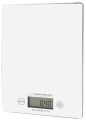 | 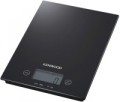 |
|---|---|---|
| Esperanza Lemon | Kenwood DS 400 | |
from $9.84 up to $13.68 | from $27.76 up to $36.64 | |
| User reviews | ||
| TOP sellers | ||
Glass platform. Maximum weight 8 kg. Automatic shutdown. | ||
| Type of scales | tabletop | tabletop |
| Mechanism | electronic | electronic |
| Maximum weight measurement | 5 kg | 8 kg |
| Division price | 1 g | 2 g |
| Units of measurement | g / kg / pounds / oz | g / lbs / oz |
Features | ||
| Functions | tarocompensation automatic shutdown | tarocompensation automatic shutdown |
General | ||
| Platform material | glass | glass |
| Power source | 1xCR2032 | |
| Dimensions | 220x170x18 mm | |
| Color | ||
| Added to E-Catalog | may 2016 | may 2013 |


Compare Esperanza Lemon and Kenwood DS 400
You may be interested in
Esperanza Lemon often compared


Kenwood DS 400 often compared

Glossary
Maximum weight measurement
The maximum weight allowed on the platform of this model of scales. Exceeding this parameter may result in the scales at best being unable to display accurate data, and at worst, breaking completely. Obviously, the maximum weight is directly related to its purpose, but even kitchen scales can weigh up to 5 kg or up to 20 kg.
In fact, the largest maximum weight measurements are found with floor scales, which can measure up to 200 kg or even more. The most delicate ones are jewelry models (see "Type"). It is also noted that in mechanical devices (see "Mechanism"), the scale is usually graduated up to the maximum weight.
Currently, the market offers scales with the following maximum weights: up to 1 kg, up to 5 kg, up to 10 kg, up to 50 kg, up to 150 kg, up to 200 kg.
In fact, the largest maximum weight measurements are found with floor scales, which can measure up to 200 kg or even more. The most delicate ones are jewelry models (see "Type"). It is also noted that in mechanical devices (see "Mechanism"), the scale is usually graduated up to the maximum weight.
Currently, the market offers scales with the following maximum weights: up to 1 kg, up to 5 kg, up to 10 kg, up to 50 kg, up to 150 kg, up to 200 kg.
Division price
Scale Division Value. Initially, the term "division value" referred only to mechanical devices (see "Mechanism") and meant the distance between marks on the scale; however, it became customary to use this term for electronic scales as well. In both cases, the meaning of this parameter is essentially the same — it directly describes the measurement accuracy. For example, if the division value is 1 g, the weight on such devices can be measured with an accuracy of 1 g, regardless of whether it's a mechanical or electronic model.
In theory, the lower the division value, the more accurate the measurements, and the more advanced the device is. On the other hand, high accuracy affects the price, although in some situations, it is not fundamentally required. Therefore, when choosing, it is worth considering the specific use of the device. For instance, kitchen scales with a division value of 0.5 – 1 g will be invaluable for a sophisticated cook preparing complex recipes with numerous small-dose ingredients; for regular household cooking on a larger scale, an accuracy of 10 – 20 g may suffice. However, there are cases when the division value changes across the entire measurement range. For more accurate measurements (low weight), accuracy may be measured in single grams, for medium values — in tens of grams, and for heavier weights, where a margin of error of 50 – 100 grams is not so critical, accuracy may be in hundreds of grams. In such c...ases, our catalog provides a value for the overall average range (considering floor scales, this is approximately for a person weighing 70 kg).
In theory, the lower the division value, the more accurate the measurements, and the more advanced the device is. On the other hand, high accuracy affects the price, although in some situations, it is not fundamentally required. Therefore, when choosing, it is worth considering the specific use of the device. For instance, kitchen scales with a division value of 0.5 – 1 g will be invaluable for a sophisticated cook preparing complex recipes with numerous small-dose ingredients; for regular household cooking on a larger scale, an accuracy of 10 – 20 g may suffice. However, there are cases when the division value changes across the entire measurement range. For more accurate measurements (low weight), accuracy may be measured in single grams, for medium values — in tens of grams, and for heavier weights, where a margin of error of 50 – 100 grams is not so critical, accuracy may be in hundreds of grams. In such c...ases, our catalog provides a value for the overall average range (considering floor scales, this is approximately for a person weighing 70 kg).
Units of measurement
Scales are capable of tracking in various units of measurement, allowing measurements by both mass and volume. Among the most common units of measurement, we highlight the following:
— Grams (g) — a unit of weight measurement belonging to the metric system. Grams are used in tabletop kitchen scales.
— Kilograms (kg) — a unit of weight measurement belonging to the metric system. Kilograms are used in floor weighing equipment.
— Pounds (lb:oz) — a common unit of weight measurement used in some European countries and in the USA. 1 pound is equivalent to 0.45 kilograms.
— Milliliters (ml) — a unit of volume measurement belonging to the metric system. Some scales models are capable of determining the volume of milk and water based on mass.
— Fluid ounces (fl’oz) — a unit of volume measurement used in English-speaking countries. 1 US fluid ounce is equivalent to 30 ml.
— Stones (st) — a British unit of weight measurement. Stones are used to track body weight, and this measurement system is found in floor household and specialized diagnostic scales. 1 stone is equivalent to 6.35 kilograms.
— Grams (g) — a unit of weight measurement belonging to the metric system. Grams are used in tabletop kitchen scales.
— Kilograms (kg) — a unit of weight measurement belonging to the metric system. Kilograms are used in floor weighing equipment.
— Pounds (lb:oz) — a common unit of weight measurement used in some European countries and in the USA. 1 pound is equivalent to 0.45 kilograms.
— Milliliters (ml) — a unit of volume measurement belonging to the metric system. Some scales models are capable of determining the volume of milk and water based on mass.
— Fluid ounces (fl’oz) — a unit of volume measurement used in English-speaking countries. 1 US fluid ounce is equivalent to 30 ml.
— Stones (st) — a British unit of weight measurement. Stones are used to track body weight, and this measurement system is found in floor household and specialized diagnostic scales. 1 stone is equivalent to 6.35 kilograms.
Power source
The vast majority of electronic scales are powered by battery packs. However, some models may have a built-in rechargeable battery, which eliminates the need for constant replacement. Just remember to recharge the scales.
Scales powered by batteries can use different types of power cells:
— AA – the format of classic "finger" batteries;
— AAA – "micro finger" batteries;
— CR2032 – so-called "coin" batteries. Many PC users are familiar with this format. "Coins" are used to power the BIOS memory in motherboards.
In addition to the battery type, it is also important to consider their quantity in the battery compartment.
Scales powered by batteries can use different types of power cells:
— AA – the format of classic "finger" batteries;
— AAA – "micro finger" batteries;
— CR2032 – so-called "coin" batteries. Many PC users are familiar with this format. "Coins" are used to power the BIOS memory in motherboards.
In addition to the battery type, it is also important to consider their quantity in the battery compartment.