
Comparison Honeywell FR124-3/4A vs Zota FR124
Add to comparison | 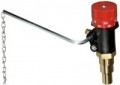 | 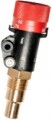 |
|---|---|---|
| Honeywell FR124-3/4A | Zota FR124 | |
| Outdated Product | Outdated Product | |
| TOP sellers | ||
| Suitable for | solid fuel boiler | solid fuel boiler |
Specs | ||
| Type | mechanical | mechanical |
| Mounting | to boiler/heater | to boiler/heater |
| Temp adjustment range | 30 – 90 °C | 30 – 90 °C |
| Hysteresis | 1 °C | |
| Chain length | 1000 mm | 1000 mm |
| Immersion sleeve length | 53 mm | |
| Fitting connection | 3/4" | 3/4" |
| Added to E-Catalog | april 2018 | april 2018 |


Compare Honeywell FR124-3/4A and Zota FR124
You may be interested in
My comparisons
Glossary
Hysteresis
Automatic temperature control hysteresis provided by the device.
Hysteresis can be described as the difference between the on and off temperatures of a system controlled by a thermostat. Usually, the permissible deviations of the actual temperature from the nominal one in one direction or another are half the hysteresis. So, at a set temperature of 22 °C and a hysteresis of 0.5 °C, the controller will turn on the heating as soon as the room temperature drops to 21.75 °C, and turn it off when it rises to 22.25 °C. Accordingly, the lower this indicator, the more carefully the temperature is maintained and the fewer fluctuations. On the other hand, small hysteresis values require accurate and expensive thermal sensors, increase fuel/energy consumption and wear of the entire system, and create an increased risk of false alarms (for example, from a cool draft on the thermal sensor). In addition, relatively small temperature fluctuations are practically imperceptible in terms of human comfort. Therefore, many modern thermostats have a hysteresis of 1 °C — this, usually, is quite enough for domestic use.
Also note that this parameter can be both fixed and adjustable. The first option is simpler and cheaper, and the second provides additional options for setting the thermostat to the specifics of the situation.
Hysteresis can be described as the difference between the on and off temperatures of a system controlled by a thermostat. Usually, the permissible deviations of the actual temperature from the nominal one in one direction or another are half the hysteresis. So, at a set temperature of 22 °C and a hysteresis of 0.5 °C, the controller will turn on the heating as soon as the room temperature drops to 21.75 °C, and turn it off when it rises to 22.25 °C. Accordingly, the lower this indicator, the more carefully the temperature is maintained and the fewer fluctuations. On the other hand, small hysteresis values require accurate and expensive thermal sensors, increase fuel/energy consumption and wear of the entire system, and create an increased risk of false alarms (for example, from a cool draft on the thermal sensor). In addition, relatively small temperature fluctuations are practically imperceptible in terms of human comfort. Therefore, many modern thermostats have a hysteresis of 1 °C — this, usually, is quite enough for domestic use.
Also note that this parameter can be both fixed and adjustable. The first option is simpler and cheaper, and the second provides additional options for setting the thermostat to the specifics of the situation.
Immersion sleeve length
An immersed sleeve in a regulator for a solid fuel boiler is a part of the body, which, when installed, is located inside the boiler, in the furnace. Thus, this parameter describes how far the regulator will go into the furnace when installed. Knowing the length of the immersed sleeve, it is possible to assess whether there is enough space in the boiler for the normal placement of the regulator.