
Comparison Meizu M8 64 GB vs Meizu M6T 32 GB
Add to comparison | 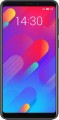 | 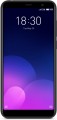 |
|---|---|---|
| Meizu M8 64 GB | Meizu M6T 32 GB | |
| Outdated Product | Outdated Product | |
| User reviews | ||
| TOP sellers | ||
Model modification: 32 GB of internal and 3 GB or 4 GB of RAM, 64 GB of internal and 4 GB of RAM. | ||
| Operating system | Android 8.0 | Android 7.0 |
Display | ||
| Main display | 5.7 " 1440х720 (18:9) 282 ppi IPS | 5.7 " 1440х720 (18:9) 282 ppi IPS |
| Display-to-body ratio | 78 % | 75 % |
Hardware | ||
| CPU frequency | 2 GHz | 1.5 GHz |
| CPU cores | 8 | 8 |
| RAM | 4 GB | 3 GB |
| Memory storage | 64 GB | 32 GB |
| Memory card slot | microSD | microSD |
| Max. memory card storage | 128 GB | 128 GB |
Test results | ||
| AnTuTu Benchmark Test | 75 000 points | 50 000 points |
Main camera | ||
| Lenses | 2 modules | 2 modules |
| Main lens | 12 MP f/2.2 | 13 MP f/2.2 |
| Auxiliary lens |  | |
| Full HD (1080p) | + | + |
| Flash | | |
Front camera | ||
| Main selfie lens | 5 MP | 8 MP |
| Aperture | f/1.9 | f/2.0 |
Connections and communication | ||
| Cellular technology | 4G (LTE) CDMA | 4G (LTE) CDMA |
| SIM card type | nano-SIM | nano-SIM |
| SIM slots | SIM + SIM/microSD | SIM + SIM/microSD |
| Connectivity technology | Wi-Fi 4 (802.11n) Bluetooth v5.0 | Wi-Fi 4 (802.11n) Bluetooth v4.1 |
| Inputs & outputs | microUSB mini-Jack (3.5 mm) bottom | microUSB mini-jack (3.5 mm) |
Features and navigation | ||
| Features | rear fingerprint scanner noise cancellation gyroscope | rear fingerprint scanner gyroscope |
| Navigation | aGPS GPS module GLONASS digital compass | aGPS GPS module GLONASS digital compass |
Power supply | ||
| Battery capacity | 3100 mAh | 3300 mAh |
| Battery type | Li-ion (graphite) | Li-ion (graphite) |
General | ||
| Bezel/back cover material | metal/metal | plastic/plastic |
| Dimensions (HxWxD) | 147.5x72.7x8.1 mm | 152.3x73x8.4 mm |
| Weight | 159 g | 145 g |
| Color | ||
| Added to E-Catalog | december 2018 | may 2018 |


Compare Meizu M8 and M6T
Comparing the Meizu M8 and Meizu M6T, several key points can be highlighted. The Meizu M8, equipped with the more powerful MediaTek Helio P22 processor and 4 GB of RAM, delivers better performance, as confirmed by positive user reviews on speed and the absence of lag. Meanwhile, the Meizu M6T with its MediaTek MT6750 processor and 3 GB of RAM is often mentioned as less performant, especially in gaming, as noted by users. The cameras also differ: the M8 has a 12 MP main camera, while the M6T features a 13 MP camera, but the picture quality of the M8 is rated higher, particularly in low-light conditions. In terms of battery, the M6T has a slight edge with a capacity of 3300 mAh compared to the M8's 3100 mAh, but users note that the M8 charges faster. Overall, the M8 appears to be the more modern and powerful option, whereas the M6T may be suitable for less demanding users.
You may be interested in
My comparisons
Meizu M8 often compared


Meizu M6T often compared

Glossary
Operating system
The term “operating system” in this case refers to all types of firmware — both full-fledged operating systems such as iOS and Android used in smartphones, and software platforms for regular phones (non-smartphones). The main difference between these two categories is that a full-fledged OS initially has a more extensive set of functions and also allows users to install and remove various applications — from games and social media clients to specialized tools such as photo and video editors.
Among modern smartphones, two operating systems are the most widespread — Android and iOS. Here is a more detailed description of each:
— Android. A free open-source OS by Google. It is used by almost all modern manufacturers except Apple; it is available on the market in numerous versions — in particular, the current ones are Android 14, Android 15, Android 16, Android 17. It should be noted that one OS version may have been installed when the device was released, while by the time of sale it may have been updated to a newer one. Functionally, this OS is notable primarily for full multitasking support and an extensive selection of available apps — in both respects, it surpasses iOS; on the other hand, Android apps generally have somewhat lower quality due to less stri...ngent requirements. Android initially has close integration with Google services — the Google Play app and content store, Gmail email, Google Drive cloud storage, etc.; however, exceptions to this rule are possible. Note that the latest versions of this OS can be found on the market both in their original form and in one of two specific editions:
— iOS. Apple's proprietary operating system, used only in this manufacturer's gadgets. The main advantages of iOS over Android are primarily careful optimization for specific devices (allowing good performance with relatively modest RAM capacities), overall ease and security of use, as well as high app quality. In addition, iOS updates are released regularly and are available for all devices (except clearly outdated ones that can no longer handle new system versions). On the other hand, this OS does not support multitasking and is as closed to the user as possible: in particular, apps can only be installed from the proprietary store, there is no access to the file system, and memory cards are not supported in principle.
— Harmony OS. A universal operating system by Huawei, also known as Hongmeng. It supports a wide range of devices: smart home ecosystem equipment, smartwatches, smartphones, and tablets. Harmony OS is a kind of overlay on top of Android without Google services. The app store for devices running Harmony OS is called AppGallery.
— Flyme OS. A modified version of the Android operating system used as the software platform for Meizu smartphones. The OneMind engine is responsible for OS stability. Flyme OS has no app menu, and all program icons are distributed across home screens. Distinctive features of the platform include advanced file management tools, the Aicy voice assistant, flexible mEngine vibration adjustment, Family Guardian parental control options, and a structured gallery with a convenient visual editor.
— Proprietary. This term most often refers to basic firmware installed in a regular phone (not a smartphone), usually a button phone. Such firmware has a more modest set of pre-installed programs than full-fledged operating systems; at best, this set can be expanded with universal Java-based mobile apps, while additional apps are often not supported at all. However, this cannot be called a disadvantage, given the specifics of traditional phone use.
Note that devices with other operating systems besides those described above can also be found on sale. However, most of these are either outdated models or devices with rare and uncommon types of firmware.
Among modern smartphones, two operating systems are the most widespread — Android and iOS. Here is a more detailed description of each:
— Android. A free open-source OS by Google. It is used by almost all modern manufacturers except Apple; it is available on the market in numerous versions — in particular, the current ones are Android 14, Android 15, Android 16, Android 17. It should be noted that one OS version may have been installed when the device was released, while by the time of sale it may have been updated to a newer one. Functionally, this OS is notable primarily for full multitasking support and an extensive selection of available apps — in both respects, it surpasses iOS; on the other hand, Android apps generally have somewhat lower quality due to less stri...ngent requirements. Android initially has close integration with Google services — the Google Play app and content store, Gmail email, Google Drive cloud storage, etc.; however, exceptions to this rule are possible. Note that the latest versions of this OS can be found on the market both in their original form and in one of two specific editions:
- - Go Edition. A modification of Android designed for affordable smartphones with “weak” hardware. Both the OS itself and standard apps (Assistant, Gmail, etc.) have been redesigned in this edition to ensure reliable operation even with low processing power. At the same time, developers have tried to preserve the functionality of full Android as much as possible — nevertheless, some specific features are still unavailable in Go Edition (for example, standard maps do not support turn-by-turn navigation, and compatibility with the Wear OS system on smartwatches is not provided).
- - HMS. An edition of Android used in Huawei smartphones. Due to US sanctions against China, this company cannot fully cooperate with Google — in particular, it cannot use Google services (Google Mobile Services — GMS) in its Android smartphones. HMS — Huawei Mobile Services — was introduced as a replacement. These services include a Huawei ID user identifier, the AppGallery app store, proprietary equivalents of Google's main services (assistant, browser, cloud storage, music/video, etc.), as well as tools for app developers.
- - Android 13. A popular operating system for mobile devices, the 13th version of which was released in 2022. No radical innovations were implemented in Android 13, but the OS introduced a number of useful features and changes. In particular, the Material You workspace design concept can now select primary colors from installed wallpapers or themes and apply them to icon display throughout the system. User data privacy has reached a new level — Android 13 allows configuring individual permissions and selecting specific images from the Gallery that an app can access. Users can choose the default interface language for each program. The system has also become more energy-efficient, while the clipboard and barcode scanner have been improved.
- - Android 13 Go. A lightweight version of the Android 13 operating system designed for installation on low-power smartphones. A distinctive feature of the OS is a special algorithm that optimizes the smartphone's processing power. The system also lacks some hardware-demanding functions. Android 13 Go introduced the Material You interface design concept, allowing the menu color scheme to be adapted to the installed wallpaper. The Go version inherited from the full Android 13 system the ability to grant apps permission to send notifications and the option to change the language for specific programs.
- - Android 14. An operating system for mobile devices released in 2023. Frankly, there are few system changes in the 14th version of Android, with the main focus placed on flexible interface customization. Among the new features, it is important to mention notification display via the flash or screen: a flashlight blinking pattern can now be set for each app, while a color palette for notifications can be selected for the screen. The operating system also introduced a useful option for adjusting screenshot capture, added a widget for displaying battery charge and a list of active connections, and implemented a system-level app cloning option. System fonts in the OS can be increased up to 200% of their standard size, with non-linear scaling — it is primarily applied to small text. Other improvements include enhanced system energy efficiency and cosmetic interface changes with more rounded elements.
- - Android 14 Go. A lightweight version of the Android 14 operating system for budget smartphones with limited hardware resources. The Go Edition distribution includes simplified standard apps while providing basic Android functionality with minimal performance and power consumption requirements. Despite its “lightweight” nature, Android 14 Go supports improved notifications, new controls, and privacy settings that debuted in the full 14th edition of Google's OS. However, smartphones with the lightweight Go version are not compatible with Wear OS smartwatches — this should be taken into account.
- - Android 15. The Android 15 operating system was released in 2024. Notable innovations include native support for satellite communication (for contacting emergency services or sending SOS signals), the ability to record and share only a specific app window rather than the entire screen, updated hardware extensions for camera control, enhanced control over messages, and flexible volume adjustment. The system has also traditionally received improved security features and increased energy efficiency.
- -Android 16. The 2025 version, where one of the main innovations is Live Updates dynamic notifications — they show delivery progress, trip status, or another process without requiring the app to be constantly opened. The system also automatically groups notifications from the same app, received an enhanced Advanced Protection mode, and improved hearing aid controls.
- -Android 17. The next generation of Android was officially released on June 16, 2026. The main focus is on multitasking: apps can be opened in floating Bubbles windows, quickly switched between, and expanded to full screen. It introduced improved screen recording with user reactions, an optimized gaming interface for foldable devices, and external controller button remapping. The system also received stricter access control for location and contacts, enhanced stolen smartphone locking, and memory management to improve stability and battery life.
— iOS. Apple's proprietary operating system, used only in this manufacturer's gadgets. The main advantages of iOS over Android are primarily careful optimization for specific devices (allowing good performance with relatively modest RAM capacities), overall ease and security of use, as well as high app quality. In addition, iOS updates are released regularly and are available for all devices (except clearly outdated ones that can no longer handle new system versions). On the other hand, this OS does not support multitasking and is as closed to the user as possible: in particular, apps can only be installed from the proprietary store, there is no access to the file system, and memory cards are not supported in principle.
— Harmony OS. A universal operating system by Huawei, also known as Hongmeng. It supports a wide range of devices: smart home ecosystem equipment, smartwatches, smartphones, and tablets. Harmony OS is a kind of overlay on top of Android without Google services. The app store for devices running Harmony OS is called AppGallery.
— Flyme OS. A modified version of the Android operating system used as the software platform for Meizu smartphones. The OneMind engine is responsible for OS stability. Flyme OS has no app menu, and all program icons are distributed across home screens. Distinctive features of the platform include advanced file management tools, the Aicy voice assistant, flexible mEngine vibration adjustment, Family Guardian parental control options, and a structured gallery with a convenient visual editor.
— Proprietary. This term most often refers to basic firmware installed in a regular phone (not a smartphone), usually a button phone. Such firmware has a more modest set of pre-installed programs than full-fledged operating systems; at best, this set can be expanded with universal Java-based mobile apps, while additional apps are often not supported at all. However, this cannot be called a disadvantage, given the specifics of traditional phone use.
Note that devices with other operating systems besides those described above can also be found on sale. However, most of these are either outdated models or devices with rare and uncommon types of firmware.
Display-to-body ratio
The ratio of the screen area to the total front panel area of the phone. Simply put, this spec describes how much of the front panel is occupied by the screen; the rest is the bezels.
This indicator is given exclusively for smartphones with touch screens — it is for them that it is most relevant. The larger the percentage of the body is occupied by the screen, the thinner are the bezels, the neater the smartphone looks and the more convenient it is to work with it with one hand. As for specific numbers, the average values are 80 – 85 %, the higher values allow us to talk about a thin bezel, and more than 90 % — about a “bezel less” design.
Separately, we note that this parameter has nothing to do with the aspect ratio of the screen. The aspect ratio describes only the display itself — its proportions, the ratio between the larger and smaller side of the rectangle.
This indicator is given exclusively for smartphones with touch screens — it is for them that it is most relevant. The larger the percentage of the body is occupied by the screen, the thinner are the bezels, the neater the smartphone looks and the more convenient it is to work with it with one hand. As for specific numbers, the average values are 80 – 85 %, the higher values allow us to talk about a thin bezel, and more than 90 % — about a “bezel less” design.
Separately, we note that this parameter has nothing to do with the aspect ratio of the screen. The aspect ratio describes only the display itself — its proportions, the ratio between the larger and smaller side of the rectangle.
CPU frequency
The clock frequency of the CPU that the device is equipped with. For multi-core processors, which are standard in modern smartphones, the frequency of each individual core is implied; and if the processor has cores with different frequencies (see "Number of cores") — usually, the maximum indicator is given.
In general, high performance smartphones have high frequency of the processor. However, note that this parameter itself is not directly related to the capabilities of the CPU: many other features of the chip affect the actual performance, and often a low cost solution with a higher clock speed turns out to be less performant than an expensive one, and at the same time, presumably, more "slow" processor. In addition, the overall performance of the system directly depends on a whole set of other factors — primarily the amount of RAM. Therefore, when evaluating a smartphone, it is worth focus not so much on the frequency of the processor, but on the general specs of the system and visual indicators like the results in tests (see below).
In general, high performance smartphones have high frequency of the processor. However, note that this parameter itself is not directly related to the capabilities of the CPU: many other features of the chip affect the actual performance, and often a low cost solution with a higher clock speed turns out to be less performant than an expensive one, and at the same time, presumably, more "slow" processor. In addition, the overall performance of the system directly depends on a whole set of other factors — primarily the amount of RAM. Therefore, when evaluating a smartphone, it is worth focus not so much on the frequency of the processor, but on the general specs of the system and visual indicators like the results in tests (see below).
RAM
The parameter determines the overall performance of the smartphone: the more RAM, the faster the device works and the better it copes with an abundance of tasks and / or resource-intensive applications (ceteris paribus). This is even more true in light of the fact that large amounts of "RAM" are usually combined with powerful advanced processors. However, only devices with identical operating systems can be directly compared with each other, and in the case of Android, with the same versions and editions of this OS (for more on all this, see "Operating system"). This is due to the fact that different operating systems and even different versions of the same OS can differ markedly in terms of RAM requirements. For example, iOS, thanks to good optimization for specific devices, is able to work efficiently with 3 GB of RAM. For modern versions of Android in the regular edition (not Go Edition), the mentioned 3 GB is actually the required minimum. Under such an OS, it is better to have at least 4 GB or 6 GB of RAM. In high-end devices with powerful electronic "stuffing" you can also find more impressive numbers - 8 GB or even 12 GB or more.
Memory storage
The volume of storage installed in the phone.
This volume directly determines how much data can be stored on the phone without using removable memory cards. This indicator is especially important for models that don't have memory card slots. However, even if memory cards are supported, built-in storage is still preferable: at least it works faster, and it usually has fewer restrictions on its use (in particular, most smartphones allow you to install applications only on storage).
As for specific volumes, the actual minimum for a modern smartphone is 32 GB; less “capacious” devices are becoming increasingly rare these days. 64 GB is considered a comfortable minimum, 128 GB is considered average indicator, 256 GB - above average. Some high-end devices are equipped with 512 GB and even 1 TB< /a>.
We also note that the actual amount of memory available to the user will inevitably be somewhat less than the total, since part of the drive is occupied by operating system files.
This volume directly determines how much data can be stored on the phone without using removable memory cards. This indicator is especially important for models that don't have memory card slots. However, even if memory cards are supported, built-in storage is still preferable: at least it works faster, and it usually has fewer restrictions on its use (in particular, most smartphones allow you to install applications only on storage).
As for specific volumes, the actual minimum for a modern smartphone is 32 GB; less “capacious” devices are becoming increasingly rare these days. 64 GB is considered a comfortable minimum, 128 GB is considered average indicator, 256 GB - above average. Some high-end devices are equipped with 512 GB and even 1 TB< /a>.
We also note that the actual amount of memory available to the user will inevitably be somewhat less than the total, since part of the drive is occupied by operating system files.
Test results
The test results are specified either by a younger model in a line or a particular model, made for a better understanding performance of phone models if you compare phones against these parameters. For example, the 128 GB model has test results, and the 256 GB model has no information on the network, and in both models you will see the same value that will give an understanding of the overall performance of the device. But if the editorial office has information for each model individually, then each model will have its test results filled out, and the model with bigger RAM will have bigger values.
AnTuTu Benchmark Test
The result shown by a device when undergoing a performance test (benchmark) in AnTuTu Benchmark.
AnTuTu Benchmark is a comprehensive test designed specifically for mobile devices, primarily smartphones and tablets. It evaluates the efficiency of the processor, memory, graphics, and input/output systems, providing a clear impression of the system's capabilities. The higher the performance, the more points are awarded. Smartphones that score over 1.5M points are considered high-performance according to the AnTuTu ranking.
Like any benchmark, this test does not provide absolute precision: the same device can show different results, usually with deviations within 5-7%. These deviations depend on various factors unrelated to the system itself, such as the device's load from third-party programs and the ambient temperature during testing. Therefore, significant differences between two models can only be noted when the gap in their scores exceeds this margin of error.
AnTuTu Benchmark is a comprehensive test designed specifically for mobile devices, primarily smartphones and tablets. It evaluates the efficiency of the processor, memory, graphics, and input/output systems, providing a clear impression of the system's capabilities. The higher the performance, the more points are awarded. Smartphones that score over 1.5M points are considered high-performance according to the AnTuTu ranking.
Like any benchmark, this test does not provide absolute precision: the same device can show different results, usually with deviations within 5-7%. These deviations depend on various factors unrelated to the system itself, such as the device's load from third-party programs and the ambient temperature during testing. Therefore, significant differences between two models can only be noted when the gap in their scores exceeds this margin of error.
Main lens
Specifications of the main lens of the rear camera installed in the phone. In models with several lenses (see “Number of lenses”), the main one is responsible for basic shooting capabilities and does not have a pronounced specialization (wide-angle, telephoto, etc.). Four main parameters can be indicated here: resolution, aperture ( high aperture optics are quite common), focal length, additional sensor data.
Resolution(in megapixels, MP)
Resolution of the sensor used for the main lens. Budget options are equipped with a module 8 MP and below, many models have 12 MP camera / 13 MP, also recently a trend towards increasing megapixels has been popular. Often in smartphones you can find the main photomodule at 48 MP, 50 MP< /a>, 64 MP and even 108 MP, 200 MP.
The maximum resolution of the resulting image directly depends on the resolution of the sensor; and the high resolution of the "picture", in turn, allows you to better display fine details. On the other hand, an increase in the number of megapixels in itself can lead to a deterioration in the overall image quality - due to the smaller size of each individual pixel..., the noise level increases. As a result, the direct resolution of the camera has little effect on the quality of the shooting - more depends on the physical size of the matrix, the features of the optics and various design tricks used by the manufacturer.
Aperture
Aperture describes the ability of a lens to transmit light. It is written as a fractional number, for example f/1.9. Moreover, the larger the number in the denominator, the lower the aperture ratio, the less light passes through the optics, all other things being equal. For example, an f/2.6 lens will be “darker” than f/1.9.
High aperture gives the camera a number of advantages. First, it improves the quality of shooting in low light. Secondly, it's possible to shoot at low shutter speeds, minimizing the effect of "stirring" and blurring of moving objects in the frame. Thirdly, with fast optics it is easier to achieve a beautiful background blur ("bokeh") — for example, when shooting portraits.
Focal length(in millimetres)
The focal length is a distance between the sensor and the centre of the lens (focused to infinity), at which the most clear image is obtained on the matrix. However, for smartphones, the specifications indicate not the actual, but the so-called equivalent focal length — a conditional indicator recalculated using special formulas. This indicator can be used to evaluate and compare cameras with different sensor sizes (the actual focal length cannot be used for this, since with a different sensor size the same real focal length will correspond to different viewing angles). (It is also worth saying that the equivalent focal length can be noticeably larger than the thickness of the case — there is nothing unusual in this, since this is a conditional, and not a real indicator).
Anyway, the field of view and the degree of magnification directly depend on the equivalent focal length: a larger focal length gives a smaller field of view and a larger size of individual objects that fall into the frame, and a decrease in this distance, in turn, allows you to cover more space. In most modern smartphones, the focal length of the main camera ranges from 13 to 35 mm; if compared with the optics of traditional cameras, then lenses with equivalent focal length up to 25 mm can be attributed to wide-angle lenses, more than 25 mm — to universal models “with a bias towards wide-angle shooting”. Such values are chosen due the fact that smartphones are often used for shooting in cramped conditions, when a fairly large space needs to fit into the frame at a small distance. Enlargement of the picture, if necessary, is most often carried out digitally — due to the reserve of megapixels on the sensor; but there are also models with optical zoom (see below) — for them, not one value is given, but the entire working range of the equivalent focal length (recall, optical zoom is carried out by changing the focal length).
Field of view(in degrees). It characterizes the size of the area covered by the lens, as well as the size of individual objects "seen" by the camera. The larger this field, the more of the scene gets into the frame, but the smaller the individual objects in the image are. The field of view is directly related to the focal length (see above): increasing this distance narrows the field of view of the lens, and vice versa.
Note that this parameter is generally considered important for professional use of the camera rather than for amateur photography. Therefore, viewing angle data is given mainly for smartphones equipped with advanced cameras — including in order to emphasize the high class of cameras. As for specific values, for the main lens they usually are in the range from 70° to 82° — this corresponds to the general specifics of such optics (universal shooting with an emphasis on general scenes and extensive coverage at short distances).
Additional Sensor Data
Additional information regarding the sensor installed in the main lens. This item can specify both the size (in inches) and the sensor model, and sometimes both parameters at once. Anyway, such data is provided only if the device is equipped with a high-end sensor. With the model, everything is quite simple: knowing the name of the sensor, you can find detailed data on it. The size is worth considering a little more.
The size of the sensor is traditionally indicated in fractional parts of an inch — accordingly, for example, a 1/2.3" sensor will be larger than 1/2.6". Larger sensors are considered more advanced, as they provide better image quality at the same resolution. The logic here is simple - due to the large sensor area, each individual pixel is also larger and gets more light, which improves sensitivity and reduces noise. Of course, the actual image quality will also depend on a number of other parameters, but in general, a larger sensor size usually means a more advanced camera. In advanced photo flagships, you can find matrices with a physical size of 1”, which is comparable to image sensors used in top compact cameras with fixed lenses.
Resolution(in megapixels, MP)
Resolution of the sensor used for the main lens. Budget options are equipped with a module 8 MP and below, many models have 12 MP camera / 13 MP, also recently a trend towards increasing megapixels has been popular. Often in smartphones you can find the main photomodule at 48 MP, 50 MP< /a>, 64 MP and even 108 MP, 200 MP.
The maximum resolution of the resulting image directly depends on the resolution of the sensor; and the high resolution of the "picture", in turn, allows you to better display fine details. On the other hand, an increase in the number of megapixels in itself can lead to a deterioration in the overall image quality - due to the smaller size of each individual pixel..., the noise level increases. As a result, the direct resolution of the camera has little effect on the quality of the shooting - more depends on the physical size of the matrix, the features of the optics and various design tricks used by the manufacturer.
Aperture
Aperture describes the ability of a lens to transmit light. It is written as a fractional number, for example f/1.9. Moreover, the larger the number in the denominator, the lower the aperture ratio, the less light passes through the optics, all other things being equal. For example, an f/2.6 lens will be “darker” than f/1.9.
High aperture gives the camera a number of advantages. First, it improves the quality of shooting in low light. Secondly, it's possible to shoot at low shutter speeds, minimizing the effect of "stirring" and blurring of moving objects in the frame. Thirdly, with fast optics it is easier to achieve a beautiful background blur ("bokeh") — for example, when shooting portraits.
Focal length(in millimetres)
The focal length is a distance between the sensor and the centre of the lens (focused to infinity), at which the most clear image is obtained on the matrix. However, for smartphones, the specifications indicate not the actual, but the so-called equivalent focal length — a conditional indicator recalculated using special formulas. This indicator can be used to evaluate and compare cameras with different sensor sizes (the actual focal length cannot be used for this, since with a different sensor size the same real focal length will correspond to different viewing angles). (It is also worth saying that the equivalent focal length can be noticeably larger than the thickness of the case — there is nothing unusual in this, since this is a conditional, and not a real indicator).
Anyway, the field of view and the degree of magnification directly depend on the equivalent focal length: a larger focal length gives a smaller field of view and a larger size of individual objects that fall into the frame, and a decrease in this distance, in turn, allows you to cover more space. In most modern smartphones, the focal length of the main camera ranges from 13 to 35 mm; if compared with the optics of traditional cameras, then lenses with equivalent focal length up to 25 mm can be attributed to wide-angle lenses, more than 25 mm — to universal models “with a bias towards wide-angle shooting”. Such values are chosen due the fact that smartphones are often used for shooting in cramped conditions, when a fairly large space needs to fit into the frame at a small distance. Enlargement of the picture, if necessary, is most often carried out digitally — due to the reserve of megapixels on the sensor; but there are also models with optical zoom (see below) — for them, not one value is given, but the entire working range of the equivalent focal length (recall, optical zoom is carried out by changing the focal length).
Field of view(in degrees). It characterizes the size of the area covered by the lens, as well as the size of individual objects "seen" by the camera. The larger this field, the more of the scene gets into the frame, but the smaller the individual objects in the image are. The field of view is directly related to the focal length (see above): increasing this distance narrows the field of view of the lens, and vice versa.
Note that this parameter is generally considered important for professional use of the camera rather than for amateur photography. Therefore, viewing angle data is given mainly for smartphones equipped with advanced cameras — including in order to emphasize the high class of cameras. As for specific values, for the main lens they usually are in the range from 70° to 82° — this corresponds to the general specifics of such optics (universal shooting with an emphasis on general scenes and extensive coverage at short distances).
Additional Sensor Data
Additional information regarding the sensor installed in the main lens. This item can specify both the size (in inches) and the sensor model, and sometimes both parameters at once. Anyway, such data is provided only if the device is equipped with a high-end sensor. With the model, everything is quite simple: knowing the name of the sensor, you can find detailed data on it. The size is worth considering a little more.
The size of the sensor is traditionally indicated in fractional parts of an inch — accordingly, for example, a 1/2.3" sensor will be larger than 1/2.6". Larger sensors are considered more advanced, as they provide better image quality at the same resolution. The logic here is simple - due to the large sensor area, each individual pixel is also larger and gets more light, which improves sensitivity and reduces noise. Of course, the actual image quality will also depend on a number of other parameters, but in general, a larger sensor size usually means a more advanced camera. In advanced photo flagships, you can find matrices with a physical size of 1”, which is comparable to image sensors used in top compact cameras with fixed lenses.
Main selfie lens
Resolution of the main lens of the front camera installed in the phone. For models with several lenses (see "Front camera" — "Number of lenses"), the main one is the one responsible for the main part of the shooting and does not have a pronounced specialization (auxiliary, ultra-wide-angle, etc.).
Initially, the front cameras were intended for video communication, but nowadays, for many users their only function is still taking a selfie. Therefore, although the resolution of such cameras is generally lower than that of the rear ones, however, among them there are also very solid indicators — 8 MP, 13 MP, and in specialized "selfie smartphones" — 16 MP, 20 MP, 24 MP, 32 MP and higher. Lower values — 5 MP, as well as 2 MP — are typical mainly for low cost and frankly outdated devices.
Keep in mind that the resolution of the sensor itself determines only the detail of the images and does not affect the overall quality of photos and videos; on the other hand, a higher number of megapixels often means a more advanced camera, with a number of technical features designed to provide high quality images. Therefore, on the one hand, it makes sense for lovers of high-quality selfies to look for...front modules with a higher resolution; on the other hand, cameras with the same resolution can differ significantly in the final quality of the photos and videos. So if the ability to take a selfie is crucial for you, you should look not only at the number of megapixels, but also at the actual examples of pictures from a particular camera (for example, in reviews).
Initially, the front cameras were intended for video communication, but nowadays, for many users their only function is still taking a selfie. Therefore, although the resolution of such cameras is generally lower than that of the rear ones, however, among them there are also very solid indicators — 8 MP, 13 MP, and in specialized "selfie smartphones" — 16 MP, 20 MP, 24 MP, 32 MP and higher. Lower values — 5 MP, as well as 2 MP — are typical mainly for low cost and frankly outdated devices.
Keep in mind that the resolution of the sensor itself determines only the detail of the images and does not affect the overall quality of photos and videos; on the other hand, a higher number of megapixels often means a more advanced camera, with a number of technical features designed to provide high quality images. Therefore, on the one hand, it makes sense for lovers of high-quality selfies to look for...front modules with a higher resolution; on the other hand, cameras with the same resolution can differ significantly in the final quality of the photos and videos. So if the ability to take a selfie is crucial for you, you should look not only at the number of megapixels, but also at the actual examples of pictures from a particular camera (for example, in reviews).