
Comparison Bailong Police BL-Q8626 vs Bailong Police BL-7020
Add to comparison | 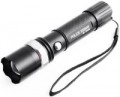 | 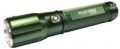 |
|---|---|---|
| Bailong Police BL-Q8626 | Bailong Police BL-7020 | |
from $3.04 | from $7.00 | |
| TOP sellers | ||
| Type | compact | compact |
Specs | ||
| Lamp type | lED with reflector | lED with reflector |
| Diode model | Cree XP-E Q5 | |
| Peak luminous flux | 500 lm | |
| Lighting range | 500 m | 80 m |
| Focus adjustment |  |  |
| Brightness levels | 1 | 2 |
| Additional modes | 1 pcs | |
Power supply | ||
| Power source | 1х18650 | 1х18650 |
| Operating time (Low mode) | 3 h | |
In box | ||
| In box | battery(s) torch charger car torch charger strap | battery(s) torch charger car torch charger strap |
General | ||
| Shockproof | | |
| Water protection | + | + |
| Material | metal | metal |
| Length | 15 cm | 14 cm |
| Weight | 198 g | |
| Color | ||
| Added to E-Catalog | october 2015 | march 2015 |


Compare Bailong Police BL-Q8626 and BL-7020
You may be interested in
My comparisons
Bailong Police BL-Q8626 often compared


Glossary
Diode model
Model of the LED(s) used in the flashlight. Knowing the exact name of the LED, you can find its detailed characteristics and evaluate the capabilities of the flashlight. In addition, this information may be useful when replacing a failed diode.
Note that the LED model is indicated mainly if it is a high-quality LED with advanced characteristics. Such light sources are produced by different manufacturers, but the most popular in modern flashlights are products from Cree with its series Cree XM, Cree XP, Cree XHP. Here are some of the most common LEDs from this brand: Cree XP-L, Cree XM-L2, Cree XP-E, Cree XP-G, Cree XM-L T6, Cree XM-L2 T6, Cree XM-L U2, Cree XM- L2 U2, Cree XP-G R5, Cree XP-G2 R5, Cree XP-E Q5.
Cree XM-L and XM-L2 series diodes are used in high-power flashlights. XP-G and XP-G2 are used in relatively small models. They produce a beam of light in the shape of a circle with a darkening inside when using a reflector to focus. XP-E and XP-E2 are a godsend for small items with an evenly f...ocused beam and even illumination on the sides. The number “2” in the designation of the diode model indicates increased brightness (compared to the basic modification). The XHP series is also gaining popularity - the LEDs in this line more than double the light flow. At the same time, they are compatible with standard printed circuit boards and optics. The numerical prefix 35/50/70 in the name of XHP diodes indicates the dimensions of the housing.
Along with solutions from Cree, high-quality LEDs from the American manufacturer Luminus are often found in flashlights. Its range includes both inexpensive diode options for budget flashlights and advanced LED light sources with high luminous brightness and luminous flux intensity for the most powerful flashlights.
A separate case is represented by diode plates made using COB technology (chip-on-board, that is, “chip on a board”). Such plates are arrays of a large number of miniature light sources, soldered directly into a printed circuit board at a short distance from each other and filled with a special composition; This composition performs two functions at once. First of all, it protects the LEDs from contact with air, which increases their service life; In addition, the coating effectively diffuses light, creating a uniform luminous flux.
Note that previously, to create LED arrays, SMD technology was mainly used, with individual LEDs soldered onto the surface of a printed circuit board. However, COB is a more modern and advanced option: this technology allows small but bright light sources to be placed at very high densities, achieving powerful lumen output even with small array sizes. In addition, SMD boards did not provide a protective coating.
In general, it makes sense to pay attention to flashlights with COB plates if you need a high-quality source of diffused light. As a result, such diode arrays are especially popular in travel lanterns and auxiliary lighting (see "Type"), but can also be used in other varieties - from ultra-compact key fobs to high-power hand-held lamps.
Note that the LED model is indicated mainly if it is a high-quality LED with advanced characteristics. Such light sources are produced by different manufacturers, but the most popular in modern flashlights are products from Cree with its series Cree XM, Cree XP, Cree XHP. Here are some of the most common LEDs from this brand: Cree XP-L, Cree XM-L2, Cree XP-E, Cree XP-G, Cree XM-L T6, Cree XM-L2 T6, Cree XM-L U2, Cree XM- L2 U2, Cree XP-G R5, Cree XP-G2 R5, Cree XP-E Q5.
Cree XM-L and XM-L2 series diodes are used in high-power flashlights. XP-G and XP-G2 are used in relatively small models. They produce a beam of light in the shape of a circle with a darkening inside when using a reflector to focus. XP-E and XP-E2 are a godsend for small items with an evenly f...ocused beam and even illumination on the sides. The number “2” in the designation of the diode model indicates increased brightness (compared to the basic modification). The XHP series is also gaining popularity - the LEDs in this line more than double the light flow. At the same time, they are compatible with standard printed circuit boards and optics. The numerical prefix 35/50/70 in the name of XHP diodes indicates the dimensions of the housing.
Along with solutions from Cree, high-quality LEDs from the American manufacturer Luminus are often found in flashlights. Its range includes both inexpensive diode options for budget flashlights and advanced LED light sources with high luminous brightness and luminous flux intensity for the most powerful flashlights.
A separate case is represented by diode plates made using COB technology (chip-on-board, that is, “chip on a board”). Such plates are arrays of a large number of miniature light sources, soldered directly into a printed circuit board at a short distance from each other and filled with a special composition; This composition performs two functions at once. First of all, it protects the LEDs from contact with air, which increases their service life; In addition, the coating effectively diffuses light, creating a uniform luminous flux.
Note that previously, to create LED arrays, SMD technology was mainly used, with individual LEDs soldered onto the surface of a printed circuit board. However, COB is a more modern and advanced option: this technology allows small but bright light sources to be placed at very high densities, achieving powerful lumen output even with small array sizes. In addition, SMD boards did not provide a protective coating.
In general, it makes sense to pay attention to flashlights with COB plates if you need a high-quality source of diffused light. As a result, such diode arrays are especially popular in travel lanterns and auxiliary lighting (see "Type"), but can also be used in other varieties - from ultra-compact key fobs to high-power hand-held lamps.
Peak luminous flux
Luminous flux (measured in lumens) can be described as the total amount of light produced by an LED or other light source and emitted in all directions the source shines by itself. In practice, this means a flashlight’s capability depends not only on luminous flux but also on beam angle. For example, a relatively weak flux can be concentrated into a narrow beam to achieve good throw; while effectively covering a wide area will inevitably require a large number of lumens.
Peak luminous flux is the short-term maximum brightness a light source can deliver with a fresh battery and low temperature, usually in Turbo mode. It’s used to gauge instantaneous burst output. Unlike sustained (long-term) luminous flux, the peak lasts seconds or minutes and then drops due to heating down to High mode, so for real-world use it’s more important to understand how many lumens a flashlight can maintain steadily. You can see this with EDC models: a stated 2000 lm is impressive for a quick outdoor search, but for a long walk the device will switch, say, to 1000 lm, keeping a comfortable body temperature and solid runtime.
It’s also worth keeping in mind that high flashlight brightness is far from always justified, and you should choose this parameter based on real conditions of use. At short distances, very bright light can be a hindrance: it tires the eyes and can dazzle people nearby. In addition, increasing brightness usually requires more powerful sources of both light an...d power, so the flashlight’s weight and overall dimensions go up.
Peak luminous flux is the short-term maximum brightness a light source can deliver with a fresh battery and low temperature, usually in Turbo mode. It’s used to gauge instantaneous burst output. Unlike sustained (long-term) luminous flux, the peak lasts seconds or minutes and then drops due to heating down to High mode, so for real-world use it’s more important to understand how many lumens a flashlight can maintain steadily. You can see this with EDC models: a stated 2000 lm is impressive for a quick outdoor search, but for a long walk the device will switch, say, to 1000 lm, keeping a comfortable body temperature and solid runtime.
It’s also worth keeping in mind that high flashlight brightness is far from always justified, and you should choose this parameter based on real conditions of use. At short distances, very bright light can be a hindrance: it tires the eyes and can dazzle people nearby. In addition, increasing brightness usually requires more powerful sources of both light an...d power, so the flashlight’s weight and overall dimensions go up.
Lighting range
The maximum range at which the flashlight provides any effective illumination of objects. Different manufacturers have different criteria for this efficiency when measuring ranges, and therefore it is only possible to unequivocally compare among themselves in range only models of one manufacturer. At the same time, this parameter allows us to compare models from different manufacturers with some certainty: for example, flashlights with a lighting range of 15 m and 100 m will clearly belong to different range classes, regardless of manufacturers.
Note that the range of illumination depends not only on the maximum luminous flux provided by the lantern (see above), but also on the features of its design: the narrower the beam is provided by the reflector of the lantern, the greater the range will be, and vice versa — scattered light does not spread far. Some models allow you to adjust the beam width depending on the requirements of the situation (for more details, see "Adjusting the focus").
It is also worth bearing in mind that models with the same claimed lighting range can cover different spaces. For example, a hand lamp (see Type) with a reflector diameter of 20 cm will be able to provide a wider beam than a conventional hand lamp with a 5 cm reflector. And although in both cases the objects that fall into the light spot will be illuminated in the same way, however, in the first case, the size of the spot itself will be larger, and the actual efficien...cy of the flashlight will be correspondingly higher (in light of the fact that it is easier to "feel" individual objects with a wide beam, especially at a considerable distance).
Note that the range of illumination depends not only on the maximum luminous flux provided by the lantern (see above), but also on the features of its design: the narrower the beam is provided by the reflector of the lantern, the greater the range will be, and vice versa — scattered light does not spread far. Some models allow you to adjust the beam width depending on the requirements of the situation (for more details, see "Adjusting the focus").
It is also worth bearing in mind that models with the same claimed lighting range can cover different spaces. For example, a hand lamp (see Type) with a reflector diameter of 20 cm will be able to provide a wider beam than a conventional hand lamp with a 5 cm reflector. And although in both cases the objects that fall into the light spot will be illuminated in the same way, however, in the first case, the size of the spot itself will be larger, and the actual efficien...cy of the flashlight will be correspondingly higher (in light of the fact that it is easier to "feel" individual objects with a wide beam, especially at a considerable distance).
Focus adjustment
The ability to adjust the angle and range of focus the beam of light provided by the flashlight.
With the same value of the light flux (see above), a narrow beam covers a small space, but allows you to shine far and illuminate objects more brightly (because more light enters per unit area). As the angle increases, the range and apparent brightness of the illumination decreases, but the flashlight provides simultaneous illumination for a larger area. Focus adjustment allows you to choose the necessary option from these two (or even some intermediate one), depending on the current situation.
With the same value of the light flux (see above), a narrow beam covers a small space, but allows you to shine far and illuminate objects more brightly (because more light enters per unit area). As the angle increases, the range and apparent brightness of the illumination decreases, but the flashlight provides simultaneous illumination for a larger area. Focus adjustment allows you to choose the necessary option from these two (or even some intermediate one), depending on the current situation.
Brightness levels
The number of brightness levels provided in the flashlight design. Most modern models have one level of brightness, but there are models with the ability to adjust. Several levels of brightness allow you to choose the best option for a particular case: for example, to view a small room, you can reduce the brightness and save battery power, while in a large warehouse you may need full power of the flashlight. Accordingly, the more brightness levels are provided in the design of the flashlight, the wider your options for choosing the best option will be.
Also note that in addition to step-by-step brightness adjustment, with fixed levels, modern flashlights can also be used with smooth adjustment. It is detailed below; here we note that the stepped format is technically simpler, cheaper, and therefore is used much more often. And in individual lamps, these options are combined — for them, the characteristics indicate both the number of individual brightness levels and the presence of smooth adjustment. The specific way to implement such a combination may be different. For example, a brightness control ring can have several fixed levels with clear values, and the ability to set any intermediate position between these values; the main mode of operation with smooth adjustment can be supplemented with a fixed level of reduced or increased brightness; etc.
Also note that in addition to step-by-step brightness adjustment, with fixed levels, modern flashlights can also be used with smooth adjustment. It is detailed below; here we note that the stepped format is technically simpler, cheaper, and therefore is used much more often. And in individual lamps, these options are combined — for them, the characteristics indicate both the number of individual brightness levels and the presence of smooth adjustment. The specific way to implement such a combination may be different. For example, a brightness control ring can have several fixed levels with clear values, and the ability to set any intermediate position between these values; the main mode of operation with smooth adjustment can be supplemented with a fixed level of reduced or increased brightness; etc.
Additional modes
The number and types of additional modes of operation provided for in the flashlight.
Additional modes include all modes in which the flashlight operation format differs from the standard “constant luminous flux in the visible range without pronounced coloration”. Namely strobe, SOS, beacon, flicker, light, low / high beam, infrared (IR), ultraviolet (UV), red light, blue light, green light, etc. More details about each:
- Stroboscope. Fast flashing mode - several flashes per second. One of the most popular applications of this function is disorientation of the enemy in an extreme situation; in light of this, a stroboscope is often provided in underbarrel flashlights (see "Type"), as well as manual models of "tactical" specialization. In addition, fast blinking is well suited to distinguish yourself on the road - especially in cloudy weather or at night: such a light is much more visible than constant light, including with peripheral vision. At the same time, we note that when using a stroboscope, some caution should be observed: due to the specific effect on the p...syche, this mode can provoke exacerbations of certain diseases - for example, seizures in patients with epilepsy.
— S.O.S. The mode of operation is "three short flashes - three long - three short", which corresponds to the international signal "please help" (letters SOS in Morse code format). This eliminates the need to send such a signal manually and allows you to leave the flashlight to work autonomously, and take care of more pressing problems (which often accompany situations that require the "SOS").
— Low / high beam. Possibility to switch between far directional beam and near diffused light. This switching is most often accomplished by using multiple sets of LEDs; at the same time, in some models, each of these sets is responsible for its own mode, in others, all diodes work in the high beam, and only a part of them work in the low beam.
— Infrared (IR). Illumination in the invisible infrared range. It is used, in particular, to improve the efficiency of night vision devices and IR sights. Note that many of the LEDs responsible for this mode also glow in the visible range (red light) during operation; however, this glow is quite weak and, as a rule, is noticeable to the human eye only when looking directly at its source from a short distance.
- Ultraviolet (UV). Illumination in the ultraviolet range is mainly used to identify objects and traces that are invisible under normal lighting. One of the most popular ways to use this feature is with a makeshift currency detector: most modern banknotes have markings that glow under UV light. Also, such light can be used to detect inscriptions with “invisible” ink (including marks on the same banknotes), some biological (for example, blood) and chemical liquids (in particular, UV-sensitive compounds can detect leaks in pipes and liquid contours), etc. Note that the UV emitter usually glows in the visible range - with a characteristic bluish tint; this allows you to accurately determine whether such a light is on or off.
- Red light. One of the more popular complementary colors in modern flashlights; can be used both in combination with blue and green (in the so-called RGB models), and as the only auxiliary shade. One of the features of red light is that it practically does not affect night vision, does not penetrate through the eyelids, and even after complete darkness does not blind the eyes. This makes such lighting the best option, for example, for clarifying map data during a night hike, when you need to quickly restore vision after turning off the light, or for emergency lighting in a sleeping room, where you need to see the environment and at the same time it is undesirable to disturb sleeping people with the light. . Another way to use red light is signaling: this light travels farther than blue or green, and stands out prominently against most landscapes and man-made objects. Hue change can be carried out both due to the light filter on the main light source, and due to a separate LED.
- Blue light. One of the shades used in the main three-color "RGB-lanterns" - along with red (see above) and green. This light is intended mainly for situations where you need to effectively illuminate the space in front of you, but it is undesirable to use ordinary white light. Human vision is most sensitive just to blue and green shades; therefore, a relatively weak blue light flux allows a large amount of detail to be revealed. And in some situations, such lighting can be even more effective than white. For example, if at night a white lantern is pointed at a light object, then the space behind this object will be hardly noticeable due to the bright reflected light; and a weak blue light will evenly highlight both the "foreground" and the "background". But using this shade at high brightness, on the contrary, is undesirable - reflection from bright blue light will dazzle even more than from white, and even more so red. And if a blue beam, even a weak one, hits directly into the eyes, it will instantly knock out night vision, and it will take quite a long time to restore it.
Note that the choice between blue and the similar green (see below) depends on the specific situation: different shades may be optimal in different situations.
- Green light. Hue, most commonly used in tri-color RGB lights, but sometimes used as the only complementary color. In many ways it is similar to the blue described above - in particular, in some situations, a weak green light can clearly reveal details that are invisible in other shades (even under the same blue light), but high brightness is undesirable for such a beam. In addition, this color has its own specific feature: many animals almost do not react to green light, so it is especially convenient for hunting.
- Lighthouse. The mode of infrequent flashes with a repeating amplitude, most often at a relatively low brightness (with some exceptions to the rule). In some models of lanterns, you can even meet more than one version of the lighthouse. The mode is designed to detect and observe the user at a distance; at the same time, the beacon not only consumes battery power more economically than a constant light of the same brightness, but is also better visible from afar. We also note that in headlamps, the flicker mode performs a similar function (see below).
- Flicker. In this mode, the flashlight emits short pulses or shines with a variable, "pulsating" brightness. This format of work is not intended to illuminate the surrounding area, but to make the user more visible to others: a person reacts to flickering light reflexively, even if its source is far in the peripheral vision zone. The flicker mode will be useful primarily on the roads - for example, when walking or cycling at night: in the same city, such a warning for surrounding drivers will not be out of place, and there is no need to talk about dark country roads.
— Red blinking (red blinking, red beacon). This mode allows you to make the flashlight as noticeable as possible: the red light, especially the flashing one, catches the eye even in the daytime. And in the dark, this shade is also useful due to the fact that it does not harm night vision (for more on this, see "Red Light" above). But the specific specialization of the red flashing may be different, depending on the specialization of the flashlight. For example, in tourist models (see "Type"), this mode allows you to give a signal, indicate the location of the camp, collection points, etc.; and in headbands, it is used to highlight the user on the road and make him as visible as possible to others (primarily for car drivers).
- Lamp. The function is found, as a rule, among hand lamps and in tourist models of flashlights (as an addition to the main directional light). In fact, we are talking about a scattered light mode - as opposed to a directional beam that provides the main light source with a reflector. Diffused light does not differ in range, but it allows you to cover a significant space - for example, to illuminate an entire room.
- LCU. Laser pointer mode: the flashlight emits a laser beam, the mark from which points to the intended point of impact. It makes sense to provide for such a regime only in underbarrel models (see "Type").
Note that this list is not exhaustive: modern flashlights may provide for other, more specific modes of operation. In such cases, the features of the functionality should be clarified according to the manufacturer's documentation.
Additional modes include all modes in which the flashlight operation format differs from the standard “constant luminous flux in the visible range without pronounced coloration”. Namely strobe, SOS, beacon, flicker, light, low / high beam, infrared (IR), ultraviolet (UV), red light, blue light, green light, etc. More details about each:
- Stroboscope. Fast flashing mode - several flashes per second. One of the most popular applications of this function is disorientation of the enemy in an extreme situation; in light of this, a stroboscope is often provided in underbarrel flashlights (see "Type"), as well as manual models of "tactical" specialization. In addition, fast blinking is well suited to distinguish yourself on the road - especially in cloudy weather or at night: such a light is much more visible than constant light, including with peripheral vision. At the same time, we note that when using a stroboscope, some caution should be observed: due to the specific effect on the p...syche, this mode can provoke exacerbations of certain diseases - for example, seizures in patients with epilepsy.
— S.O.S. The mode of operation is "three short flashes - three long - three short", which corresponds to the international signal "please help" (letters SOS in Morse code format). This eliminates the need to send such a signal manually and allows you to leave the flashlight to work autonomously, and take care of more pressing problems (which often accompany situations that require the "SOS").
— Low / high beam. Possibility to switch between far directional beam and near diffused light. This switching is most often accomplished by using multiple sets of LEDs; at the same time, in some models, each of these sets is responsible for its own mode, in others, all diodes work in the high beam, and only a part of them work in the low beam.
— Infrared (IR). Illumination in the invisible infrared range. It is used, in particular, to improve the efficiency of night vision devices and IR sights. Note that many of the LEDs responsible for this mode also glow in the visible range (red light) during operation; however, this glow is quite weak and, as a rule, is noticeable to the human eye only when looking directly at its source from a short distance.
- Ultraviolet (UV). Illumination in the ultraviolet range is mainly used to identify objects and traces that are invisible under normal lighting. One of the most popular ways to use this feature is with a makeshift currency detector: most modern banknotes have markings that glow under UV light. Also, such light can be used to detect inscriptions with “invisible” ink (including marks on the same banknotes), some biological (for example, blood) and chemical liquids (in particular, UV-sensitive compounds can detect leaks in pipes and liquid contours), etc. Note that the UV emitter usually glows in the visible range - with a characteristic bluish tint; this allows you to accurately determine whether such a light is on or off.
- Red light. One of the more popular complementary colors in modern flashlights; can be used both in combination with blue and green (in the so-called RGB models), and as the only auxiliary shade. One of the features of red light is that it practically does not affect night vision, does not penetrate through the eyelids, and even after complete darkness does not blind the eyes. This makes such lighting the best option, for example, for clarifying map data during a night hike, when you need to quickly restore vision after turning off the light, or for emergency lighting in a sleeping room, where you need to see the environment and at the same time it is undesirable to disturb sleeping people with the light. . Another way to use red light is signaling: this light travels farther than blue or green, and stands out prominently against most landscapes and man-made objects. Hue change can be carried out both due to the light filter on the main light source, and due to a separate LED.
- Blue light. One of the shades used in the main three-color "RGB-lanterns" - along with red (see above) and green. This light is intended mainly for situations where you need to effectively illuminate the space in front of you, but it is undesirable to use ordinary white light. Human vision is most sensitive just to blue and green shades; therefore, a relatively weak blue light flux allows a large amount of detail to be revealed. And in some situations, such lighting can be even more effective than white. For example, if at night a white lantern is pointed at a light object, then the space behind this object will be hardly noticeable due to the bright reflected light; and a weak blue light will evenly highlight both the "foreground" and the "background". But using this shade at high brightness, on the contrary, is undesirable - reflection from bright blue light will dazzle even more than from white, and even more so red. And if a blue beam, even a weak one, hits directly into the eyes, it will instantly knock out night vision, and it will take quite a long time to restore it.
Note that the choice between blue and the similar green (see below) depends on the specific situation: different shades may be optimal in different situations.
- Green light. Hue, most commonly used in tri-color RGB lights, but sometimes used as the only complementary color. In many ways it is similar to the blue described above - in particular, in some situations, a weak green light can clearly reveal details that are invisible in other shades (even under the same blue light), but high brightness is undesirable for such a beam. In addition, this color has its own specific feature: many animals almost do not react to green light, so it is especially convenient for hunting.
- Lighthouse. The mode of infrequent flashes with a repeating amplitude, most often at a relatively low brightness (with some exceptions to the rule). In some models of lanterns, you can even meet more than one version of the lighthouse. The mode is designed to detect and observe the user at a distance; at the same time, the beacon not only consumes battery power more economically than a constant light of the same brightness, but is also better visible from afar. We also note that in headlamps, the flicker mode performs a similar function (see below).
- Flicker. In this mode, the flashlight emits short pulses or shines with a variable, "pulsating" brightness. This format of work is not intended to illuminate the surrounding area, but to make the user more visible to others: a person reacts to flickering light reflexively, even if its source is far in the peripheral vision zone. The flicker mode will be useful primarily on the roads - for example, when walking or cycling at night: in the same city, such a warning for surrounding drivers will not be out of place, and there is no need to talk about dark country roads.
— Red blinking (red blinking, red beacon). This mode allows you to make the flashlight as noticeable as possible: the red light, especially the flashing one, catches the eye even in the daytime. And in the dark, this shade is also useful due to the fact that it does not harm night vision (for more on this, see "Red Light" above). But the specific specialization of the red flashing may be different, depending on the specialization of the flashlight. For example, in tourist models (see "Type"), this mode allows you to give a signal, indicate the location of the camp, collection points, etc.; and in headbands, it is used to highlight the user on the road and make him as visible as possible to others (primarily for car drivers).
- Lamp. The function is found, as a rule, among hand lamps and in tourist models of flashlights (as an addition to the main directional light). In fact, we are talking about a scattered light mode - as opposed to a directional beam that provides the main light source with a reflector. Diffused light does not differ in range, but it allows you to cover a significant space - for example, to illuminate an entire room.
- LCU. Laser pointer mode: the flashlight emits a laser beam, the mark from which points to the intended point of impact. It makes sense to provide for such a regime only in underbarrel models (see "Type").
Note that this list is not exhaustive: modern flashlights may provide for other, more specific modes of operation. In such cases, the features of the functionality should be clarified according to the manufacturer's documentation.
Operating time (Low mode)
The operating time in Low mode indicates how long the flashlight shines at low brightness before there’s a noticeable decrease in light level according to factory tests, usually at room temperature and with the battery provided. Low is chosen for long-duration tasks: set it as a tent light, attach it with a magnetic tail under the hood, or leave it as a nightlight or marker—situations where autonomy and moderate brightness are important. In this mode, the electronics heat up less and consume power more efficiently than in Medium/High, so the stated hours often reach the tens, especially in models with 18650/21700 batteries. It's important to consider that the actual "Low mode runtime" varies depending on the quality and capacity of the battery, outdoor temperature, and driver settings (such as whether there are steps and constant brightness maintenance). Compared to "Eco/Ultralow," Low provides a more practical level of light for household and service tasks, preserving the main advantage—long autonomy without overheating and unnecessary battery resource loss.