
Comparison Yamaha YDP-163 vs Yamaha YDP-143
Add to comparison | 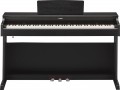 | 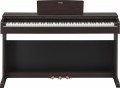 |
|---|---|---|
| Yamaha YDP-163 | Yamaha YDP-143 | |
from $1,799.99 | Compare prices 1 | |
| TOP sellers | ||
| Body | stationary | stationary |
| Cover |  | |
| Built-in pedals | | |
Keys | ||
| Number of keys | 88 шт | 88 шт |
| Size | full size | full size |
| Mechanics | malleus | malleus |
| Sensitivity adjustment | | |
| Rigidity | weighted | weighted |
Specs | ||
| Polyphony | 192 voices | 192 voices |
| Built-in timbres | 10 шт | 10 шт |
| Tempo change | 5 – 280 | 5 – 280 |
| Metronome | | |
| Sequencer (recording) | | |
| Built-in compositions | | |
Effects and control | ||
| Timbres layering | | |
| Keyboard split | | |
| Octave shift | | |
| Reverberation | | |
| Transposition | | |
| Fine tuning | | |
| More features | sound management system | sound management system |
Connectors | ||
| Connectable pedals | 1 шт | 1 шт |
| Outputs | USB to host (type B) | USB to host (type B) |
| Headphone outputs | 2 шт | 2 шт |
General | ||
| Built-in acoustics | 40 W | 12 W |
| Number of bands | 1 | 1 |
| Power consumption | 12 W | 8 W |
| Dimensions (WxHxD) | 1357x849x422 mm | 1357x815x422 mm |
| Weight | 42 kg | 38 kg |
| Color | ||
| Added to E-Catalog | june 2017 | june 2017 |



Compare Yamaha YDP-163 and YDP-143
Price comparison
You may be interested in
My comparisons
Yamaha YDP-163 often compared


Yamaha YDP-143 often compared


Glossary
Built-in acoustics
The power of the native acoustics installed in the Digital Piano.
This indicator directly affects the maximum volume that the instrument is able to produce "on its own", without connecting external speakers. At the same time, it is worth noting that many manufacturers go to the trick and indicate in the characteristics not the rated power (rms power when operating at full volume), but the peak power, which is the highest power that the acoustics can deliver at short “ups” of volume. Peak power values can be quite impressive — in the tens and hundreds of watts — but these figures have a very indirect relation to the actual capabilities of the speakers. Therefore, before choosing, it is worth clarifying what kind of power is mentioned in the characteristics. To do this, it is not necessary to look for detailed data on the instrument, it is enough to compare the power of the speakers with the power consumption (see below): if the claimed power of the acoustics is greater than the power consumption of the entire instrument, then the manufacturer indicated exactly the peak value.
This indicator directly affects the maximum volume that the instrument is able to produce "on its own", without connecting external speakers. At the same time, it is worth noting that many manufacturers go to the trick and indicate in the characteristics not the rated power (rms power when operating at full volume), but the peak power, which is the highest power that the acoustics can deliver at short “ups” of volume. Peak power values can be quite impressive — in the tens and hundreds of watts — but these figures have a very indirect relation to the actual capabilities of the speakers. Therefore, before choosing, it is worth clarifying what kind of power is mentioned in the characteristics. To do this, it is not necessary to look for detailed data on the instrument, it is enough to compare the power of the speakers with the power consumption (see below): if the claimed power of the acoustics is greater than the power consumption of the entire instrument, then the manufacturer indicated exactly the peak value.
Power consumption
The power consumed by the tool during normal operation.
The cost of electricity, as well as connection requirements, depend on this indicator. At the same time, we note that digital pianos require relatively little energy — even in the most powerful and advanced models, consumption usually does not exceed 60 watts. So in fact, power consumption data is required mainly for specific cases — for example, to calculate the total load when connecting a tool to an autonomous generator along with other devices. In addition, this information may be useful when assessing the power of the built-in speaker, for more information, see "Built-in acoustics".
The cost of electricity, as well as connection requirements, depend on this indicator. At the same time, we note that digital pianos require relatively little energy — even in the most powerful and advanced models, consumption usually does not exceed 60 watts. So in fact, power consumption data is required mainly for specific cases — for example, to calculate the total load when connecting a tool to an autonomous generator along with other devices. In addition, this information may be useful when assessing the power of the built-in speaker, for more information, see "Built-in acoustics".