
Comparison Bosch C3 vs Bosch C7
Add to comparison | 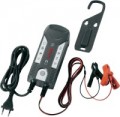 | 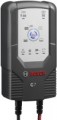 |
|---|---|---|
| Bosch C3 | Bosch C7 | |
from $69.99 | from $129.99 | |
| User reviews | ||
| TOP sellers | ||
Automatic selection of charging mode. Can be used without disconnecting the battery from the car. Protection against short circuit and overheating. Capable of charging all types of car batteries. | ||
| Device | charger | charger |
| Type | inverter | inverter |
Specs | ||
| Battery compatibility | WET/EFB (Lead-Acid) AGM GEL | WET/EFB (Lead-Acid) AGM GEL |
| Battery voltage | 6 В 12 В | 12 В 24 В |
| Min. charging current | 0.8 А | 1.5 А |
| Max. charging current | 3.8 А | 7 А |
| Current adjustment | automatic | automatic |
| Battery capacity 12V | 1.2 – 120 Ah | 1.2 – 230 Ah |
| Features | charging indicator overcharge protection winter charging mode battery storage mode | charging indicator overcharge protection winter charging mode battery storage mode |
General | ||
| Power source | 230 В | 230 В |
| Weight | 1.3 kg | |
| Added to E-Catalog | november 2014 | november 2014 |


Compare Bosch C3 and C7
Comparing Bosch C3 and Bosch C7, several key differences can be highlighted. Bosch C3 supports batteries with a voltage of 6 V and 12 V, while Bosch C7 works with 12 V and 24 V. The maximum current for C3 is 3.8 A, and for C7 it is 7 A, making C7 a more powerful option for charging. Additionally, C7 can charge batteries with a capacity of up to 230 Ah, whereas C3 is up to 120 Ah. Both devices have automatic current regulation and overcharge protection, ensuring safety during use.
You may be interested in
Bosch C3 often compared


Bosch C7 often compared


Glossary
Battery voltage
The nominal voltage of the batteries that the device can work with. For boosters (see "Type"), in this case, the voltage that the "starter" can output at the output in the engine start mode is indicated.
- 6 V. Voltage found in some motorcycles, scooters, ATVs and similar vehicles.
- 12 V. Standard voltage of batteries (and on-board networks) for passenger cars, as well as light trucks and minibuses.
- 24 V. Voltage used mainly in trucks, buses and other heavy equipment. Also found in some heavy SUVs.
- 6 V. Voltage found in some motorcycles, scooters, ATVs and similar vehicles.
- 12 V. Standard voltage of batteries (and on-board networks) for passenger cars, as well as light trucks and minibuses.
- 24 V. Voltage used mainly in trucks, buses and other heavy equipment. Also found in some heavy SUVs.
Min. charging current
The smallest current that the charger can provide in charging mode. See "Maximum charging current.
This parameter in our catalog is indicated only for those models that have several current adjustments (see below).
This parameter in our catalog is indicated only for those models that have several current adjustments (see below).
Max. charging current
The highest current that the charger can provide in charging mode. For models with one current adjustment (see below), its value is also indicated in this paragraph.
Different battery models may differ in charging parameters, including over the optimum current range. Accordingly, it is worth choosing a charger in such a way that it matches this range. Detailed selection recommendations can be found in special sources — in particular, documentation for batteries.
Different battery models may differ in charging parameters, including over the optimum current range. Accordingly, it is worth choosing a charger in such a way that it matches this range. Detailed selection recommendations can be found in special sources — in particular, documentation for batteries.
Battery capacity 12V
The capacity of batteries with an operating voltage of 12 V, for which a starter charger can be used. As a rule, modern units are not designed for one specific value, but for a range of capacities, which greatly facilitates the search filter according to the required parameters.
Note that although the discrepancy between the rechargeable battery in terms of capacity is not as critical as in terms of current or voltage, this does not mean that this parameter should not be paid attention to. Both too capacious and too “small” a battery will cause the charger to work in an off-design mode, which is harmful to both the “charger” and the battery, and can even lead to accidents.
Note that although the discrepancy between the rechargeable battery in terms of capacity is not as critical as in terms of current or voltage, this does not mean that this parameter should not be paid attention to. Both too capacious and too “small” a battery will cause the charger to work in an off-design mode, which is harmful to both the “charger” and the battery, and can even lead to accidents.