
Comparison Yamaha A-S701 vs Yamaha A-S501
Add to comparison | 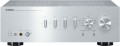 | 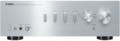 |
|---|---|---|
| Yamaha A-S701 | Yamaha A-S501 | |
| Compare prices 12 | Compare prices 7 | |
| User reviews | ||
| TOP sellers | ||
| Device type | integrated amplifier | integrated amplifier |
| Element base | transistor | transistor |
| Capacitor capacitance | 12 mF | 12 mF |
Amplifier parameters | ||
| Number of channels | 2 | 2 |
| Frequency range | 10 – 100000 Hz | 10 – 100000 Hz |
| Power per channel (8Ω) | 100 W | 85 W |
| Power per channel (6Ω) | 120 W | 100 W |
| Signal to noise ratio | 99 dB | 99 dB |
| Signal-to-noise ratio (Main) | 104 dB | |
| Signal to noise ratio (Phono MM/MC) | 82 dB | 82 dB |
| Damping factor | 240 | 240 |
| Harmonic distortion | 0.019 % | 0.019 % |
Channel sensitivity / impedance | ||
| Line input | 200 mV 47 kOhm | 200 mV 47 kOhm |
| Phono MM/MC | 3 mV 47 kOhm | 3 mV 47 kOhm |
| REC output | 200 mV 1 kOhm | 200 mV 1 kOhm |
Connectors | ||
| Inputs | Phono coaxial S/PDIF optical | Phono coaxial S/PDIF optical |
| To amplifier (Main) | RCA | |
| RCA | 4 pairs | 4 pairs |
| Outputs | to subwoofer | to subwoofer |
| For acoustics | 4 шт | 4 шт |
| REC (to recorder) | 2 pairs | 2 pairs |
| On headphones | 6.35 mm (Jack) | 6.35 mm (Jack) |
| Front panel | indicators headphone output | indicators headphone output |
Features | ||
| Adjustments | bass control treble adjustment balance adjustment level adjustment loudness | bass control treble adjustment balance adjustment level adjustment loudness |
| More features | By-pass/Direct auto power off ММ phono stage additional speaker connect Bi-Wiring | By-pass/Direct auto power off ММ phono stage additional speaker connect Bi-Wiring |
General | ||
| Remote control |  | |
| PSU | internal | internal |
| Power consumption | 270 W | 240 W |
| Standby consumption | 0.5 W | 0.5 W |
| Dimensions (WxDxH) | 435x387x151 mm | 435x387x151 mm |
| Weight | 11.2 kg | 10.3 kg |
| Color | ||
| Added to E-Catalog | january 2015 | january 2015 |




Compare Yamaha A-S701 and A-S501
Comparing the amplifiers Yamaha A-S701 and Yamaha A-S501, it can be noted that the A-S701 offers more power per channel — 100 W at 8 Ohms versus 85 W for the A-S501, making it more suitable for powerful speaker systems. Both devices have similar characteristics in terms of frequency range and harmonic distortion. However, the A-S701 has a higher signal-to-noise ratio for the phono stage, which may be important for vinyl turntables. Users note that the A-S701 provides clean, detailed sound, while the A-S501 also receives positive feedback for its build quality and sound, but occasionally mentions insufficient power for large rooms. Overall, the A-S701 would be the better choice for those seeking high performance, whereas the A-S501 may be suitable for more modest audio systems.
Price comparison
You may be interested in
Yamaha A-S701 often compared


Yamaha A-S501 often compared


Glossary
Power per channel (8Ω)
The nominal sound power output by the amplifier per channel when operating with a load having a dynamic resistance (impedance) of 8 ohms. In our catalog, this parameter is indicated for the mode when all channels of the amplifier work under load (see "Number of channels"); in the presence of unused channels, the rated power may be slightly higher, but this mode cannot be called standard.
Rated power can be simply described as the highest output signal power at which the amplifier is able to work stably for a long time (at least an hour) without negative consequences. These are average figures, because in fact, the audio signal is by definition unstable, and individual level jumps can significantly exceed the rated power. However, it is she who is the main basis for assessing the overall loudness of the sound.
This indicator also determines which speakers can be connected to the amplifier: their rated power should not be lower than that of the amplifier.
According to the laws of electrodynamics, with different dynamic load resistance, the output power of the amplifier will also be different. In modern speakers, the standard values \u200b\u200bare 8, 6, 4 and 2 Ohms, and power levels are indicated for them.
Rated power can be simply described as the highest output signal power at which the amplifier is able to work stably for a long time (at least an hour) without negative consequences. These are average figures, because in fact, the audio signal is by definition unstable, and individual level jumps can significantly exceed the rated power. However, it is she who is the main basis for assessing the overall loudness of the sound.
This indicator also determines which speakers can be connected to the amplifier: their rated power should not be lower than that of the amplifier.
According to the laws of electrodynamics, with different dynamic load resistance, the output power of the amplifier will also be different. In modern speakers, the standard values \u200b\u200bare 8, 6, 4 and 2 Ohms, and power levels are indicated for them.
Power per channel (6Ω)
The nominal sound power output by the amplifier per channel when a load with a dynamic resistance (impedance) of 6 ohms is connected to it. See Power per Channel (8Ω) for more information on power rating and its relationship to impedance.
Signal-to-noise ratio (Main)
Signal-to-noise ratio when the amplifier is operating through the Main input. For more details on the value of the signal-to-noise ratio, see the relevant paragraph above, about the Main input — p. "Input to the amplifier (Main)".
Power consumption
The power consumed by the amplifier during normal operation. Some manufacturers may indicate average power values, some — indicators at maximum load. However, anyway, this parameter allows you to quite adequately assess the power consumption of the device and the requirements for connected power.
In addition, it can be useful if you have doubts about the accuracy of the claimed data on the output power (see "Power per channel (8Ω)"). The basic rule is that the total power rating of all channels cannot exceed the total power consumption of the amplifier. In addition, there are special formulas that allow you to derive the maximum possible rated power depending on the power supply and type of amplifier; they can be found in special sources.
In addition, it can be useful if you have doubts about the accuracy of the claimed data on the output power (see "Power per channel (8Ω)"). The basic rule is that the total power rating of all channels cannot exceed the total power consumption of the amplifier. In addition, there are special formulas that allow you to derive the maximum possible rated power depending on the power supply and type of amplifier; they can be found in special sources.