
Comparison Wagner W 400 vs Wagner W 565
Add to comparison | 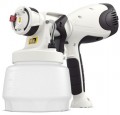 | 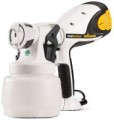 |
|---|---|---|
| Wagner W 400 | Wagner W 565 | |
| Outdated Product | from $116.00 | |
| TOP sellers | ||
| Device | paint sprayer | paint sprayer |
| Type | corded | corded |
Specs | ||
| Power consumption | 460 W | 320 W |
| Paint consumption | 0.23 L/min | 0.23 L/min |
| Maximum viscosity | 27 DIN | |
| Spraying | pneumatic | pneumatic |
| Container | bottom | bottom |
| Container volume | 1300 mL | 1300 mL |
| Tank material | plastic | plastic |
General | ||
| Weight | 1.7 kg | 1.6 kg |
| Added to E-Catalog | february 2018 | november 2015 |


Compare Wagner W 400 and W 565
You may be interested in
My comparisons
Wagner W 400 often compared


Glossary
Power consumption
The power consumed by the operation of an electric tool (see "Type").
Most modern spray guns, even performant ones, have a rather low power: for example, models with more than 1 kW are extremely rare, and in most cases, power consumption does not exceed 500 W at all. So when connecting such equipment to sockets, there are usually no problems; only single units of high performance, requiring 3.5 kW or more, have to be connected according to special rules (directly to the shield). In other cases, data on power consumption is most often not needed for normal use and may be required only for specific tasks — for example, to calculate the load on an autonomous generator.
Most modern spray guns, even performant ones, have a rather low power: for example, models with more than 1 kW are extremely rare, and in most cases, power consumption does not exceed 500 W at all. So when connecting such equipment to sockets, there are usually no problems; only single units of high performance, requiring 3.5 kW or more, have to be connected according to special rules (directly to the shield). In other cases, data on power consumption is most often not needed for normal use and may be required only for specific tasks — for example, to calculate the load on an autonomous generator.
Maximum viscosity
The maximum viscosity of the paint or other working material at which the spray gun is able to work normally. Specified in DIN units; a certain DIN in this case is the number of seconds it takes for a standard volume of paint (usually 100 mL) to pour out of a funnel with a strictly defined pour hole diameter (usually about 4 mm). Such a funnel (viscometer) can be supplied with the spray gun, but if necessary, it can be purchased separately.
Thus, the larger the DIN, the more viscous the composition is. And the larger the number indicated in the characteristics of the spray gun, the wider its capabilities, the thicker liquids can be poured into it without fear of clogging and breakage. At the same time, it should be taken into account that in fact it is not so often necessary to work with thick liquids — on the contrary, excessive viscosity worsens the quality of the coating, leads to streaks and increases the drying time. For example, most enamels and oil paints are used at a viscosity of about 20 DIN, latex paints up to 45 DIN, etc. General recommendations on this matter can be found in special sources, and specific ones can be found on the packaging of a particular brand of paint or other composition.
Thus, the larger the DIN, the more viscous the composition is. And the larger the number indicated in the characteristics of the spray gun, the wider its capabilities, the thicker liquids can be poured into it without fear of clogging and breakage. At the same time, it should be taken into account that in fact it is not so often necessary to work with thick liquids — on the contrary, excessive viscosity worsens the quality of the coating, leads to streaks and increases the drying time. For example, most enamels and oil paints are used at a viscosity of about 20 DIN, latex paints up to 45 DIN, etc. General recommendations on this matter can be found in special sources, and specific ones can be found on the packaging of a particular brand of paint or other composition.