
Comparison Bort BSS-600-R vs Makita BUB182Z
Add to comparison | 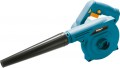 | 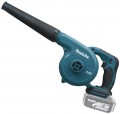 |
|---|---|---|
| Bort BSS-600-R | Makita BUB182Z | |
| Outdated Product | from $67.99 up to $75.72 | |
| TOP sellers | ||
| Type | manual | manual |
| Operating mode | blowing suction | blowing suction |
Specs | ||
| Air flow control |  | |
| Air flow (blowing) | 4 m³/min | 2.6 m³/min |
| Mulching ratio | 16:1 | |
Motor | ||
| Motor type | electric (mains) | electric (battery) |
| Motor power | 600 W | |
| Max. engine speed | 13000 rpm | 18000 rpm |
Battery | ||
| Battery in set | absent | |
| Battery voltage | 18 В | |
| Compatible batteries | BL1815, BL1815N, BL1820, BL1830, BL1840, BL1850 | |
General | ||
| Noise level | 83 dB | |
| Dimensions | 52.3x15.5x19.7 cm | |
| Weight | 2.16 kg | 1.7 kg |
| Added to E-Catalog | january 2016 | february 2015 |


Compare Bort BSS-600-R and Makita BUB182Z
You may be interested in
My comparisons
Bort BSS-600-R often compared

Makita BUB182Z often compared

Glossary
Air flow (blowing)
Performance of the garden vacuum cleaner when blowing (see "Operating mode").
This parameter determines the amount of air that the device distills through itself in a certain time. It should be noted that it depends not only on the speed of this air, but also on other parameters — for example, the diameter of the pipe. Therefore, two models with the same performance can noticeably differ in speed, and vice versa. You also need to keep in mind that the efficiency of "purging" bottlenecks with stuck debris does not depend on performance, but on the flow rate. On the other hand, good performance makes it easier to work on large areas, as allows you to simultaneously cover a large area with a jet of air.
Most modern garden vacuum cleaners in blowing mode provide up to 15 m / min; higher rates are typical mainly for professional models.
This parameter determines the amount of air that the device distills through itself in a certain time. It should be noted that it depends not only on the speed of this air, but also on other parameters — for example, the diameter of the pipe. Therefore, two models with the same performance can noticeably differ in speed, and vice versa. You also need to keep in mind that the efficiency of "purging" bottlenecks with stuck debris does not depend on performance, but on the flow rate. On the other hand, good performance makes it easier to work on large areas, as allows you to simultaneously cover a large area with a jet of air.
Most modern garden vacuum cleaners in blowing mode provide up to 15 m / min; higher rates are typical mainly for professional models.
Mulching ratio
The ratio of shredding debris provided by a vacuum cleaner with the appropriate mode of operation (see above).
This parameter shows how much the volume occupied by garbage decreases after passing through the grinder. For example, the value "8:1" corresponds to a reduction of 8 times. These figures, of course, are quite approximate, because. in fact, much depends on the type of waste, and in different cases, the indicators will also be different. For example, bulky large branches are “packed” very tightly, and soft leaves initially take up relatively little space, and for them the difference in volume before and after the chopper may be small. Nevertheless, the claimed values quite reliably describe the capabilities of the vacuum cleaner for processing the collected garbage.
Garden vacuum cleaners with a grinding ratio of 1:10 can be classified as average; lower rates are typical for relatively modest models, larger ones for advanced ones.
This parameter shows how much the volume occupied by garbage decreases after passing through the grinder. For example, the value "8:1" corresponds to a reduction of 8 times. These figures, of course, are quite approximate, because. in fact, much depends on the type of waste, and in different cases, the indicators will also be different. For example, bulky large branches are “packed” very tightly, and soft leaves initially take up relatively little space, and for them the difference in volume before and after the chopper may be small. Nevertheless, the claimed values quite reliably describe the capabilities of the vacuum cleaner for processing the collected garbage.
Garden vacuum cleaners with a grinding ratio of 1:10 can be classified as average; lower rates are typical for relatively modest models, larger ones for advanced ones.
Motor type
The type of motor provided in the design of the garden vacuum cleaner.
— Electric (mains). An electric motor powered by a stationary network is most often an ordinary household one, at 230 V. The electric motors themselves are distinguished by a relatively low noise level, the absence of exhaust gases, as well as the simplicity and low cost of both the design itself and its operation. In particular, mains power does not have the battery life limitations that are typical for batteries (see below). However, the price of unlimited battery life is limited mobility: the network cable does not allow you to go far from sockets. The situation can be partially corrected by using extension cords, however, there are certain limits for them. Another feature is that powerful electric motors would create high loads on the power grid. Therefore, in the vast majority of electric vacuum cleaners, the motor power does not exceed 3 kW (and three-phase 400 V power supply, which would allow working with high powers, is not used in them at all for a number of reasons). As a result of all this, such models are mostly intended for work in relatively small areas. At the same time, we note that low power does not mean low efficiency: due to various engineering tricks, some units of this type are able to provide a high flow rate (see above).
— Electric (battery). Electric motor powered by a built-in battery. Suc...h motors do not have fundamental design differences from mains-powered motors (see above), due to which they have the same advantages — low noise, cleanliness, simplicity and low cost. And battery power allows you to make the vacuum cleaner independent of outlets and practically unlimited in movement. But there is a downside here too: batteries significantly affect the weight and dimensions of the unit, they need to be charged from time to time (which will still require a socket), and the power restrictions for such power are even more stringent than for mains. As a result, battery power is found exclusively in low-power hand-held models (see "Type"), and many of them do not even have a suction mode and are intended exclusively for the role of a blower.
— Petrol. An internal combustion engine (ICE) that runs on gasoline. Such engines are heavier, more complex and more expensive than electric ones, they require regular purchases of fuel and oil, and the exhaust gases that occur during operation can create inconvenience during prolonged operation. However, all these shortcomings are covered by two key advantages: internal combustion engines can be used completely autonomously, because. they are completely independent of external power, while their power can be much higher than even that of "mains" electric motors, not to mention battery ones (see above). Due to this, almost all powerful garden vacuum cleaners of the middle and top classes are equipped with gasoline engines.
— Electric (mains). An electric motor powered by a stationary network is most often an ordinary household one, at 230 V. The electric motors themselves are distinguished by a relatively low noise level, the absence of exhaust gases, as well as the simplicity and low cost of both the design itself and its operation. In particular, mains power does not have the battery life limitations that are typical for batteries (see below). However, the price of unlimited battery life is limited mobility: the network cable does not allow you to go far from sockets. The situation can be partially corrected by using extension cords, however, there are certain limits for them. Another feature is that powerful electric motors would create high loads on the power grid. Therefore, in the vast majority of electric vacuum cleaners, the motor power does not exceed 3 kW (and three-phase 400 V power supply, which would allow working with high powers, is not used in them at all for a number of reasons). As a result of all this, such models are mostly intended for work in relatively small areas. At the same time, we note that low power does not mean low efficiency: due to various engineering tricks, some units of this type are able to provide a high flow rate (see above).
— Electric (battery). Electric motor powered by a built-in battery. Suc...h motors do not have fundamental design differences from mains-powered motors (see above), due to which they have the same advantages — low noise, cleanliness, simplicity and low cost. And battery power allows you to make the vacuum cleaner independent of outlets and practically unlimited in movement. But there is a downside here too: batteries significantly affect the weight and dimensions of the unit, they need to be charged from time to time (which will still require a socket), and the power restrictions for such power are even more stringent than for mains. As a result, battery power is found exclusively in low-power hand-held models (see "Type"), and many of them do not even have a suction mode and are intended exclusively for the role of a blower.
— Petrol. An internal combustion engine (ICE) that runs on gasoline. Such engines are heavier, more complex and more expensive than electric ones, they require regular purchases of fuel and oil, and the exhaust gases that occur during operation can create inconvenience during prolonged operation. However, all these shortcomings are covered by two key advantages: internal combustion engines can be used completely autonomously, because. they are completely independent of external power, while their power can be much higher than even that of "mains" electric motors, not to mention battery ones (see above). Due to this, almost all powerful garden vacuum cleaners of the middle and top classes are equipped with gasoline engines.
Motor power
Power of the garden vacuum cleaner motor, expressed in watts. This unit is by far the main one, it is used for both electric and gasoline engines (see "Engine type").
The more powerful the motor — the more air the vacuum cleaner is able to pass through itself, the greater the speed it is able to give the air flow and the more efficient the chopper (if there is one at all — see "Operating mode"). At the same time, all these moments depend not only on power, but also on many other design features; and manufacturers select each motor in such a way as to provide the vacuum cleaner with certain performance characteristics. Therefore, when choosing, it is worth looking primarily at practical characteristics (flow rate, blowing and suction performance), and engine power is of secondary importance.
The more powerful the motor — the more air the vacuum cleaner is able to pass through itself, the greater the speed it is able to give the air flow and the more efficient the chopper (if there is one at all — see "Operating mode"). At the same time, all these moments depend not only on power, but also on many other design features; and manufacturers select each motor in such a way as to provide the vacuum cleaner with certain performance characteristics. Therefore, when choosing, it is worth looking primarily at practical characteristics (flow rate, blowing and suction performance), and engine power is of secondary importance.
Max. engine speed
The highest speed at which the vacuum cleaner engine is able to operate in normal mode.
Theoretically, faster motors are capable of delivering more solid performance; however, in fact, these characteristics depend on so many different design features that the engine speed is practically lost against the background of these features. Therefore, this moment, in fact, is purely reference (and partly promotional — impressive rpm numbers can at first glance give the impression of high power and performance; but this impression is often deceptive).
Theoretically, faster motors are capable of delivering more solid performance; however, in fact, these characteristics depend on so many different design features that the engine speed is practically lost against the background of these features. Therefore, this moment, in fact, is purely reference (and partly promotional — impressive rpm numbers can at first glance give the impression of high power and performance; but this impression is often deceptive).
Battery in set
Complete Battery Set in garden blowers-vacuums shows how many batteries are included in the set and how ready the tool is to work "out of the box." One battery is the basic option for small areas and occasional cleaning when the minimal budget is important, but the working time is limited. Two batteries already allow you to comfortably maintain the yard and garden paths: while you use one battery, the other can be recharged or kept as a backup. Four batteries are almost always found in models that are designed to operate with two batteries at once: one pair is in the tool simultaneously for maximum power and extended operation, and the second pair is charged and ready to quickly replace the first without any pauses. There are also devices without batteries and chargers, colloquially known as "body only." This option is advantageous for those who already have compatible batteries of the same platform and do not want to overpay for duplicates.
Battery voltage
The battery voltage for which the powered garden vacuum cleaner is designed (see "Motor type"). For a powerful unit, usually, a fairly high voltage is required.
For the user, this parameter is important if the purchased vacuum cleaner is not equipped with a battery (see "Battery included"): in order to successfully select the battery, you need to know the required voltage. If the battery is included in the kit, then this indicator has a purely reference value, and can only come in handy when looking for a spare or additional battery.
For the user, this parameter is important if the purchased vacuum cleaner is not equipped with a battery (see "Battery included"): in order to successfully select the battery, you need to know the required voltage. If the battery is included in the kit, then this indicator has a purely reference value, and can only come in handy when looking for a spare or additional battery.
Compatible batteries
The name of the battery that is compatible with the device. It helps to buy a spare or find a suitable one in case of a breakdown of the main one.
Noise level
The noise level generated by the vacuum cleaner during normal operation. The lower this indicator, the more comfortable it is to work with the unit, the less the operator gets tired; and high noise levels may require the use of protection (e.g. earmuffs).
When assessing the noise level, note that the decibel used to measure this level is a non-linear quantity. Therefore, it is easiest to evaluate specific values using comparative tables. Here is one of the variants of such a table (rather simplified):
— 60 dB — sound comparable to a TV at medium volume. From this value, the indicators of modern garden vacuum cleaners begin, because. this technique works quite loudly.
— 70 dB — to a truck at a distance of about 8 m;
— 80 dB — traffic noise on a busy street;
— 90 dB — freight train noise at a distance of 8 – 10 m;
— 100 dB — the noise of the demolition hammer;
— 110 dB — indoor rock concert
When assessing the noise level, note that the decibel used to measure this level is a non-linear quantity. Therefore, it is easiest to evaluate specific values using comparative tables. Here is one of the variants of such a table (rather simplified):
— 60 dB — sound comparable to a TV at medium volume. From this value, the indicators of modern garden vacuum cleaners begin, because. this technique works quite loudly.
— 70 dB — to a truck at a distance of about 8 m;
— 80 dB — traffic noise on a busy street;
— 90 dB — freight train noise at a distance of 8 – 10 m;
— 100 dB — the noise of the demolition hammer;
— 110 dB — indoor rock concert