
Comparison Chieftec PPS PPS-500S vs Frime FP FP-500Y
Add to comparison | 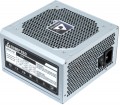 | 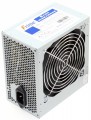 |
|---|---|---|
| Chieftec PPS PPS-500S | Frime FP FP-500Y | |
from $32.56 up to $35.16 | from $29.00 | |
| TOP sellers | ||
| Power | 500 W | 500 W |
| Form factor | ATX | ATX |
Specs | ||
| Efficiency | 80 % | |
| Cooling system | active | active |
| Fan size | 120 mm | 120 mm |
| Certification | without 80+ | without 80+ |
| ATX12V version | 2.3 | |
Power connectors | ||
| MB/CPU power supply | 24+4 pin | 24+4 pin |
| SATA | 4 | 2 |
| MOLEX | 2 | 2 |
| PCIe 6pin | 1 | |
| Floppy |  |  |
| Cable system | non-modular | non-modular |
General | ||
| Over voltage protection (OVP) | | |
| Over power protection (OPP) | | |
| Short circuit protection (SCP) | | |
| Manufacturer's warranty | 1 year | |
| Dimensions (HxWxD) | 86x150x140 mm | 86x150x140 mm |
| Added to E-Catalog | october 2016 | september 2016 |


Compare Chieftec PPS and Frime FP Chieftec PPS-500S и Frime FP-500Y?
You may be interested in
My comparisons
Chieftec PPS often compared


Glossary
Efficiency
Efficiency, in this case — the ratio of the power of the power supply (see "Power") to its power consumption. The higher the efficiency, the more efficient the power supply, the less energy it consumes from the network at the same output power, and the cheaper it is to operate. Efficiency may differ depending on the load; the characteristics can indicate both the minimum efficiency and its value at an average load (50%).
It should be noted that compliance with one or another level of 80PLUS efficiency directly depends on this indicator (for more details, see "Certificate").
It should be noted that compliance with one or another level of 80PLUS efficiency directly depends on this indicator (for more details, see "Certificate").
ATX12V version
A standard for power supplies that supplements the ATX specifications regarding power supply along the 12 V line. Introduced into use since the time of the Intel Pentium 4 processor. In the first series of the standard, the +5 V line was mainly used; from version 2.0, the +12 V line was introduced to fully power the components computer. Also in the second generation, a 24-pin power connector appeared, used in most modern motherboards.
SATA
The number of SATA power connectors provided in the PSU.
Nowadays, SATA is the standard interface for connecting internal hard drives, and it is also found in other types of drives (SSD, SSHD, etc.). Such an interface consists of a data connector connected to the motherboard, and a power connector connected to the PSU. Accordingly, in this paragraph we are talking about the number of SATA power plugs provided in the PSU. This number corresponds to the number of SATA drives that can be simultaneously powered from this model.
Nowadays, SATA is the standard interface for connecting internal hard drives, and it is also found in other types of drives (SSD, SSHD, etc.). Such an interface consists of a data connector connected to the motherboard, and a power connector connected to the PSU. Accordingly, in this paragraph we are talking about the number of SATA power plugs provided in the PSU. This number corresponds to the number of SATA drives that can be simultaneously powered from this model.
PCIe 6pin
Number of 6-pin PCIe power connectors provided in the power supply unit.
These connectors are used for additional power to types of internal peripherals for which the 75W supplied directly through the PCIe slot on the motherboard is insufficient (a typical example being graphics cards). A 6-pin connector on the power supply unit provides an additional 75W, allowing the connection of boards with power consumption up to 150W.
Note that some graphics cards have multiple connectors for additional power. In light of this, a PSU may have either one PCIe 6-pin plug or two such connectors. However, this type of plug is generally used quite rarely due to the proliferation of the more convenient and versatile 8-pin "6+2" format connector, which can be used as either a six- or eight-pin (see more about it below).
These connectors are used for additional power to types of internal peripherals for which the 75W supplied directly through the PCIe slot on the motherboard is insufficient (a typical example being graphics cards). A 6-pin connector on the power supply unit provides an additional 75W, allowing the connection of boards with power consumption up to 150W.
Note that some graphics cards have multiple connectors for additional power. In light of this, a PSU may have either one PCIe 6-pin plug or two such connectors. However, this type of plug is generally used quite rarely due to the proliferation of the more convenient and versatile 8-pin "6+2" format connector, which can be used as either a six- or eight-pin (see more about it below).
Floppy
The presence of at least one Floppy power connector in the PSU.
Initially, this connector was intended to power floppy disk drives, hence the name. It is also known under the designation "mini-Molex". Anyway, this standard is generally considered obsolete, but it is still used by some specific types of components, and therefore continues to be used in power supplies.
Initially, this connector was intended to power floppy disk drives, hence the name. It is also known under the designation "mini-Molex". Anyway, this standard is generally considered obsolete, but it is still used by some specific types of components, and therefore continues to be used in power supplies.
Manufacturer's warranty
Manufacturer's warranty provided for this model.
In fact, this is the minimum service life promised by the manufacturer, subject to the rules of operation. There are both models with a small warranty up to 3 years, and more advanced power supplies, in which the warranty can reach 7, 10 years and even 12 years. In general , a 5-year warranty(for example) does not mean that the device will fail after the specified time. Most often, the actual service life of the device is much longer than the guaranteed one.
Specific warranty periods may vary even for similar drives from the same manufacturer. So not
In fact, this is the minimum service life promised by the manufacturer, subject to the rules of operation. There are both models with a small warranty up to 3 years, and more advanced power supplies, in which the warranty can reach 7, 10 years and even 12 years. In general , a 5-year warranty(for example) does not mean that the device will fail after the specified time. Most often, the actual service life of the device is much longer than the guaranteed one.
Specific warranty periods may vary even for similar drives from the same manufacturer. So not