
Comparison Chieftec iARENA GPC GPC-700S vs Aerocool Value VX-700
Add to comparison | 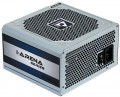 | 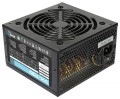 |
|---|---|---|
| Chieftec iARENA GPC GPC-700S | Aerocool Value VX-700 | |
from $112.89 | from $47.16 up to $54.56 | |
| User reviews | ||
| TOP sellers | ||
| Power | 700 W | 700 W |
| Form factor | ATX | ATX |
Specs | ||
| PFC | active | passive |
| Efficiency | 80 % | 80 % |
| Cooling system | active | active |
| Fan size | 120 mm | 120 mm |
| Certification | without 80+ | without 80+ |
| ATX12V version | 2.3 | 2.3 |
Power connectors | ||
| MB/CPU power supply | 24+8 (4+4) pin | 24+8 (4+4) pin |
| SATA | 6 | 6 |
| MOLEX | 2 | 3 |
| PCIe 8pin (6+2) | 2 | 2 |
| Floppy |  |  |
| Cable system | non-modular | non-modular |
Max. power | ||
| +3.3V | 22 А | 22 А |
| +5V | 22 А | 18 А |
| +12V1 | 52.5 А | 54 А |
| -12V | 0.3 А | 0.3 А |
| +5Vsb | 2.5 А | 2.5 А |
| +12V | 630 W | 648 W |
| +3.3V +5V | 130 W | 130 W |
| -12V | 3.6 W | 3.6 W |
| +5Vsb | 12.5 W | 12.5 W |
General | ||
| Over voltage protection (OVP) | | |
| Over power protection (OPP) | | |
| Short circuit protection (SCP) | | |
| Noise level | 33 dB | |
| Manufacturer's warranty | 2 years | 2 years |
| Dimensions (HxWxD) | 87x150x140 mm | 86x140x150 mm |
| Added to E-Catalog | august 2016 | november 2015 |


Compare Chieftec iARENA GPC and Aerocool Value Chieftec GPC-700S и Aerocool VX-700?
You may be interested in
My comparisons
Chieftec iARENA GPC often compared


Aerocool Value often compared
Glossary
PFC
The type of power factor correction (PFC) provided in the power supply.
The power consumed by the PSU is divided into active and reactive; the first goes to perform useful work, the second does not produce such work and is dissipated in the form of heat. The power factor is the ratio of active power to the total power consumed; the closer it is to one, the more efficient the PSU.
PFC correction is applied to improve the power factor. It can be done passively or actively. The first option provides the presence of a coil (choke), which partly compensates for the operation of the reactive components of the PSU; such a correction is simple and inexpensive to implement, but not very effective. The active method, in turn, provides the presence of a specialized controller. It is more expensive, but the power factor in such PSUs can reach 0.95 or more; in addition, the device is more resistant to voltage drops.
In general, for use in a home or small office, passive correction is more than enough; active PSUs should be specifically looked for mainly in cases where we are talking about numerous computers connected to a powerful UPS.
The power consumed by the PSU is divided into active and reactive; the first goes to perform useful work, the second does not produce such work and is dissipated in the form of heat. The power factor is the ratio of active power to the total power consumed; the closer it is to one, the more efficient the PSU.
PFC correction is applied to improve the power factor. It can be done passively or actively. The first option provides the presence of a coil (choke), which partly compensates for the operation of the reactive components of the PSU; such a correction is simple and inexpensive to implement, but not very effective. The active method, in turn, provides the presence of a specialized controller. It is more expensive, but the power factor in such PSUs can reach 0.95 or more; in addition, the device is more resistant to voltage drops.
In general, for use in a home or small office, passive correction is more than enough; active PSUs should be specifically looked for mainly in cases where we are talking about numerous computers connected to a powerful UPS.
MOLEX
The number of Molex (IDE) connectors provided in the design of the power supply.
Initially, such a connector was intended to power peripherals for the IDE interface, primarily hard drives. And although the IDE itself is completely obsolete today and is not used in new components, however, the Molex power connector continues to be installed in power supplies, and almost without fail. Almost any modern PSU has at least 1 – 2 of these connectors, and in high-end models this number can be 7 or more. This situation is due to the fact that Molex IDE is a fairly universal standard, and with the help of the simplest adapters, components with a different power interface can be powered from it. For example, there are Molex - SATA adapters for drives, Molex - 6 pin for video cards, etc.
Initially, such a connector was intended to power peripherals for the IDE interface, primarily hard drives. And although the IDE itself is completely obsolete today and is not used in new components, however, the Molex power connector continues to be installed in power supplies, and almost without fail. Almost any modern PSU has at least 1 – 2 of these connectors, and in high-end models this number can be 7 or more. This situation is due to the fact that Molex IDE is a fairly universal standard, and with the help of the simplest adapters, components with a different power interface can be powered from it. For example, there are Molex - SATA adapters for drives, Molex - 6 pin for video cards, etc.
Floppy
The presence of at least one Floppy power connector in the PSU.
Initially, this connector was intended to power floppy disk drives, hence the name. It is also known under the designation "mini-Molex". Anyway, this standard is generally considered obsolete, but it is still used by some specific types of components, and therefore continues to be used in power supplies.
Initially, this connector was intended to power floppy disk drives, hence the name. It is also known under the designation "mini-Molex". Anyway, this standard is generally considered obsolete, but it is still used by some specific types of components, and therefore continues to be used in power supplies.
+5V
The maximum current that the PSU is capable of issuing + 5V to the power line. For more information about power lines in general, see "+3.3V". Also note here that + 5V power, in addition to connectors for motherboards (for 20 and 24 pins), is also found in Molex and SATA plugs, as well as some other specific types of connectors.
+12V1
The maximum current the PSU can deliver on the first +12V power line.
For more information on power lines in general, see the "+3.3V" section. Here, it is worth mentioning that 12V is the most popular voltage among computer power connectors. It is used in almost all such connectors (with few exceptions), and some plugs (for example, additional PCI-E power with 6 or 8 connectors) use only 12-volt lines — specifically in the +12V format. The division of +12V power into several separate lines is done for safety reasons — to reduce the current going through each individual wire and thus prevent excessive load and overheating of the wiring. However, some manufacturers do not specify the maximum current for individual +12V lines and provide only the overall value in the specifications; in such cases, this number is indicated in this section.
For more information on power lines in general, see the "+3.3V" section. Here, it is worth mentioning that 12V is the most popular voltage among computer power connectors. It is used in almost all such connectors (with few exceptions), and some plugs (for example, additional PCI-E power with 6 or 8 connectors) use only 12-volt lines — specifically in the +12V format. The division of +12V power into several separate lines is done for safety reasons — to reduce the current going through each individual wire and thus prevent excessive load and overheating of the wiring. However, some manufacturers do not specify the maximum current for individual +12V lines and provide only the overall value in the specifications; in such cases, this number is indicated in this section.
+12V
The maximum power that the PSU can deliver to the +12V power rail.
For more details on power rails in general, see "Maximum current and power." Here, it should be noted that 12V is the most popular voltage among computer power connectors. It is used in nearly all such connectors (with few exceptions), and some plugs (such as the additional PCI-E power for 6 or 8 connectors) use only 12-volt rails, specifically in the +12V format. Therefore, this indicator is one of the most important characteristics of any PSU.
It is worth noting that many PSUs have multiple separate +12V power rails. In such cases, the total power is indicated here, which is usually divided equally among the rails.
For more details on power rails in general, see "Maximum current and power." Here, it should be noted that 12V is the most popular voltage among computer power connectors. It is used in nearly all such connectors (with few exceptions), and some plugs (such as the additional PCI-E power for 6 or 8 connectors) use only 12-volt rails, specifically in the +12V format. Therefore, this indicator is one of the most important characteristics of any PSU.
It is worth noting that many PSUs have multiple separate +12V power rails. In such cases, the total power is indicated here, which is usually divided equally among the rails.
Noise level
The noise level produced by the power supply.
Usually, the characteristics indicate the average value of the noise level during normal operation. The lower this value, the quieter the power supply and the more comfortable it is to use. However, it is worth noting that modern computer PSUs produce very little noise. So, in the quietest models, this figure does not exceed 20 dB — this is no louder than the rustling of leaves in a light breeze, such a sound is almost inaudible and is quite acceptable even in a residential area at night. Also acceptable for this application are noise sources of 21 – 25 dB(corresponding to a whisper at a distance of about 1 m) and 26 – 30 dB(wall clock ticking). Noise of more than 30 dB is already considered quite significant for computer PSUs; according to sanitary standards, such equipment in residential premises can only be used during the day.
When choosing a power supply for this indicator, it is worth considering a few points. First, noise reduction comes at a cost: it can affect the cooling performance and/or cost of the device. Secondly, the noise from the power supply is often lost against the background of louder PC components — for example, powerful cooling systems for the CPU or graphics card. Thirdly, the very environment where the PC is installed can be noisy — an example is a...n office or coworking. Thus, specifically looking for a low-noise model makes sense mainly in cases where maximum silence is crucial for you.
Usually, the characteristics indicate the average value of the noise level during normal operation. The lower this value, the quieter the power supply and the more comfortable it is to use. However, it is worth noting that modern computer PSUs produce very little noise. So, in the quietest models, this figure does not exceed 20 dB — this is no louder than the rustling of leaves in a light breeze, such a sound is almost inaudible and is quite acceptable even in a residential area at night. Also acceptable for this application are noise sources of 21 – 25 dB(corresponding to a whisper at a distance of about 1 m) and 26 – 30 dB(wall clock ticking). Noise of more than 30 dB is already considered quite significant for computer PSUs; according to sanitary standards, such equipment in residential premises can only be used during the day.
When choosing a power supply for this indicator, it is worth considering a few points. First, noise reduction comes at a cost: it can affect the cooling performance and/or cost of the device. Secondly, the noise from the power supply is often lost against the background of louder PC components — for example, powerful cooling systems for the CPU or graphics card. Thirdly, the very environment where the PC is installed can be noisy — an example is a...n office or coworking. Thus, specifically looking for a low-noise model makes sense mainly in cases where maximum silence is crucial for you.
Dimensions (HxWxD)
PC PSU dimensions are defined by the form factor (most often ATX 150×86 mm), and the key factor in compatibility is depth — the PSU case length. “Universal” ATX units are usually 140, 150 mm, while quiet, high-power models with large heatsinks and a 135/140‑mm fan range from 160 to 200+ mm; compact builds use SFX/SFX-L (depth ~100 and ~125 mm with an adapter bracket). The greater the depth, the higher the risk of hitting drive cages, the PSU shroud, cable management, or a front LCS radiator, and modular connectors plus cable bend radius require another 20 – 40 mm of real clearance.