
Comparison Chieftec Force CPS-550S vs Chieftec Smart A8 GPS-600A8
Add to comparison | 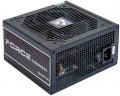 | 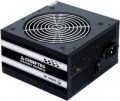 |
|---|---|---|
| Chieftec Force CPS-550S | Chieftec Smart A8 GPS-600A8 | |
from $46.62 up to $57.32 | from $46.06 up to $53.16 | |
| User reviews | ||
| TOP sellers | ||
| Power | 550 W | 600 W |
| Form factor | ATX | ATX |
Specs | ||
| PFC | active | active |
| Efficiency | 85 % | 80 % |
| Cooling system | active | active |
| Fan size | 120 mm | 120 mm |
| Fan bearing | sliding | |
| Certification | without 80+ | without 80+ |
| ATX12V version | 2.3 | 2.3 |
Power connectors | ||
| MB/CPU power supply | 24+8 (4+4) pin | 24+8 (4+4) pin |
| SATA | 4 | 4 |
| MOLEX | 2 | 2 |
| PCIe 8pin (6+2) | 2 | 2 |
| Floppy |  |  |
| Cable system | non-modular | non-modular |
Cable length | ||
| MB | 450 mm | 500 mm |
| CPU | 550 mm | 500 mm |
| SATA | 400 mm | 500 mm |
| MOLEX | 400 mm | 500 mm |
| PCIe | 550 mm | 500 mm |
Max. power | ||
| +3.3V | 22 А | 20 А |
| +5V | 22 А | 20 А |
| +12V1 | 41.25 А | 46 А |
| -12V | 0.3 А | 0.3 А |
| +5Vsb | 2.5 А | 2.5 А |
| +12V | 552 W | |
| +3.3V +5V | 120 W | 120 W |
| -12V | 3.6 W | 3.6 W |
| +5Vsb | 12.5 W | 12.5 W |
General | ||
| Over voltage protection (OVP) | | |
| Over power protection (OPP) | | |
| Short circuit protection (SCP) | | |
| Manufacturer's warranty | 2 years | 2 years |
| Dimensions (HxWxD) | 86x140x140 mm | 87x150x140 mm |
| Added to E-Catalog | december 2015 | february 2013 |


Compare Chieftec Force and Smart A8
You may be interested in
My comparisons
Chieftec Force often compared


Chieftec Smart A8 often compared


Glossary
Power
The output power of the power supply, in other words, is the maximum power that it is capable of delivering to the system. For the computer to operate efficiently, the power supply must be greater than the total power consumption of the system at maximum load. The latter can be calculated by summing the power of individual components, however, in general, for office configurations , about 400 W — 450 W is considered sufficient, for medium gaming — about 600 W( 500 W, 550 W, 650 W, 700 W, 750 W), and for the top ones — power of 800 W and above ( 850 W, 1000 W and even more than 1 kW).
Efficiency
Efficiency, in this case — the ratio of the power of the power supply (see "Power") to its power consumption. The higher the efficiency, the more efficient the power supply, the less energy it consumes from the network at the same output power, and the cheaper it is to operate. Efficiency may differ depending on the load; the characteristics can indicate both the minimum efficiency and its value at an average load (50%).
It should be noted that compliance with one or another level of 80PLUS efficiency directly depends on this indicator (for more details, see "Certificate").
It should be noted that compliance with one or another level of 80PLUS efficiency directly depends on this indicator (for more details, see "Certificate").
Fan bearing
The bearing is the piece between the rotating axle of the fan and the fixed base that supports the axle and reduces friction. The following types of bearings are found in modern fans:
— Sliding. The action of these bearings is based on direct contact between two solid surfaces, carefully polished to reduce friction. Such devices are simple, reliable and durable, but their efficiency is quite low — rolling, and even more so the hydrodynamic and magnetic principle of operation, provide much less friction.
— Rolling. They are also called "ball bearings", since the "mediators" between the axis of rotation and the fixed base are balls (less often — cylindrical rollers) fixed in a special ring. When the axis rotates, such balls roll between it and the base, due to which the friction force is very low — noticeably lower than in plain bearings. On the other hand, the design turns out to be more expensive and complex, and in terms of reliability it is somewhat inferior to both the same plain bearings and more advanced hydrodynamic devices. Therefore, although rolling bearings are quite widespread nowadays, however, in general, they are much less common than the mentioned varieties.
— Hydrodynamic. Bearings of this type are filled with a special liquid; when rotated, it creates a layer on which the moving part of the bearing slides. In this way, direct contact between hard surfaces is avoided and friction is significantly reduced compared to previous...types. Also, these bearings are quiet and very reliable. Of their shortcomings, a relatively high cost can be noted, but in fact this moment often turns out to be invisible against the background of the price of the entire system. Therefore, this option is extremely popular nowadays, it can be found in cooling systems of all levels — from low-cost to advanced.
— Magnetic centering. Bearings based on the principle of magnetic levitation: the rotating axis is "suspended" in a magnetic field. Thus, it is possible (as in hydrodynamic ones) to avoid contact between solid surfaces and further reduce friction. Considered the most advanced type of bearings, they are reliable and quiet, but expensive.
— Sliding. The action of these bearings is based on direct contact between two solid surfaces, carefully polished to reduce friction. Such devices are simple, reliable and durable, but their efficiency is quite low — rolling, and even more so the hydrodynamic and magnetic principle of operation, provide much less friction.
— Rolling. They are also called "ball bearings", since the "mediators" between the axis of rotation and the fixed base are balls (less often — cylindrical rollers) fixed in a special ring. When the axis rotates, such balls roll between it and the base, due to which the friction force is very low — noticeably lower than in plain bearings. On the other hand, the design turns out to be more expensive and complex, and in terms of reliability it is somewhat inferior to both the same plain bearings and more advanced hydrodynamic devices. Therefore, although rolling bearings are quite widespread nowadays, however, in general, they are much less common than the mentioned varieties.
— Hydrodynamic. Bearings of this type are filled with a special liquid; when rotated, it creates a layer on which the moving part of the bearing slides. In this way, direct contact between hard surfaces is avoided and friction is significantly reduced compared to previous...types. Also, these bearings are quiet and very reliable. Of their shortcomings, a relatively high cost can be noted, but in fact this moment often turns out to be invisible against the background of the price of the entire system. Therefore, this option is extremely popular nowadays, it can be found in cooling systems of all levels — from low-cost to advanced.
— Magnetic centering. Bearings based on the principle of magnetic levitation: the rotating axis is "suspended" in a magnetic field. Thus, it is possible (as in hydrodynamic ones) to avoid contact between solid surfaces and further reduce friction. Considered the most advanced type of bearings, they are reliable and quiet, but expensive.
Floppy
The presence of at least one Floppy power connector in the PSU.
Initially, this connector was intended to power floppy disk drives, hence the name. It is also known under the designation "mini-Molex". Anyway, this standard is generally considered obsolete, but it is still used by some specific types of components, and therefore continues to be used in power supplies.
Initially, this connector was intended to power floppy disk drives, hence the name. It is also known under the designation "mini-Molex". Anyway, this standard is generally considered obsolete, but it is still used by some specific types of components, and therefore continues to be used in power supplies.
+3.3V
The maximum values of current and power that the PSU can provide on individual power lines.
The power line can be simply described as a pair of contacts for connecting a particular load; one of these contacts is “ground” (with zero voltage), and the second has a certain voltage with a plus or minus sign, this voltage corresponds to the voltage of the power line. In this paragraph, it is + 3.3V (such power is present in 20- and 24-pin connectors for motherboards, in SATA power connectors and some other types of connectors).
In general, power and currents are rather specific parameters that the average user rarely needs — mainly when connecting high-power components such as video cards, as well as when starting a PSU without a computer to power other electronics (for example, amateur radio stations). It is also worth mentioning that the sum of the maximum powers on all lines can be higher than the total output power of the PSU — this means that all lines cannot operate at full power at the same time. Accordingly, when the PSU is fully loaded, some of them will produce less power than the maximum possible.
The power line can be simply described as a pair of contacts for connecting a particular load; one of these contacts is “ground” (with zero voltage), and the second has a certain voltage with a plus or minus sign, this voltage corresponds to the voltage of the power line. In this paragraph, it is + 3.3V (such power is present in 20- and 24-pin connectors for motherboards, in SATA power connectors and some other types of connectors).
In general, power and currents are rather specific parameters that the average user rarely needs — mainly when connecting high-power components such as video cards, as well as when starting a PSU without a computer to power other electronics (for example, amateur radio stations). It is also worth mentioning that the sum of the maximum powers on all lines can be higher than the total output power of the PSU — this means that all lines cannot operate at full power at the same time. Accordingly, when the PSU is fully loaded, some of them will produce less power than the maximum possible.
+5V
The maximum current that the PSU is capable of issuing + 5V to the power line. For more information about power lines in general, see "+3.3V". Also note here that + 5V power, in addition to connectors for motherboards (for 20 and 24 pins), is also found in Molex and SATA plugs, as well as some other specific types of connectors.
+12V1
The maximum current the PSU can deliver on the first +12V power line.
For more information on power lines in general, see the "+3.3V" section. Here, it is worth mentioning that 12V is the most popular voltage among computer power connectors. It is used in almost all such connectors (with few exceptions), and some plugs (for example, additional PCI-E power with 6 or 8 connectors) use only 12-volt lines — specifically in the +12V format. The division of +12V power into several separate lines is done for safety reasons — to reduce the current going through each individual wire and thus prevent excessive load and overheating of the wiring. However, some manufacturers do not specify the maximum current for individual +12V lines and provide only the overall value in the specifications; in such cases, this number is indicated in this section.
For more information on power lines in general, see the "+3.3V" section. Here, it is worth mentioning that 12V is the most popular voltage among computer power connectors. It is used in almost all such connectors (with few exceptions), and some plugs (for example, additional PCI-E power with 6 or 8 connectors) use only 12-volt lines — specifically in the +12V format. The division of +12V power into several separate lines is done for safety reasons — to reduce the current going through each individual wire and thus prevent excessive load and overheating of the wiring. However, some manufacturers do not specify the maximum current for individual +12V lines and provide only the overall value in the specifications; in such cases, this number is indicated in this section.
+12V
The maximum power that the PSU can deliver to the +12V power rail.
For more details on power rails in general, see "Maximum current and power." Here, it should be noted that 12V is the most popular voltage among computer power connectors. It is used in nearly all such connectors (with few exceptions), and some plugs (such as the additional PCI-E power for 6 or 8 connectors) use only 12-volt rails, specifically in the +12V format. Therefore, this indicator is one of the most important characteristics of any PSU.
It is worth noting that many PSUs have multiple separate +12V power rails. In such cases, the total power is indicated here, which is usually divided equally among the rails.
For more details on power rails in general, see "Maximum current and power." Here, it should be noted that 12V is the most popular voltage among computer power connectors. It is used in nearly all such connectors (with few exceptions), and some plugs (such as the additional PCI-E power for 6 or 8 connectors) use only 12-volt rails, specifically in the +12V format. Therefore, this indicator is one of the most important characteristics of any PSU.
It is worth noting that many PSUs have multiple separate +12V power rails. In such cases, the total power is indicated here, which is usually divided equally among the rails.
Dimensions (HxWxD)
PC PSU dimensions are defined by the form factor (most often ATX 150×86 mm), and the key factor in compatibility is depth — the PSU case length. “Universal” ATX units are usually 140, 150 mm, while quiet, high-power models with large heatsinks and a 135/140‑mm fan range from 160 to 200+ mm; compact builds use SFX/SFX-L (depth ~100 and ~125 mm with an adapter bracket). The greater the depth, the higher the risk of hitting drive cages, the PSU shroud, cable management, or a front LCS radiator, and modular connectors plus cable bend radius require another 20 – 40 mm of real clearance.