
Comparison Audio-Technica PRO31 vs Audio-Technica PRO41
Add to comparison | 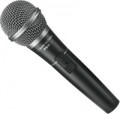 | 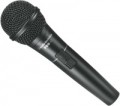 |
|---|---|---|
| Audio-Technica PRO31 | Audio-Technica PRO41 | |
from $80.77 up to $98.64 | from $79.50 | |
| TOP sellers | ||
"Quiet" button on / off MagnaLock. Two-stage capsule protection. Neodymium magnet HI-ENERGY. Wind protection. Cable included. Gold-plated XLR plug. | ||
| Microphone | vocal | vocal |
| Operating principle | dynamic | dynamic |
Specs | ||
| Microphone directivity | unidirectional | unidirectional |
| Directional pattern | cardioid | cardioid |
| Rated resistance | 600 Ohm | 300 Ohm |
| Frequency range | 60 – 13000 Hz | 90 – 16000 Hz |
| Sensitivity | -55 dB | -55 dB |
Functions and connectors | ||
| Features | mute button | mute button |
| Connection | XLR | XLR |
General | ||
| Cable length | 4.5 m | 4.5 m |
| Material | metal | |
| Size | 185x53x53 mm | 185x53x53 mm |
| Weight | 312 g | 304 g |
| In box | rack holder detachable cable case | rack holder detachable cable case |
| Color | ||
| Added to E-Catalog | november 2014 | november 2014 |


Compare Audio-Technica PRO31 and PRO41
You may be interested in
My comparisons
Glossary
Rated resistance
Microphone AC impedance; this parameter is also called "impedance". This is one of the most important characteristics that determines compatibility with the amplifier or other device to which the microphone is connected: if the impedance is not optimal, there may be a loss in signal power. It has its own characteristics, depending on the purpose of a particular model (see above). So, for microphones used with computers, laptops, voice recorders and phones / tablets, the impedance may not be indicated at all — the characteristics of such models are selected in such a way as to ensure normal compatibility with the corresponding devices. But in professional audio equipment, special rules are used for selection; more details can be found in special sources.
Frequency range
The range of audio frequencies normally perceived and processed by a microphone.
The wider this range — the fuller the signal, the less likely that too high or low frequencies will be missed due to the imperfection of the microphone. However, in this case, it is worth considering some nuances. First of all: a wide frequency range in itself does not guarantee high sound quality — a lot also depends on the type of microphone (see above) and its frequency response, not to mention the quality of other components of the audio system. In addition, a large width is also not always really necessary. For example, for normal transmission of human speech, a range of 500 Hz — 2 kHz is considered sufficient, which is much narrower than the general range perceived by the human ear. This general range, in turn, averages from 16 Hz to 22 kHz, and also narrows with age. Do not forget about the features of the equipment to which the microphone is connected: it is hardly worth specifically looking for a model with an extensive range, if, for example, the amplifier to which it is planned to be connected severely “cuts off” the frequencies from above and/or below.
The wider this range — the fuller the signal, the less likely that too high or low frequencies will be missed due to the imperfection of the microphone. However, in this case, it is worth considering some nuances. First of all: a wide frequency range in itself does not guarantee high sound quality — a lot also depends on the type of microphone (see above) and its frequency response, not to mention the quality of other components of the audio system. In addition, a large width is also not always really necessary. For example, for normal transmission of human speech, a range of 500 Hz — 2 kHz is considered sufficient, which is much narrower than the general range perceived by the human ear. This general range, in turn, averages from 16 Hz to 22 kHz, and also narrows with age. Do not forget about the features of the equipment to which the microphone is connected: it is hardly worth specifically looking for a model with an extensive range, if, for example, the amplifier to which it is planned to be connected severely “cuts off” the frequencies from above and/or below.
Material
The material from which the microphone body is made.
— Plastic. The main advantages of plastic are low cost, light weight and complete insensitivity to corrosion. At the same time, it is considered less reliable than metal, due to its relatively low strength (high-strength varieties of plastics exist, but in the case of microphones, it is usually easier to use metal after all). Therefore, this material is popular mainly among models for which lightness and miniature are important — primarily lapel, head and those that are installed on a video camera(see "Destination"). It is also often found in computer and laptop devices, but plastic microphones for vocals usually belong to the entry-level price category.
— Metal. Metal is more expensive than plastic and has more weight. On the other hand, metal microphones are much stronger and more reliable, besides, a microphone in such a case gives the impression of "solidity" (not least due to massiveness). This option is popular with mid to high end vocal, studio and instrument microphones.
— Plastic. The main advantages of plastic are low cost, light weight and complete insensitivity to corrosion. At the same time, it is considered less reliable than metal, due to its relatively low strength (high-strength varieties of plastics exist, but in the case of microphones, it is usually easier to use metal after all). Therefore, this material is popular mainly among models for which lightness and miniature are important — primarily lapel, head and those that are installed on a video camera(see "Destination"). It is also often found in computer and laptop devices, but plastic microphones for vocals usually belong to the entry-level price category.
— Metal. Metal is more expensive than plastic and has more weight. On the other hand, metal microphones are much stronger and more reliable, besides, a microphone in such a case gives the impression of "solidity" (not least due to massiveness). This option is popular with mid to high end vocal, studio and instrument microphones.