
Comparison Magner 75 UD vs Magner 75 D
Add to comparison | 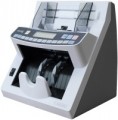 | 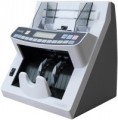 |
|---|---|---|
| Magner 75 UD | Magner 75 D | |
from $790.00 up to $850.77 | from $585.84 up to $613.85 | |
| TOP sellers | ||
| Product Type | bill counter | bill counter |
Specs | ||
| Max. counting speed | 1500 bills/min | 1500 bills/min |
| Load Tray capacity | 500 bills | 500 bills |
| Receive pocket capacity | 150 bills | 150 bills |
| Min. bills size | 100x50 mm | 100x50 mm |
| Max. bills size | 180x95 mm | 180x95 mm |
Features | ||
| Authenticity Check | by size optical density ultraviolet (UV) | by size optical density |
| Features | auto start value counting batch feature | auto start value counting batch feature |
General | ||
| PC connection |  | |
| Power source | power through mount | power through mount |
| Power consumption | 70 W | 70 W |
| Dimensions | 280x230x250 mm | 280x230x250 mm |
| Weight | 7.3 kg | 7.3 kg |
| Added to E-Catalog | july 2015 | july 2015 |


Compare Magner 75 UD and 75 D
You may be interested in
My comparisons
Magner 75 UD often compared

Glossary
Authenticity Check
Types of authenticity check with certain signs on the money being counted and provided in the design of the counter. Only models for paper money are equipped with detection (see “Product Type”).
— By size. A detection that involves determining the size of a bills. In bill counters, usually, it is used for sorting by face (see "Functions") or dilapidation, but it can also be used for other purposes — for example, identifying bills that are not related to the currency being counted.
— By optical density. Detection based on optical density — the ability of a bills to transmit and retain light. It is mainly used to detect sticky bills and prevent counting errors, but can also be used to screen out worn or suspicious bills.
— By magnetic marks. Detection based on the reading of magnetic marks. Typically, such marks are applied with a special paint, "noticeable" for magnetic sensors; note that they are widely used in US dollars and euros. This type of detection can be used both to determine the denomination and to separate bills in other currencies and detect counterfeit bills.
— Ultraviolet (UV). Detection using UV radiation. Devices with this feature are able to detect special security elements that are visible only under ultraviolet light, and respond to the absence or non-standard arrangement of s...uch elements. Due to this, it is possible to detect not only counterfeit or foreign bills, but also money marked with special compositions (for example, bills used as material evidence in a criminal case on a bribe and signed respectively). However, if the possibility of identifying marked bills is fundamentally important for you, its availability should be clarified additionally.
— Infrared (IR). Detection using infrared radiation. By the operating principle, it is similar to the UV detection described above, however, protective IR elements are less common, and their detection is technically more difficult. Therefore, this detection function is found mainly in hi-end devices, in particular, high-precision sorters (see "Product Type").
— By size. A detection that involves determining the size of a bills. In bill counters, usually, it is used for sorting by face (see "Functions") or dilapidation, but it can also be used for other purposes — for example, identifying bills that are not related to the currency being counted.
— By optical density. Detection based on optical density — the ability of a bills to transmit and retain light. It is mainly used to detect sticky bills and prevent counting errors, but can also be used to screen out worn or suspicious bills.
— By magnetic marks. Detection based on the reading of magnetic marks. Typically, such marks are applied with a special paint, "noticeable" for magnetic sensors; note that they are widely used in US dollars and euros. This type of detection can be used both to determine the denomination and to separate bills in other currencies and detect counterfeit bills.
— Ultraviolet (UV). Detection using UV radiation. Devices with this feature are able to detect special security elements that are visible only under ultraviolet light, and respond to the absence or non-standard arrangement of s...uch elements. Due to this, it is possible to detect not only counterfeit or foreign bills, but also money marked with special compositions (for example, bills used as material evidence in a criminal case on a bribe and signed respectively). However, if the possibility of identifying marked bills is fundamentally important for you, its availability should be clarified additionally.
— Infrared (IR). Detection using infrared radiation. By the operating principle, it is similar to the UV detection described above, however, protective IR elements are less common, and their detection is technically more difficult. Therefore, this detection function is found mainly in hi-end devices, in particular, high-precision sorters (see "Product Type").