
Comparison Konner&Sohnen KS 2000T E vs Hyundai T2000-E
Add to comparison | 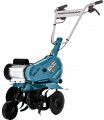 | 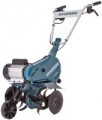 |
|---|---|---|
| Konner&Sohnen KS 2000T E | Hyundai T2000-E | |
from $323.96 up to $362.12 | from $352.16 up to $387.32 | |
| User reviews | ||
| TOP sellers | ||
Powerful branded electric motor with low noise level. Chain reducer. V-belt clutch. Front transport wheel. Coulter. Edge cutters included. | ||
| Motor type | electric (mains) | electric (mains) |
Soil cultivation | ||
| Working width | 55 cm | 45 cm |
| Working depth | 25 cm | 26 cm |
| Number of blades | 4 | 4 |
Design characteristics | ||
| Design | transportation wheels plant protection handle height adjustment | transportation wheels plant protection handle height adjustment |
| Reducer | chain | chain |
| Gears | 1 forward | 1 forward |
Motor | ||
| Motor power | 2000 W | 2000 W |
General | ||
| Noise level | 96 dB | 82 dB |
| Weight | 30 kg | 30 kg |
| Added to E-Catalog | april 2016 | august 2012 |


Compare Konner&Sohnen KS 2000T E and Hyundai T2000-E
You may be interested in
Konner&Sohnen KS 2000T E often compared


Hyundai T2000-E often compared


Glossary
Working width
The maximum width of the strip of land processed by the machine in one pass.
The large width makes it easier to work in large open areas, allowing them to be dealt with faster. At the same time, it is easier to deal with bottlenecks and hard-to-reach nooks and crannies with a small working width — a large unit may simply not fit where a smaller one will pass without problems. So it is worth choosing according to this indicator, taking into account the features of the planned work. If we talk about specific numbers, then in the smallest models the capture width does not exceed 50 cm, in the largest it can be 1 m or more, a value from 50 to 75 cm can be called average, and from 75 cm to 1 m — above average.
Also note that some models allow you to expand the processing width by installing additional cutters. However, note that the wider the band, the more power is needed for efficient operation. It is believed that for the full use of the two-wheel tractor, it must produce at least 1 hp. for every 20 cm of width; however, for loose soils and shallow depths, smaller values are sufficient.
The large width makes it easier to work in large open areas, allowing them to be dealt with faster. At the same time, it is easier to deal with bottlenecks and hard-to-reach nooks and crannies with a small working width — a large unit may simply not fit where a smaller one will pass without problems. So it is worth choosing according to this indicator, taking into account the features of the planned work. If we talk about specific numbers, then in the smallest models the capture width does not exceed 50 cm, in the largest it can be 1 m or more, a value from 50 to 75 cm can be called average, and from 75 cm to 1 m — above average.
Also note that some models allow you to expand the processing width by installing additional cutters. However, note that the wider the band, the more power is needed for efficient operation. It is believed that for the full use of the two-wheel tractor, it must produce at least 1 hp. for every 20 cm of width; however, for loose soils and shallow depths, smaller values are sufficient.
Working depth
The maximum processing depth provided by the unit. In cultivators with non-replaceable cutters, this parameter is determined primarily by the cutter diameter, in walk-behind tractors designed for active cutters (see below) - by design features (in such models, even high power does not guarantee a large working depth). The most limited indicator in modern walk-behind tractors is up to 20 cm, and a value from 21 to 25 cm can be called small. However, often even such capabilities are quite sufficient. A depth of 26 to 30 cm already provides quite extensive capabilities, and the most advanced models are capable of "biting into the ground" more than 30 cm.
In any case, the optimal processing depth depends on the type and condition of the soil, as well as the crops for which the soil is being prepared; detailed recommendations on this matter can be found in specialized sources. So it does not always make sense to look for a model with maximum depth - especially since such capabilities require high power. It should also be noted that in many units the depth can be adjusted.
In any case, the optimal processing depth depends on the type and condition of the soil, as well as the crops for which the soil is being prepared; detailed recommendations on this matter can be found in specialized sources. So it does not always make sense to look for a model with maximum depth - especially since such capabilities require high power. It should also be noted that in many units the depth can be adjusted.
Noise level
The maximum noise level produced by the cultivator / two-wheel tractor during operation. A noise of 70 dB is comparable to a very loud conversation, 80 dB to a busy city street, 100 dB to a production shop. The lower the noise level, the more comfortable the use of the unit for the operator himself and the less inconvenience it causes to others.