
Comparison Acer K650i vs LG PF1500
Add to comparison | 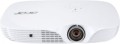 | 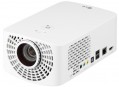 |
|---|---|---|
| Acer K650i | LG PF1500 | |
| Outdated Product | from $965.44 up to $1,052.00 | |
| TOP sellers | ||
Built-in player to play content from SD-drives and USB-sticks. Loud speakers with a total power of 10 watts. Carry bag included. | Support for playing 3D content. Optical zoom. Multifunctional remote control Magic Remote. Compact dimensions. The Magic Remote is not always included. | |
| Main function | home | home |
Lamp and image | ||
| Lamp type | LED | LED |
| Service life | 20000 h | 30000 h |
| Service life (energy-saving) | 30000 h | |
| Brightness | 1400 lm | 1400 lm |
| Dynamic contrast | 100 000:1 | 150 000:1 |
| Colour rendering | 1.07 billion colours | |
| Horizontal frequency | 15 – 100 kHz | |
| Frame rate | 24 – 120 Hz | |
Projection system | ||
| Technology | DLP | DLP |
| Real resolution | 1920x1080 px | 1920x1080 px |
| Max. video resolution | 1920x1200 px | |
| Image format support | 4:3, 16:9, 16:10 | 4:3, 16:9 |
| Brightness/contrast enhancement |  |  |
| Colour enhancement | | |
Projecting | ||
| Rear projection | | |
| Throw distance, min | 1 m | 0.91 m |
| Throw distance, max | 7.4 m | 3.7 m |
| Image size | 39.5 – 300 " | 27 – 120 " |
| Throw ratio | 1.50:1 | |
| Optical zoom | 1 x | 1.1 x |
| Digital zoom | 2 x | |
| Zoom and focus | manual | manual |
| Keystone correction (vert), ± | 30 ° | |
Features | ||
| Features | MHL support | MHL support 3D support |
| Bluetooth | v 4.0 | v 3.0 |
| Wi-Fi | Wi-Fi 4 (802.11n) | Wi-Fi 4 (802.11n) |
Hardware | ||
| USB-A 2.0 | 2 pcs | |
| Number of speakers | 1 | 2 |
| Sound power | 10 W | 6 W |
| Video connectors | VGA | VGA component |
| HDMI inputs | no | 2 |
| Audio connectors | 3.5 mm input (mini-Jack) 3.5 mm output (mini-Jack) | 3.5 mm output (mini-Jack) |
| Service connectors | COM port (RS-232) USB (slave) LAN (RJ-45) | LAN (RJ-45) |
General | ||
| Noise level (nominal) | 29 dB | 30 dB |
| Noise level (energy-saving / quiet) | 25 dB | |
| Power source | mains | mains |
| Power consumption | 125 W | 90 W |
| Size (HxWxD) | 63x355x235 mm | 84x132x220 mm |
| Weight | 2.4 kg | 1.5 kg |
| Color | ||
| Added to E-Catalog | june 2017 | october 2015 |


Compare Acer K650i and LG PF1500
Projectors Acer K650i and LG PF1500 are both designed for home theater and use LED lamps with a brightness of 1400 lm. However, the K650i stands out with a higher dynamic contrast ratio (100,000:1 compared to 150,000:1 for the PF1500) and a longer lamp life in economy mode (up to 30,000 hours). Acer also offers a larger projection size (up to 300 inches), while LG is limited to 120 inches. In terms of connectivity, the LG PF1500 has two HDMI inputs and 3D support, which might be important for movie enthusiasts. At the same time, the K650i features a built-in player and loudspeakers with a power of 10 W, making it more versatile for content playback. Users note the compact size of the LG, making it more portable. Ultimately, the choice between them depends on preferences: the K650i is better for larger screens and built-in playback, while the PF1500 is for portability and 3D capabilities.
You may be interested in
My comparisons
Acer K650i often compared


LG PF1500 often compared


Glossary
Service life
Minimum projector lamp life as stated by the manufacturer. Specified by the total time of continuous operation. Note that if the projector was operated without violations, then upon reaching this time, the lamp will not necessarily fail — on the contrary, it can work for quite a long time. However, when evaluating durability, it is best to focus on the claimed service life.
Service life (energy-saving)
When working in economy mode, the brightness of the backlight is noticeably reduced, on average by 30-50%. With a decrease in brightness, heat dissipation also decreases, which saves the working life of the illuminator, thereby increasing the lamp life. Thus, the ECO mode allows you to extend the lamp life by an average of 30%. If the typical projector lamp life is 4000 hours, regular use of the ECO mode will extend the backlight life to approximately 5500 hours.
Dynamic contrast
The dynamic image contrast provided by the projector.
Dynamic contrast ratio is the ratio between the brightest white and darkest black colour that a projector can produce. Recall that the quality of colour reproduction and detailing depend on contrast, the higher this indicator, the lower the likelihood that details will be indistinguishable in bright or dark areas. However, dynamic contrast is a rather specific parameter. The fact is that when it is calculated, the brightest white at the maximum brightness settings and the darkest black at the minimum are taken into account. As a result, the figures in this column can be very impressive, but it is impossible to achieve such a contrast within one frame.
By introducing this parameter, the manufacturers went to a certain trick. However, this is not to say that dynamic contrast has nothing to do with image quality at all. Projectors can use automatic brightness control, in which the overall brightness, depending on the "picture" on the screen, can increase or decrease. This format of work is based on the fact that the human eye does not need too bright areas on a general dark background and very dark areas on a bright one, the image is normally perceived even without it. The maximum brightness difference achievable in this mode of operation is exactly what described by dynamic contrast.
Dynamic contrast ratio is the ratio between the brightest white and darkest black colour that a projector can produce. Recall that the quality of colour reproduction and detailing depend on contrast, the higher this indicator, the lower the likelihood that details will be indistinguishable in bright or dark areas. However, dynamic contrast is a rather specific parameter. The fact is that when it is calculated, the brightest white at the maximum brightness settings and the darkest black at the minimum are taken into account. As a result, the figures in this column can be very impressive, but it is impossible to achieve such a contrast within one frame.
By introducing this parameter, the manufacturers went to a certain trick. However, this is not to say that dynamic contrast has nothing to do with image quality at all. Projectors can use automatic brightness control, in which the overall brightness, depending on the "picture" on the screen, can increase or decrease. This format of work is based on the fact that the human eye does not need too bright areas on a general dark background and very dark areas on a bright one, the image is normally perceived even without it. The maximum brightness difference achievable in this mode of operation is exactly what described by dynamic contrast.
Colour rendering
The number of individual colour shades that the projector is capable of displaying.
The minimum indicator for modern projection technology is actually 16 million colours (more precisely, 16.7 million is a standard number associated with the features of digital image processing). In the most advanced models, this value can exceed 1 billion. However, two nuances should be taken into account here: firstly, the human eye is able to recognize only about 10 million colour shades, and secondly, not a single modern image output device (projectors, monitors, etc.) cannot cover the entire spectrum of colours visible to the human eye. Therefore, impressive colour performance is more of a marketing ploy than a real indicator of image quality, and in fact it makes sense to pay attention to other characteristics — primarily brightness and contrast (see above), as well as specific data like a colour gamut chart.
The minimum indicator for modern projection technology is actually 16 million colours (more precisely, 16.7 million is a standard number associated with the features of digital image processing). In the most advanced models, this value can exceed 1 billion. However, two nuances should be taken into account here: firstly, the human eye is able to recognize only about 10 million colour shades, and secondly, not a single modern image output device (projectors, monitors, etc.) cannot cover the entire spectrum of colours visible to the human eye. Therefore, impressive colour performance is more of a marketing ploy than a real indicator of image quality, and in fact it makes sense to pay attention to other characteristics — primarily brightness and contrast (see above), as well as specific data like a colour gamut chart.
Horizontal frequency
Horizontal frequency supported by the projector.
This parameter is relevant when working with analogue video signal. In such a video, the image is formed line by line: each pixel in the line is highlighted in turn, then the next line is highlighted, and so on. The horizontal frequency describes how many times per second the backlight beam runs from edge to edge of the screen. For normal playback, the projector must support the same refresh rate as the input signal was recorded. However, most models support a fairly wide range of frequencies, and there are no problems with support. Also note that if you are not a professional, then when choosing a projector, it is quite possible to focus on the frame rate (see below) — this parameter is simpler and more intuitive, and support for a certain frame rate automatically means support for the corresponding line rate.
This parameter is relevant when working with analogue video signal. In such a video, the image is formed line by line: each pixel in the line is highlighted in turn, then the next line is highlighted, and so on. The horizontal frequency describes how many times per second the backlight beam runs from edge to edge of the screen. For normal playback, the projector must support the same refresh rate as the input signal was recorded. However, most models support a fairly wide range of frequencies, and there are no problems with support. Also note that if you are not a professional, then when choosing a projector, it is quite possible to focus on the frame rate (see below) — this parameter is simpler and more intuitive, and support for a certain frame rate automatically means support for the corresponding line rate.
Frame rate
Frame rate, simply put, is the frame rate supported by the projector.
For normal playback, it is highly desirable that the frame rate of the projector match the original frame rate of the video signal. However, most modern models do not support a specific frame rate, but a whole range of frequencies, and quite an extensive one at that.
Note that for viewing most video materials, the range from 24 to 60 fps is quite enough. The exception is 3D content, which may require double the frame rate, up to 120Hz (see " 3D Support " for details).
For normal playback, it is highly desirable that the frame rate of the projector match the original frame rate of the video signal. However, most modern models do not support a specific frame rate, but a whole range of frequencies, and quite an extensive one at that.
Note that for viewing most video materials, the range from 24 to 60 fps is quite enough. The exception is 3D content, which may require double the frame rate, up to 120Hz (see " 3D Support " for details).
Max. video resolution
The actual maximum frame resolution that the projector is capable of processing and displaying.
Many models allow project images at a higher resolution than the actual resolution of the projector matrix (see above). For example, a 1920x1080 video can be displayed on a device with a frame size of 1024x768. However, the quality of such an image will be noticeably lower than on a projector, which initially has a resolution of 1920x1080.
The maximum resolution is closely related to both the overall picture quality and the size of the projection screen. The higher the resolution, the sharper the image details become. Of course, the screen size itself should be taken into account. The fact is that on a 40-50″ projection surface there will not be much difference between the Quad HD and 4K formats. A high-resolution picture will be able to show itself on a truly large screen.
Many models allow project images at a higher resolution than the actual resolution of the projector matrix (see above). For example, a 1920x1080 video can be displayed on a device with a frame size of 1024x768. However, the quality of such an image will be noticeably lower than on a projector, which initially has a resolution of 1920x1080.
The maximum resolution is closely related to both the overall picture quality and the size of the projection screen. The higher the resolution, the sharper the image details become. Of course, the screen size itself should be taken into account. The fact is that on a 40-50″ projection surface there will not be much difference between the Quad HD and 4K formats. A high-resolution picture will be able to show itself on a truly large screen.
Image format support
Image formats supported by the projector.
In this case, format means the aspect ratio of the image. The general rule in this case is that the projector must support the same format in which the original content is recorded. Otherwise, the image will either be stretched in height or width, or with black stripes on the sides or top-bottom. Specifically, the formats can be divided into three main categories:
— Traditional, or rectangular. Classic formats in which the height of the picture is not much less than the width. The most popular options are 4:3, widely used in analogue TV, and 5:4, common in computer technology. Traditional formats are well suited for presentations, working with documents and graphics, and other similar tasks.
— Widescreen — formats in which the frame width is significantly (more than 1.5 times) greater than the height. The most popular of these standards are 16:9 and 16:10. These aspect ratios are well suited for games and movies; in particular, most high-definition content (HD 720p and above) is recorded in widescreen format.
— Extra wide. The formats are even wider than the widescreen ones described above — for example, 21:9. Mainly used in cinematography.
It is worth noting that many modern projectors are able to work with several types of formats at once — for example, with classic 4:3 and...wide-angle 16:9.
In this case, format means the aspect ratio of the image. The general rule in this case is that the projector must support the same format in which the original content is recorded. Otherwise, the image will either be stretched in height or width, or with black stripes on the sides or top-bottom. Specifically, the formats can be divided into three main categories:
— Traditional, or rectangular. Classic formats in which the height of the picture is not much less than the width. The most popular options are 4:3, widely used in analogue TV, and 5:4, common in computer technology. Traditional formats are well suited for presentations, working with documents and graphics, and other similar tasks.
— Widescreen — formats in which the frame width is significantly (more than 1.5 times) greater than the height. The most popular of these standards are 16:9 and 16:10. These aspect ratios are well suited for games and movies; in particular, most high-definition content (HD 720p and above) is recorded in widescreen format.
— Extra wide. The formats are even wider than the widescreen ones described above — for example, 21:9. Mainly used in cinematography.
It is worth noting that many modern projectors are able to work with several types of formats at once — for example, with classic 4:3 and...wide-angle 16:9.
Brightness/contrast enhancement
Support by the projector of one or another technology of brightness/contrast enhancement.
Usually in such case, software image processing is implied to improve brightness and/or contrast (if necessary). Specific processing methods may be different — in particular, in some cases we are actually talking about turning standard content into HDR, and some manufacturers do not specify technical details at all. The effectiveness of different technologies can also be different, and besides, it is highly dependent on the specific content: in some cases, the improvement will be obvious, in others it may be almost imperceptible.
Usually in such case, software image processing is implied to improve brightness and/or contrast (if necessary). Specific processing methods may be different — in particular, in some cases we are actually talking about turning standard content into HDR, and some manufacturers do not specify technical details at all. The effectiveness of different technologies can also be different, and besides, it is highly dependent on the specific content: in some cases, the improvement will be obvious, in others it may be almost imperceptible.