
Comparison Thermaltake Suppressor F31 black vs Thermaltake Commander G41 black
Add to comparison | 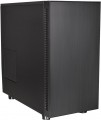 | 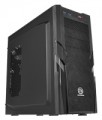 |
|---|---|---|
| Thermaltake Suppressor F31 black | Thermaltake Commander G41 black | |
from $132.00 | from $98.00 | |
| TOP sellers | ||
Screwless fasteners. Removable HDD cages. Dust filters on magnetic latches. Sound-absorbing pads throughout the body. Observation window. 7 places to install additional coolers. | ||
| Features | gaming | gaming |
| Form factor | Midi Tower | Midi Tower |
| Mount | vertical | vertical |
| Motherboard support | ATX | ATX |
| PSU form factor | ATX (regular) | ATX (regular) |
Computer case | ||
| Dimensions (HxWxD) | 497x250x515 mm | 487x244x481 mm |
| PSU max lenght | 220 mm | |
| Graphics card max lenght | 420 mm | 410 mm |
| Fan max height | 180 mm | 185 mm |
| Weight | 10.5 kg | 7.1 kg |
| Material | steel | steel |
| Rubber feet |  | |
| Lighting type | backlit fan | |
| Side panel | removable | removable |
Storage | ||
| PSU |  | |
| PSU mount | bottom | bottom |
| 5.25" bays | 2 | 3 |
| 3.5" external bays | 1 | |
| 3.5" bays | 3 | 6 |
| internal 2.5" compartments | 6 | 6 |
| Expansion slots | 8 | 9 |
| Graphics card vertical mount | | |
| Screwless | | |
Cooling | ||
| Installed fans | 2 шт | 2 шт |
| Fans (back) | 1x140mm | 1x120mm |
| Fans (front) | 1x200mm | 1x120mm |
| Fans (side) | 1x140mm | |
| Fans (top) | 2x200mm | 2x120mm |
| Fans (bottom) | 2x140mm | 1x120mm |
| Fan mounts total | 7 | 5 |
| Dust filter | + | + |
| Liquid cooling system support | | |
Liquid cooling system | ||
| Liquid cooling (rear) | 140 mm | |
| Liquid cooling (front) | 360 mm | |
| Liquid cooling (top) | 360mm | |
| Liquid cooling (bottom) | 140mm | |
| Liquid cooling mounts | 4 | |
Connectors and functions | ||
| Placement | on top of the case | on the front |
| USB-A 2.0 | 2 pcs | |
| USB-A 5Gbps | 2 pcs | 2 pcs |
| Audio (microphone/headphones) | | |
More features | ||
| Front panel | lattice | |
| Side panel window | + | |
| More features | front panel soundproof removable HDD cage hidden wiring CPU cooling mount window | removable HDD cage hidden wiring CPU cooling mount window |
| Color | ||
| Added to E-Catalog | february 2016 | january 2015 |


Compare Thermaltake Suppressor F31 and Commander G41
You may be interested in
Thermaltake Suppressor F31 often compared


Glossary
PSU max lenght
Possible length of the PSU that can be installed in the case.
Graphics card max lenght
The maximum length of a graphics card that can be installed in this case.
Modern mid-range and top-end video cards with high performance often differ in considerable length, which is why such a card can not fit into any case. So before collecting components, it is worth evaluating the length of the proposed graphics card and choosing a case in which it is guaranteed to fit. This forethought is useful anyway, but it's especially true if you're building a system that requires a powerful graphics adapter, such as a high-end gaming PC or 3D design workstation.
Modern mid-range and top-end video cards with high performance often differ in considerable length, which is why such a card can not fit into any case. So before collecting components, it is worth evaluating the length of the proposed graphics card and choosing a case in which it is guaranteed to fit. This forethought is useful anyway, but it's especially true if you're building a system that requires a powerful graphics adapter, such as a high-end gaming PC or 3D design workstation.
Fan max height
The highest cooler height allowed for this case.
In this case, we mean a cooler used to cool the processor — such a component is found in the vast majority of modern PCs. Height is measured relative to the motherboard.
In this case, we mean a cooler used to cool the processor — such a component is found in the vast majority of modern PCs. Height is measured relative to the motherboard.
Lighting type
The type of illumination provided in the body design.
The backlight plays mainly a decorative role, it gives the computer an original appearance, which is appreciated by fans of external tuning. Lighting can be mounted separately, but it is easier to purchase a case where it was originally provided. The types of illumination can be as follows:
— Illuminated fan. One or more coolers are illuminated, facing the side or top surface of the case.
— Cases with backlight. Separate parts of the body are illuminated, usually from the inside, in such a way that the illumination can be seen through a transparent window / windows or a lattice surface. Sometimes external lighting can be provided.
There are cases in which both types of illumination are provided simultaneously. And for office needs , cases without backlight are suitable.
The backlight plays mainly a decorative role, it gives the computer an original appearance, which is appreciated by fans of external tuning. Lighting can be mounted separately, but it is easier to purchase a case where it was originally provided. The types of illumination can be as follows:
— Illuminated fan. One or more coolers are illuminated, facing the side or top surface of the case.
— Cases with backlight. Separate parts of the body are illuminated, usually from the inside, in such a way that the illumination can be seen through a transparent window / windows or a lattice surface. Sometimes external lighting can be provided.
There are cases in which both types of illumination are provided simultaneously. And for office needs , cases without backlight are suitable.
5.25" bays
The number of 5.25" form factor bays provided in the case design. Such bays are made only external, that is, they can be accessed from the outside without opening the case (unlike 3.5", see the corresponding glossary items). Today, 5.25" bays are mainly used for installing optical disk drives, internal hard drives in removable pocket adapters (Mobile Rack), and sometimes additional fans. Also, 3.5" devices can be installed in such bays using special adapters. ". Most cases are equipped with 1 5.25" bay or two bays. But there are models with 3 or more bays, as well as cases without external bays.
3.5" external bays
The number of external 3.5" component bays provided in the case. The name "external" means that the bay has an exit to the outside (usually to the front panel), and can be reached without opening the case. One of the most popular options the use of such slots — the installation of card readers; in addition, they can be used for other components — in particular, USB hubs.
The number of bays corresponds to the number of external components that can be simultaneously installed in the case. However, this form factor is not particularly popular in the outer periphery, so cases with more than 2 such compartments are rare.
The number of bays corresponds to the number of external components that can be simultaneously installed in the case. However, this form factor is not particularly popular in the outer periphery, so cases with more than 2 such compartments are rare.
3.5" bays
The number of internal 3.5" form factor bays provided in the design of the case. Such bays, in accordance with the name, are intended for internal components, mainly hard drives and some SSD modules; to access them, the case must be disassembled.
Theoretically, the number of bays corresponds to the maximum number of drives that can be installed in the chassis. However, in fact, the best option is to install drives through a single slot to ensure efficient cooling. Accordingly, it is best to select a case in such a way that the number of internal 3.5" bays is twice the expected number of hard drives.
Theoretically, the number of bays corresponds to the maximum number of drives that can be installed in the chassis. However, in fact, the best option is to install drives through a single slot to ensure efficient cooling. Accordingly, it is best to select a case in such a way that the number of internal 3.5" bays is twice the expected number of hard drives.
Expansion slots
The number of slots for expansion cards located on the rear panel of the case.
The expansion card itself (graphics card, sound card, TV tuner, etc.) is installed in a slot on the motherboard, and an external panel of such a card with inputs and outputs is attached to the hole on the back of the case. The more holes are provided in the case, the more expansion cards can be installed in it. Note that some boards can occupy two or even three holes at once; this is especially common in powerful video cards. On the other hand, you have to pay attention to the number of holes mainly if you are building a powerful high-performance system. For an ordinary household PC, in most cases, one opening is enough for a graphics card; and in many configurations, the openings on the rear panel are not used at all.
The expansion card itself (graphics card, sound card, TV tuner, etc.) is installed in a slot on the motherboard, and an external panel of such a card with inputs and outputs is attached to the hole on the back of the case. The more holes are provided in the case, the more expansion cards can be installed in it. Note that some boards can occupy two or even three holes at once; this is especially common in powerful video cards. On the other hand, you have to pay attention to the number of holes mainly if you are building a powerful high-performance system. For an ordinary household PC, in most cases, one opening is enough for a graphics card; and in many configurations, the openings on the rear panel are not used at all.
Graphics card vertical mount
The ability to install a graphics card in the case vertically, facing the side panel. To do this, the design provides for an appropriate bracket, and the graphics card is connected to the motherboard with a special extension cable — a riser. This feature is found in open cases and models with a viewing window (see relevant paragraphs), its purpose is primarily aesthetic: a vertically placed graphics card is clearly visible from the outside, which gives the case an original appearance, designed for fans of external modding. But vertical installation does not provide any fundamental practical advantages.