
Comparison DJI RC Pro vs DJI RC Motion 2
Add to comparison | 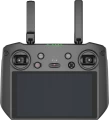 | 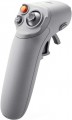 |
|---|---|---|
| DJI RC Pro | DJI RC Motion 2 | |
| Compare prices 2 | Compare prices 2 | |
| TOP sellers | ||
| Suitable for | for FPV drones | for FPV drones |
| Form factor | gamepad | motion controller |
| Display | + | |
| Screen size | 5.5 | |
| Screen resolution | 1920x1080 | |
| Compatibility | Mini 3 Pro, Air 2S, Mavic 3 Classic, Mavic 3, Mavic 3 Cine | Avata, Mavic 3, Mini 3 Pro |
Transmitter and communication | ||
| Radio frequency | 2.4 GHz, 5.8 GHz | 2.4 GHz, 5.8 GHz |
| Transmitter power | 2000 mW | 1000 mW |
| Range | 15 km | 10 km |
| Video transmission |  |  |
| Telemetry support | | |
Control | ||
| Controls | 11 | 7 |
| Gimbals | on potentiometers | |
| Touchscreen | | |
Features | ||
| Built-in speaker | | |
| HDMI output | | |
| Card reader | microSD | |
General | ||
| Power supply | battery | battery |
| Operating time | 3 h | 5 h |
| Connector for charging | USB-C | USB-C |
| Dimensions | 183x203x60 mm | |
| Weight | 680 g | 170 g |
| Added to E-Catalog | february 2024 | february 2024 |


Compare DJI RC Pro and RC Motion 2
Price comparison
My comparisons
DJI RC Pro often compared


DJI RC Motion 2 often compared

Glossary
Form factor
- Gamepad. Remote controls in the gamepad form factor are supposed to be held with both hands. The controls in them are represented by buttons, levers, etc. The control elements are placed in such a way that they can be conveniently reached without changing (or almost without changing) the grip.
— Rectangular (box). Advanced controllers for controlling RC models usually have a rectangular or almost square shape. This category includes both remote controls with a screen that occupies the lion’s share of the front part of the controller body, and models with an extensive set of control elements for maximum control of all parameters. Such remote controls are supposed to be held with both hands. Often their design includes a service display for telemetry (see “Telemetry support”).
— Motion controller. Controllers for controlling the RC model using gestures and body movements. In most cases, they are devices held in the hand. Such remote controls have buttons and other traditional controls, but it is the movements tracked by the manipulator that play an important role. The action of the motion controller is often based on the use of mechanical sensors - an accelerometer and a gyroscope, but some models may include special additional equipment to improve accuracy.
— Pistol. Remote controls of this form factor are h...eld in the hand like a pistol—hence the name. In the overwhelming majority, such controllers are designed to control RC machines, special equipment and boats. The gas trigger in pistol controls is usually placed under the index finger, and on the side of the body there is a ring that is responsible for turning the RU model. These organs can be supplemented with other elements to control auxiliary functions.
— Rectangular (box). Advanced controllers for controlling RC models usually have a rectangular or almost square shape. This category includes both remote controls with a screen that occupies the lion’s share of the front part of the controller body, and models with an extensive set of control elements for maximum control of all parameters. Such remote controls are supposed to be held with both hands. Often their design includes a service display for telemetry (see “Telemetry support”).
— Motion controller. Controllers for controlling the RC model using gestures and body movements. In most cases, they are devices held in the hand. Such remote controls have buttons and other traditional controls, but it is the movements tracked by the manipulator that play an important role. The action of the motion controller is often based on the use of mechanical sensors - an accelerometer and a gyroscope, but some models may include special additional equipment to improve accuracy.
— Pistol. Remote controls of this form factor are h...eld in the hand like a pistol—hence the name. In the overwhelming majority, such controllers are designed to control RC machines, special equipment and boats. The gas trigger in pistol controls is usually placed under the index finger, and on the side of the body there is a ring that is responsible for turning the RU model. These organs can be supplemented with other elements to control auxiliary functions.
Display
The presence of a display controller in the design and the type of installed matrix.
The screen in remote controls for RC models can play different roles. Thus, it is possible to display a picture from the camera in real time on a color display, and service parameters are often superimposed on top of it (for example, flight altitude, speed, remaining battery charge level, all sorts of service notifications, etc.). Monochrome screens are usually assigned other tasks - first of all, they are responsible for tracking telemetry (for more details, see the corresponding paragraph).
It is customary to equip advanced controllers for RC models with a display. Simple remote controls are often presented without a display. And according to the types of matrices, there are the following screen options in controllers:
- OLED. In the context of control controllers, OLED screens usually mean the simplest solutions with a black backing and white symbols for displaying settings and/or various service information. Such displays are based on organic light-emitting diodes, and their key advantage is the ability to easily read the displayed information in poor ambient lighting.
- LCD. As a rule, these are the simplest monochrome screens - either segmented to display a limited set of characters, or based on a single-color...LCD matrix, suitable for text and basic graphic information. LCD screens provide additional convenience: they can display various important data, for example, the flight altitude of a conventional quadcopter, the speed of movement of the RC machine, the signal level, the remaining battery charge, notifications of problems, etc.
- TFT. A TFT display means a screen consisting not of segments, but of full pixels and suitable for displaying various types of data: graphic symbols, images, and even streaming video from an installed camera. TFT screens provide the most extensive visualization of settings; they are used in controllers for controlling drones and other RC models in FPV (First Person View) mode.
The screen in remote controls for RC models can play different roles. Thus, it is possible to display a picture from the camera in real time on a color display, and service parameters are often superimposed on top of it (for example, flight altitude, speed, remaining battery charge level, all sorts of service notifications, etc.). Monochrome screens are usually assigned other tasks - first of all, they are responsible for tracking telemetry (for more details, see the corresponding paragraph).
It is customary to equip advanced controllers for RC models with a display. Simple remote controls are often presented without a display. And according to the types of matrices, there are the following screen options in controllers:
- OLED. In the context of control controllers, OLED screens usually mean the simplest solutions with a black backing and white symbols for displaying settings and/or various service information. Such displays are based on organic light-emitting diodes, and their key advantage is the ability to easily read the displayed information in poor ambient lighting.
- LCD. As a rule, these are the simplest monochrome screens - either segmented to display a limited set of characters, or based on a single-color...LCD matrix, suitable for text and basic graphic information. LCD screens provide additional convenience: they can display various important data, for example, the flight altitude of a conventional quadcopter, the speed of movement of the RC machine, the signal level, the remaining battery charge, notifications of problems, etc.
- TFT. A TFT display means a screen consisting not of segments, but of full pixels and suitable for displaying various types of data: graphic symbols, images, and even streaming video from an installed camera. TFT screens provide the most extensive visualization of settings; they are used in controllers for controlling drones and other RC models in FPV (First Person View) mode.
Screen size
Display diagonal size in inches. The larger the display, the more accurate and easier to read the information displayed on it, the better the video stream can be seen on the screen in real time. On the other hand, a display that is too large entails an increase in the size and cost of the controller. In remote controls with the ability to display only service parameters, the screen size is usually from 1 to 3 inches, in copies with full color matrices and support for broadcasting a video stream - about 5 - 7 inches diagonally.
Screen resolution
Display size in dots (pixels) horizontally and vertically. The higher the resolution of the screen, the more detailed the image can be displayed on it and the smaller objects will be clearly visible. It makes sense to pay attention to this parameter in controllers that are used to control the RC model with a first-person view in real time. The display resolution of such copies can correspond to the Full HD format (1920x1080 pixels) or even exceed it (for example, Quad HD - 2560x1440 pixels).
Compatibility
Compatibility of the controller with specific RC models. For many popular models, their own specialized remote controls are produced, which are initially tailored to the characteristics of a particular model. However, it is often possible to replace the “native” controller with a third-party one - many models of this type are produced with compatibility for a certain list of RC equipment. Before purchasing, it makes sense to check compatibility to avoid unpleasant surprises.
Transmitter power
Rated power of the transmitter installed in the controller. This is an important parameter for ensuring reliable control of the RC model at a distance. The power of the transmitter is measured in milliwatts (mW), and the higher the number, the further the signal reaches and the more reliable control will be over long distances or in conditions of interference. In professional models of remote controls, the transmitter power can exceed 1000 mW (1 W).
Range
The operating range of the transmitter in the control panel, in other words, is the maximum distance that the RC model can move away from the transmitter without losing control. The greater this distance, the more convenient it is to operate the car, but at the same time, powerful “long-range” transmitters have corresponding dimensions, weight and cost. In practice, the range may be less than stated - for example, due to the presence of obstacles in the signal path or due to weak batteries. Therefore, it is best to choose according to this parameter with some reserve.
Video transmission
This function allows you to transmit the image seen by the RU-model camera. In other words, during such a broadcast the operator will see on the screen the same thing that the lens “sees”. Video transmission is especially useful for taking photos and videos, but can also be useful for driving a car in FPV (first person view) mode.
Telemetry support
Telemetry allows for receiving information about the model's status through continuous bidirectional communication between the transmitter and receiver. This information can include various parameters such as speed, altitude, battery voltage, engine temperature, and more, depending on the sensors installed on the RC model. Telemetry support makes control more informative and efficient, helping to prevent unforeseen situations like battery depletion or engine overheating. In remote controls, telemetry is implemented in various ways: using special receivers with built-in sensors, additional telemetry modules, and/or software for processing and displaying the received data.