
Comparison DJI Goggles N3 vs DJI Goggles 2
Add to comparison |  | 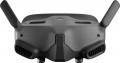 |
|---|---|---|
| DJI Goggles N3 | DJI Goggles 2 | |
| Compare prices 1 | Compare prices 2 | |
| TOP sellers | ||
Automatic selection of frequency 2.4 GHz or 5.8 GHz. Supports DJI O3+ with DJI Avata or DJI O3 Air Unit. Removable antennas. Diopter adjustment from +2.0 to -8.0. Possibility to use with a smartphone as a home theater. Compatibility: DJI Motion Controller, DJI RC Motion 2, DJI FPV Remote Controller 2, DJI FPV, DJI Mavic 3 Pro, DJI Mavic 3 Pro Cine, DJI Mavic 3, DJI Mavic 3 Cine, DJI Mavic 3 Classic, and DJI Mini 3 Pro . | ||
| Device type | FPV goggles | FPV goggles |
| Purpose (compatibility) | quadcopter (drone) | quadcopter (drone) |
Specs | ||
| Screen resolution | 1920x1080 px | 1920x1080 px |
| Field of view | 54 ° | 102 ° |
| Refresh rate | 60 fps | 100 fps |
Multimedia | ||
| Card reader |  |  |
| USB-C | + | |
| Bluetooth | v 5.0 | |
| Wi-Fi | Wi-Fi 5 (802.11ac) | |
| Headphone output | | |
General | ||
| Control | button controls | touch controls |
| Battery capacity | 2450 mAh | 1800 mAh |
| Operating time | 2.7 h | 2 h |
| Material | plastic | plastic |
| Dimensions (HxWxD) | 193x163x103 mm | 197x105x104 mm |
| Weight | 536 g | 290 g |
| Added to E-Catalog | february 2025 | november 2023 |


Compare DJI Goggles N3 and Goggles 2
Price comparison
You may be interested in
My comparisons
DJI Goggles N3 often compared


DJI Goggles 2 often compared
Glossary
Field of view
The viewing angle provided by virtual reality glasses is the angular size of the space that falls into the user's field of view. Usually, the characteristics indicate the size of this space horizontally; however, if you need the most accurate information, this point needs to be specified separately.
The wider the viewing angle — the more the game space the user can see without turning his head, the more powerful the immersion effect and the less likely that the image will be subject to the "tunnel vision" effect. On the other hand, making the field of view too wide also does not make sense, given the characteristics of the human eye. In general, a large viewing angle is considered to be an angle of 100° or more. On the other hand, there are models where this indicator is 30° or even less — these are, usually, specific devices (for example, drone piloting glasses and augmented reality glasses), where such characteristics are quite justified given the overall functionality.
The wider the viewing angle — the more the game space the user can see without turning his head, the more powerful the immersion effect and the less likely that the image will be subject to the "tunnel vision" effect. On the other hand, making the field of view too wide also does not make sense, given the characteristics of the human eye. In general, a large viewing angle is considered to be an angle of 100° or more. On the other hand, there are models where this indicator is 30° or even less — these are, usually, specific devices (for example, drone piloting glasses and augmented reality glasses), where such characteristics are quite justified given the overall functionality.
Refresh rate
The refresh rate supported by the glasses' built-in screens, in simple terms, is the maximum frame rate that the screens are capable of delivering.
Recall that screens are provided in models for PC / consoles and in stand-alone devices (see "Intended use"). And the quality of the picture directly depends on this indicator: other things being equal, a higher frame rate provides a smoother image, without jerks and with good detail in dynamic scenes. The flip side of these benefits is an increase in price.
It is also worth considering that in some cases the actual frame rate will not be limited by the capabilities of the glasses, but by the characteristics of the external device or the properties of the content being played. For example, a relatively weak PC graphics card may not be able to pull out a high frame rate signal, or a certain frame rate may be set in the game and not provide boosting. Therefore, you should not chase after large values and points with a frequency of 90 fps will be enough.
Recall that screens are provided in models for PC / consoles and in stand-alone devices (see "Intended use"). And the quality of the picture directly depends on this indicator: other things being equal, a higher frame rate provides a smoother image, without jerks and with good detail in dynamic scenes. The flip side of these benefits is an increase in price.
It is also worth considering that in some cases the actual frame rate will not be limited by the capabilities of the glasses, but by the characteristics of the external device or the properties of the content being played. For example, a relatively weak PC graphics card may not be able to pull out a high frame rate signal, or a certain frame rate may be set in the game and not provide boosting. Therefore, you should not chase after large values and points with a frequency of 90 fps will be enough.
Card reader
The presence of a card reader in the glasses — a device for reading removable memory cards.
Such equipment is found only in independent devices (see "Intended use"). The card reader allows you to install an additional amount of memory to store various data — in addition to your own points drive. At the same time, removable cards have a number of advantages: they are much cheaper than built-in storage (in terms of gigabytes of volume), and the volume of such a card can be chosen at your discretion. So a model with a small capacity, but with a card reader, can be a good alternative to glasses with a large amount of internal memory. Also note that you can purchase several memory cards and change them as needed. And card readers are available in many modern devices (laptops, smartphones, tablets, etc.), so that removable cards make it easier to store information with such devices (for example, you can record a movie on a card for viewing). On the other hand, removable memory is slower than the built-in memory, and some software functions may be limited for it — in particular, not every model of glasses allows you to install applications on the card.
Such equipment is found only in independent devices (see "Intended use"). The card reader allows you to install an additional amount of memory to store various data — in addition to your own points drive. At the same time, removable cards have a number of advantages: they are much cheaper than built-in storage (in terms of gigabytes of volume), and the volume of such a card can be chosen at your discretion. So a model with a small capacity, but with a card reader, can be a good alternative to glasses with a large amount of internal memory. Also note that you can purchase several memory cards and change them as needed. And card readers are available in many modern devices (laptops, smartphones, tablets, etc.), so that removable cards make it easier to store information with such devices (for example, you can record a movie on a card for viewing). On the other hand, removable memory is slower than the built-in memory, and some software functions may be limited for it — in particular, not every model of glasses allows you to install applications on the card.
USB-C
Presence of a USB-C port in glasses. This is a relatively new type of USB port, with miniature size (slightly larger than microUSB) and a convenient reversible design, allowing the plug to be connected either way. It can be found in glasses of different purposes and, accordingly, designed for various applications. For example, in models for PCs/consoles, this port is used similarly to traditional USB-A — for main connection, alongside HDMI or DisplayPort interfaces. In standalone devices, in turn, USB-C is mainly intended for battery charging and connection to a computer for direct file exchange, settings management, firmware updates, etc.
It should also be noted that this section might specify the USB version that the USB-C port corresponds to. Currently, two versions are relevant — 5Gbps and 10Gbps; for VR glasses, the difference between them is generally not significant.
It should also be noted that this section might specify the USB version that the USB-C port corresponds to. Currently, two versions are relevant — 5Gbps and 10Gbps; for VR glasses, the difference between them is generally not significant.
Bluetooth
The presence of a Bluetooth module in the glasses; The Bluetooth version to which this module corresponds can also be specified here.
Bluetooth is a technology created for direct wireless connection between various devices. This technology is found in all types of VR glasses (see “Purpose”), although most models with its support are independent devices. In any case, the most popular way to use Bluetooth in virtual reality glasses is to broadcast sound wirelessly. Moreover, the format of such a broadcast may be different, depending on the specifics of the glasses themselves. Thus, standalone devices broadcast the reproduced sound to external headphones. Models for PCs and smartphones may have built-in headphones, and here the sound is transmitted via Bluetooth to the glasses from an external device; Audio from the built-in microphone can be transmitted in the opposite direction.
In addition, there are other possible ways to use Bluetooth, such as directly exchanging files with another device or connecting game controllers. Such capabilities are found exclusively in stand-alone glasses; the specific functionality for each model should be clarified separately.
As for the versions, the oldest one used in VR glasses today is Bluetooth 3.0, the newest is Bluetooth 5.0. However, the differences between different versions for such devices are not fundamental; this information is provided mainly for reference purposes.
Bluetooth is a technology created for direct wireless connection between various devices. This technology is found in all types of VR glasses (see “Purpose”), although most models with its support are independent devices. In any case, the most popular way to use Bluetooth in virtual reality glasses is to broadcast sound wirelessly. Moreover, the format of such a broadcast may be different, depending on the specifics of the glasses themselves. Thus, standalone devices broadcast the reproduced sound to external headphones. Models for PCs and smartphones may have built-in headphones, and here the sound is transmitted via Bluetooth to the glasses from an external device; Audio from the built-in microphone can be transmitted in the opposite direction.
In addition, there are other possible ways to use Bluetooth, such as directly exchanging files with another device or connecting game controllers. Such capabilities are found exclusively in stand-alone glasses; the specific functionality for each model should be clarified separately.
As for the versions, the oldest one used in VR glasses today is Bluetooth 3.0, the newest is Bluetooth 5.0. However, the differences between different versions for such devices are not fundamental; this information is provided mainly for reference purposes.
Wi-Fi
The Wi-Fi version supported by the glasses.
Wi-Fi technology is known mainly as the most popular way to connect to the Internet wirelessly, although it can also be used for direct connection between different devices (Wi-Fi Direct). Anyway, this function is found exclusively in stand-alone devices (see "Intended Use"). It is mainly used to connect to the World Wide Web, but the possibilities of such a connection may be different. So, in some models, a Wi-Fi connection is used to access proprietary application repositories, cloud services for storing game data, etc. Others may provide support for third-party services such as social networks or instant messengers, or even a full-fledged browser for web surfing. Technically, nothing prevents the use of Wi-Fi Direct in VR glasses, but for a number of reasons, this format of work is almost never found.
As for the versions, in modern virtual reality glasses there are mainly Wi-Fi 4 (802.11 n) and Wi-Fi 5 (802.11 ac). The difference between them in most cases is not fundamental, especially since, for compatibility, Wi-Fi modules often provide support for not only one of these standards, but also earlier ones. And the new Wi-Fi 6 at the beginning of 2021 has not yet gained much popularity. But everything has its time.
Wi-Fi technology is known mainly as the most popular way to connect to the Internet wirelessly, although it can also be used for direct connection between different devices (Wi-Fi Direct). Anyway, this function is found exclusively in stand-alone devices (see "Intended Use"). It is mainly used to connect to the World Wide Web, but the possibilities of such a connection may be different. So, in some models, a Wi-Fi connection is used to access proprietary application repositories, cloud services for storing game data, etc. Others may provide support for third-party services such as social networks or instant messengers, or even a full-fledged browser for web surfing. Technically, nothing prevents the use of Wi-Fi Direct in VR glasses, but for a number of reasons, this format of work is almost never found.
As for the versions, in modern virtual reality glasses there are mainly Wi-Fi 4 (802.11 n) and Wi-Fi 5 (802.11 ac). The difference between them in most cases is not fundamental, especially since, for compatibility, Wi-Fi modules often provide support for not only one of these standards, but also earlier ones. And the new Wi-Fi 6 at the beginning of 2021 has not yet gained much popularity. But everything has its time.
Headphone output
Availability in points of an exit for connection of earphones. Most often, the role of such a connector is played by a standard 3.5 mm mini-jack socket.
A full-fledged "immersion" in the virtual world requires not only a picture on the screen, but also an appropriate sound accompaniment, for which headphones are the best option. Its own headphone output allows you to connect wired "ears" directly to the glasses — it is much more convenient and safer during use than connecting headphones to a computer or set-top box. However, independent devices can also have such a connector (see "Purpose").
Note that there are VR glasses with their own built-in headphones, but this option is more convenient: it allows you to select the “ears” separately, according to the user’s own preferences.
A full-fledged "immersion" in the virtual world requires not only a picture on the screen, but also an appropriate sound accompaniment, for which headphones are the best option. Its own headphone output allows you to connect wired "ears" directly to the glasses — it is much more convenient and safer during use than connecting headphones to a computer or set-top box. However, independent devices can also have such a connector (see "Purpose").
Note that there are VR glasses with their own built-in headphones, but this option is more convenient: it allows you to select the “ears” separately, according to the user’s own preferences.
Control
The type of control provided in the design of the glasses.
Note that in this case we are talking exclusively about our own controls installed directly on the body of the glasses; many models are equipped with external controllers (see "Remote control"), but they are not taken into account in this case.
- Button. Control with classic buttons. The main advantage of this option is simplicity and low cost, while its functionality is quite enough to work with basic functions like menu navigation. On the other hand, the buttons require some effort when pressed, which can be somewhat inconvenient, especially when using the controls intensively. However, most often this disadvantage is still not fundamental.
- Touch. Control using sensors that are sensitive to touch and do not require pressing (unlike buttons). In the simplest models, these are separate sensors, the functions of which are similar to the same buttons. In more advanced devices, entire touch panels can be provided, for example, allowing you to control the cursor visible through the glasses and use special gestures. Anyway, this type of control is more advanced than push-button, however, it is more expensive, and therefore less common.
Note that in this case we are talking exclusively about our own controls installed directly on the body of the glasses; many models are equipped with external controllers (see "Remote control"), but they are not taken into account in this case.
- Button. Control with classic buttons. The main advantage of this option is simplicity and low cost, while its functionality is quite enough to work with basic functions like menu navigation. On the other hand, the buttons require some effort when pressed, which can be somewhat inconvenient, especially when using the controls intensively. However, most often this disadvantage is still not fundamental.
- Touch. Control using sensors that are sensitive to touch and do not require pressing (unlike buttons). In the simplest models, these are separate sensors, the functions of which are similar to the same buttons. In more advanced devices, entire touch panels can be provided, for example, allowing you to control the cursor visible through the glasses and use special gestures. Anyway, this type of control is more advanced than push-button, however, it is more expensive, and therefore less common.