
Comparison TP-LINK Tapo P110M vs EcoFlow Smart Plug
Add to comparison |  | 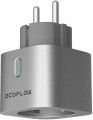 |
|---|---|---|
| TP-LINK Tapo P110M | EcoFlow Smart Plug | |
| Outdated Product | Outdated Product | |
| User reviews | ||
| TOP sellers | ||
Matter support. Simulates human presence at home. Shared access to one socket is possible. | Durable material, resistant to abrasion, grease, acid and alkali. Fire protection. Works with PowerStream Microinverter, intelligent power distribution. | |
| Device type | socket | socket |
| Number of sockets | 1 | 1 |
| Operating format | Master | Master |
| Kit | 1 | 1 |
| Control | from smartphone | from smartphone |
| Connection (protocol) | Wi-Fi | Wi-Fi / Bluetooth |
| Integration into a smart home system | Apple HomeKit Google Home | Apple HomeKit Google Home |
| Support Matter |  | |
| Voice assistant | Amazon Alexa Google Assistant Apple Siri | Amazon Alexa Google Assistant Apple Siri |
Features | ||
| Features | timer scheduled work energy consumption statistics childproof curtains surge protection | timer scheduled work energy consumption statistics childproof curtains surge protection |
General | ||
| Maximum power | 3680 W | |
| Maximum load | 16 А | 10 А |
| Operating temperature | 0 °C ~ +40 °C | -10 °C ~ +40 °C |
| Size | 72x51x40 mm | 53x53x79 mm |
| Weight | 113 g | |
| Added to E-Catalog | january 2024 | july 2023 |


Compare TP-LINK Tapo P110M and EcoFlow Smart Plug
You may be interested in
My comparisons
TP-LINK Tapo P110M often compared


EcoFlow Smart Plug often compared

Glossary
Connection (protocol)
Communication protocol (standard) used by the socket for connection with the control device.
Currently, among smart sockets, only wireless standards are used, which can be divided into two types. The first is the widespread technologies like Bluetooth, Wi-Fi, and GSM, used for connecting to a smartphone (see "Control"); the second includes specialized communication formats like Z-Wave, Zigbee, and Jeweller, intended for security/smart home systems and used when controlling via a control unit (see the same). Here is a more detailed description of each of these standards:
— Wi-Fi. The most popular communication protocol among sockets controlled via smartphone. Initially, this technology was mainly used for wireless access to local networks and the Internet, but nowadays direct connection of various devices via Wi-Fi is possible. Accordingly, the specific method of implementing such a connection can vary: some models connect to a router and are accessible through a "local" or even remotely via the Internet; others connect to a smartphone/tablet, and can only be controlled within direct connection range; while some allow both modes of operation. It’s worth specifying these details separately; however, in any case, it is precisely this versatility t...hat has largely contributed to the wide popularity of Wi-Fi sockets. The second advantage of this protocol is good transmission range: it is about several tens, or even hundreds, of meters (which, among other things, allows for reliable operation even through walls). It is also worth mentioning that Wi-Fi modules are inherently present in all modern smartphones and tablets; and some sockets allow control from other devices as well — for example, laptops and even desktop computers (including over networks).
The general disadvantages of this technology might include only a higher cost and lower energy efficiency compared to Bluetooth. However, the first point is often outweighed by the advantages, and the second is mainly relevant to controlling gadgets, since the sockets themselves are constantly powered by the network and have virtually unlimited autonomy. Additionally, it should be noted that some Wi-Fi sockets work only through a wireless router and do not support direct connection; however, considering the prevalence of Wi-Fi networks nowadays, this point can also not be considered critical.
— Bluetooth. Another technology used for connecting sockets to smartphones and tablets. It is encountered much less frequently than the aforementioned Wi-Fi, as it significantly falls short of this standard in capabilities. First, Bluetooth connections are only made directly between devices, so remote control is out of the question. Second, the actual range of such connections usually does not exceed 15-20 meters, and it may be significantly less if the walls are thick. As for the advantages of Bluetooth, they include primarily low cost and the ability to operate without routers or other intermediate equipment (whereas many Wi-Fi models work only with a wireless network available). Furthermore, such connections are characterized by low power consumption, but in the case of smart sockets, this aspect cannot be considered particularly significant. This is because the sockets themselves are constantly connected to the network and do not need to conserve energy; and the controlling gadget must be in close proximity to the sockets, and there are usually no problems with charging its battery.
— GSM. Connection via a mobile network; the term "GSM" in this case is rather conditional since such sockets can also operate in more modern 3G and 4G LTE networks. To use such a connection, you need to purchase a mobile operator's starter pack and install a SIM card in the smart socket. Generally, control via GSM is carried out using calls and/or SMS to the phone number assigned to the socket; there is often also the option to send response notifications (text or even voice), and to protect against unauthorized access, a list of allowed numbers is stored in the device's memory. The main advantage of this type of connection is the ability to access the socket settings from anywhere on the planet with mobile coverage. Moreover, calls and SMS can be made from any mobile phone; it does not necessarily have to be a smartphone. On the other hand, control via the mobile network offers considerably fewer options than other protocols, and the connection requires financial expenses. So it probably doesn't make sense to focus on such sockets if most of the time they will be managed "locally" from the same home or office where these devices are installed.
— Z-Wave. A wireless communication standard specially created for automation and control systems, including alarms and smart homes. Alongside the below-described Zigbee, it is one of the widely accepted protocols used in such systems; and in smart sockets controlled through a control unit, it is also the most popular. This is because such communication is simple and inexpensive to implement while being sufficiently functional and practical. It involves the transmission of maximum simple and short control commands, which promotes energy savings and operates in a range up to 1 GHz, making it not susceptible to interference from Wi-Fi and Bluetooth devices. Additionally, in Z-Wave-based networks, it is possible to use a MESH topology — where each individual device also acts as a full-fledged repeater for signals from other components of the system. Devices in such networks can choose any signal route through any number of intermediate nodes, depending on the situation. For example, if direct communication between two nodes is somehow impossible, the data will be sent "bypass" through other network devices, and the system will automatically determine the most optimal route. This allows organizing extensive networks with a large number of devices and wide coverage easily.
— Zigbee. Another communication protocol created for automation systems (including smart homes), alarms, industrial control, etc. In many respects, it is similar to the above-described Z-Wave: it allows transferring control signals with low energy consumption, as well as creating MESH networks with signal direction through several nodes and automatic selection of the optimal route considering the current network situation. The main differences of Zigbee from Z-Wave are high security of communication channels from hacking and the ability to ensure high triggering speed. The downside of these advantages is the higher cost of implementing this protocol, given that in smart sockets, speed, and security usually do not play key roles. Therefore, fewer devices are produced for this communication standard than for Z-Wave.
— Jeweller. A proprietary communication protocol developed by Ajax Systems. The company specializes in alarms, and this protocol was initially created with such systems in mind — hence its advanced features. Specifically, Jeweller provides a communication range of up to 2 km with very low energy consumption, features high-class protection against hacking, allows frequency changes when attempts are made to jam the operational range, and supports simultaneous connection of up to 150 devices on a gateway. On the other hand, for smart sockets, most of these features are redundant, although they significantly affect the cost. However, the main disadvantage of this protocol is that its use is limited to devices from one manufacturer. Therefore, it makes sense to purchase sockets with Jeweller support if an Ajax Systems security system is used (or planned to be used) in the house.
Currently, among smart sockets, only wireless standards are used, which can be divided into two types. The first is the widespread technologies like Bluetooth, Wi-Fi, and GSM, used for connecting to a smartphone (see "Control"); the second includes specialized communication formats like Z-Wave, Zigbee, and Jeweller, intended for security/smart home systems and used when controlling via a control unit (see the same). Here is a more detailed description of each of these standards:
— Wi-Fi. The most popular communication protocol among sockets controlled via smartphone. Initially, this technology was mainly used for wireless access to local networks and the Internet, but nowadays direct connection of various devices via Wi-Fi is possible. Accordingly, the specific method of implementing such a connection can vary: some models connect to a router and are accessible through a "local" or even remotely via the Internet; others connect to a smartphone/tablet, and can only be controlled within direct connection range; while some allow both modes of operation. It’s worth specifying these details separately; however, in any case, it is precisely this versatility t...hat has largely contributed to the wide popularity of Wi-Fi sockets. The second advantage of this protocol is good transmission range: it is about several tens, or even hundreds, of meters (which, among other things, allows for reliable operation even through walls). It is also worth mentioning that Wi-Fi modules are inherently present in all modern smartphones and tablets; and some sockets allow control from other devices as well — for example, laptops and even desktop computers (including over networks).
The general disadvantages of this technology might include only a higher cost and lower energy efficiency compared to Bluetooth. However, the first point is often outweighed by the advantages, and the second is mainly relevant to controlling gadgets, since the sockets themselves are constantly powered by the network and have virtually unlimited autonomy. Additionally, it should be noted that some Wi-Fi sockets work only through a wireless router and do not support direct connection; however, considering the prevalence of Wi-Fi networks nowadays, this point can also not be considered critical.
— Bluetooth. Another technology used for connecting sockets to smartphones and tablets. It is encountered much less frequently than the aforementioned Wi-Fi, as it significantly falls short of this standard in capabilities. First, Bluetooth connections are only made directly between devices, so remote control is out of the question. Second, the actual range of such connections usually does not exceed 15-20 meters, and it may be significantly less if the walls are thick. As for the advantages of Bluetooth, they include primarily low cost and the ability to operate without routers or other intermediate equipment (whereas many Wi-Fi models work only with a wireless network available). Furthermore, such connections are characterized by low power consumption, but in the case of smart sockets, this aspect cannot be considered particularly significant. This is because the sockets themselves are constantly connected to the network and do not need to conserve energy; and the controlling gadget must be in close proximity to the sockets, and there are usually no problems with charging its battery.
— GSM. Connection via a mobile network; the term "GSM" in this case is rather conditional since such sockets can also operate in more modern 3G and 4G LTE networks. To use such a connection, you need to purchase a mobile operator's starter pack and install a SIM card in the smart socket. Generally, control via GSM is carried out using calls and/or SMS to the phone number assigned to the socket; there is often also the option to send response notifications (text or even voice), and to protect against unauthorized access, a list of allowed numbers is stored in the device's memory. The main advantage of this type of connection is the ability to access the socket settings from anywhere on the planet with mobile coverage. Moreover, calls and SMS can be made from any mobile phone; it does not necessarily have to be a smartphone. On the other hand, control via the mobile network offers considerably fewer options than other protocols, and the connection requires financial expenses. So it probably doesn't make sense to focus on such sockets if most of the time they will be managed "locally" from the same home or office where these devices are installed.
— Z-Wave. A wireless communication standard specially created for automation and control systems, including alarms and smart homes. Alongside the below-described Zigbee, it is one of the widely accepted protocols used in such systems; and in smart sockets controlled through a control unit, it is also the most popular. This is because such communication is simple and inexpensive to implement while being sufficiently functional and practical. It involves the transmission of maximum simple and short control commands, which promotes energy savings and operates in a range up to 1 GHz, making it not susceptible to interference from Wi-Fi and Bluetooth devices. Additionally, in Z-Wave-based networks, it is possible to use a MESH topology — where each individual device also acts as a full-fledged repeater for signals from other components of the system. Devices in such networks can choose any signal route through any number of intermediate nodes, depending on the situation. For example, if direct communication between two nodes is somehow impossible, the data will be sent "bypass" through other network devices, and the system will automatically determine the most optimal route. This allows organizing extensive networks with a large number of devices and wide coverage easily.
— Zigbee. Another communication protocol created for automation systems (including smart homes), alarms, industrial control, etc. In many respects, it is similar to the above-described Z-Wave: it allows transferring control signals with low energy consumption, as well as creating MESH networks with signal direction through several nodes and automatic selection of the optimal route considering the current network situation. The main differences of Zigbee from Z-Wave are high security of communication channels from hacking and the ability to ensure high triggering speed. The downside of these advantages is the higher cost of implementing this protocol, given that in smart sockets, speed, and security usually do not play key roles. Therefore, fewer devices are produced for this communication standard than for Z-Wave.
— Jeweller. A proprietary communication protocol developed by Ajax Systems. The company specializes in alarms, and this protocol was initially created with such systems in mind — hence its advanced features. Specifically, Jeweller provides a communication range of up to 2 km with very low energy consumption, features high-class protection against hacking, allows frequency changes when attempts are made to jam the operational range, and supports simultaneous connection of up to 150 devices on a gateway. On the other hand, for smart sockets, most of these features are redundant, although they significantly affect the cost. However, the main disadvantage of this protocol is that its use is limited to devices from one manufacturer. Therefore, it makes sense to purchase sockets with Jeweller support if an Ajax Systems security system is used (or planned to be used) in the house.
Maximum power
The maximum load power that can be connected to the network through a smart socket. If you plan to power several devices through the device, accordingly, you need to take into account their total power.
Permissible power up to 2 kW is considered relatively low, but it is quite enough for most household appliances that do not have high power consumption. For example, such values will be enough for a household lamp, a medium-sized TV, a home air conditioner, a microwave oven, etc. Devices with a maximum power of 2 to 3 kW are suitable for more “gluttonous” equipment like an electric kettle or boiler. And the most “hardy” smart sockets are limited from 3 to 3.5 kW, they will be compatible with any electrical appliances that are generally designed to work from an outlet (recall, power of more than 3.5 kW requires connection directly to the shield, ordinary sockets are no longer designed for it).
Permissible power up to 2 kW is considered relatively low, but it is quite enough for most household appliances that do not have high power consumption. For example, such values will be enough for a household lamp, a medium-sized TV, a home air conditioner, a microwave oven, etc. Devices with a maximum power of 2 to 3 kW are suitable for more “gluttonous” equipment like an electric kettle or boiler. And the most “hardy” smart sockets are limited from 3 to 3.5 kW, they will be compatible with any electrical appliances that are generally designed to work from an outlet (recall, power of more than 3.5 kW requires connection directly to the shield, ordinary sockets are no longer designed for it).
Maximum load
The maximum load current for which the smart socket is designed. This parameter is directly related to the maximum power (see above) — we recall that the power is calculated by multiplying the current by the voltage. Thus, if the maximum power is, for example, 2200 W, then the maximum load will be 2200/220 = 10 A.
The permissible load of less than 10 A for modern smart sockets is considered low, 11 – 15 A is considered average, and the maximum indicator is actually 16 A — ordinary wall sockets do not initially assume a higher load. Equipment that consumes a current of more than 16 A requires a special connection with special control automation; smart sockets are not used for such devices.
The permissible load of less than 10 A for modern smart sockets is considered low, 11 – 15 A is considered average, and the maximum indicator is actually 16 A — ordinary wall sockets do not initially assume a higher load. Equipment that consumes a current of more than 16 A requires a special connection with special control automation; smart sockets are not used for such devices.
Operating temperature
The operating temperature of the device is the range of ambient air temperatures at which the socket / extension cord is guaranteed to remain operational.
All smart sockets and extension cords easily tolerate “room” conditions with a temperature comfortable for a person. Therefore, if the device is bought for an ordinary residential or office space, you can ignore this indicator. But if the outlet / extension cord is to be used in a more extreme environment (for example, in an unheated garage), you should make sure that the selected model can normally endure the corresponding temperatures. This is especially true with regard to resistance to cold: frost -resistant devices can be found on the market, but there are quite a few of them.
All smart sockets and extension cords easily tolerate “room” conditions with a temperature comfortable for a person. Therefore, if the device is bought for an ordinary residential or office space, you can ignore this indicator. But if the outlet / extension cord is to be used in a more extreme environment (for example, in an unheated garage), you should make sure that the selected model can normally endure the corresponding temperatures. This is especially true with regard to resistance to cold: frost -resistant devices can be found on the market, but there are quite a few of them.